Gray-headed Kite

Gray-headed Kite

Leptodon cayanensis

Silhouette: PhyloPic

LCLeast ConcernNTVUENCR
Daily sighting probability <5% · Rare
at Arenal Volcano National Park

In 3 days <5%

67 Verified sightings at Arenal Volcano National Park From 2019 to 2026
3,081 In all 40 parks
December Best month
☀️ Diurnal When it's spotted

About the Gray-headed Kite

The gray-headed kite (Leptodon cayanensis) is a raptor found in open woodland and swamp forests. It shares the genus Leptodon with the extremely rare white-collared kite. It breeds from eastern Mexico and Trinidad south to Peru, Bolivia, Brazil and northern Argentina.

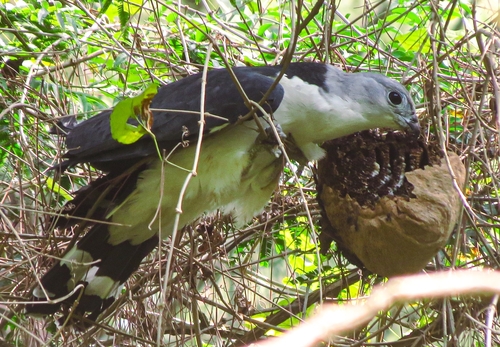
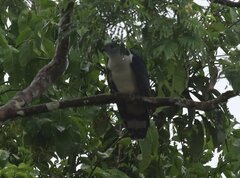
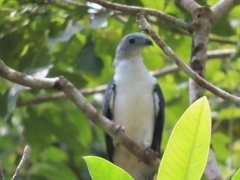
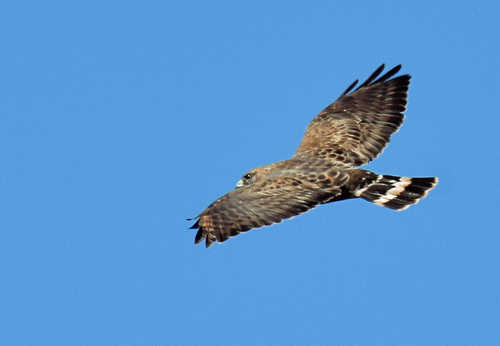
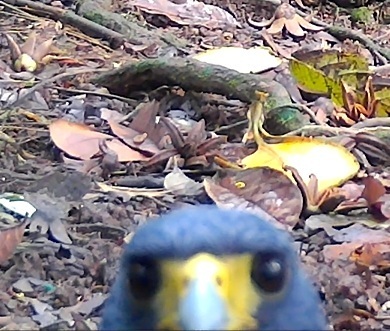
The gray-headed kite is 46–53 cm in length and weighs 410–605 grams (.9–1.3 lb) The adult has a grey head, black upperparts, white underparts, and a black tail with two or three white bars. The bill is blue and the legs grey. The flight is a deliberate flap-flap-glide. Immature birds have three colour morphs; the light phase is similar to the adult, but has a white head and neck, with a black crown and eyestripe, black bill and yellow legs, closely resembling the Black-and-white hawk-eagle (Spizaetus melanoleucus). The rufous phase has a reddish neck with a white throat, black malar stripes and a black, long crest closely resembling the adult Ornate hawk-eagle (Spizaetus ornatus). The dark phase has a blackish head, neck and upper parts, and dark-streaked buff underparts closely resembling the Black hawk-eagle (Spizaetus tyrannus). The sophistication in the mimicry of these juveniles is remarkable and... Wikipedia →

Sounds

Song0:27

Brazil · 2026

© JAYRSON ARAUJO DE OLIVEIRA · XC1182527 · CC BY-NC-SA 4.0

Call0:09

Ecuador · 2025

© Marc Anderson · XC987186 · CC BY-NC-ND 4.0

Subsong0:23

Ecuador · 2021

© José María Loaiza B. · XC618822 · CC BY-NC-SA 4.0

Global Distribution

Parks Where Found

# Park Country Daily sighting probability
1 Brownsberg Nature Park 🇸🇷 Suriname
~10%
2 Soberanía National Park 🇵🇦 Panama
~10%
3 Anavilhanas National Park 🇧🇷 Brazil
~10%
4 Darién National Park 🇵🇦 Panama
~10%
5 Yasuní National Park 🇪🇨 Ecuador
~10%
6 Tortuguero National Park 🇨🇷 Costa Rica
~10%
7 Cuyabeno Wildlife Reserve 🇪🇨 Ecuador
~10%
8 Cockscomb Basin Wildlife Sanctuary 🇧🇿 Belize
~10%
9 San Lorenzo Protected Forest 🇵🇦 Panama
~10%
10 Marino Ballena National Park 🇨🇷 Costa Rica
<5%
11 Montes Azules Biosphere Reserve 🇲🇽 Mexico
<5%
12 Cerro Azul Meámbar National Park 🇭🇳 Honduras
<5%
13 Piedras Blancas National Park 🇨🇷 Costa Rica
<5%
14 Amacayacu National Natural Park 🇨🇴 Colombia
<5%
15 Tayrona National Natural Park 🇨🇴 Colombia
<5%
16 Corcovado National Park 🇨🇷 Costa Rica
<5%
17 Calakmul Biosphere Reserve 🇲🇽 Mexico
<5%
18 Tikal National Park 🇬🇹 Guatemala
<5%
19 Parque Estadual Encontro das Águas 🇧🇷 Brazil
<5%
20 Chagres National Park 🇵🇦 Panama
<5%
21 Serra da Canastra National Park 🇧🇷 Brazil
<5%
22 Tambopata National Reserve 🇵🇪 Peru
<5%
23 Machalilla National Park 🇪🇨 Ecuador
<5%
24 Serra dos Órgãos National Park 🇧🇷 Brazil
<5%
25 Parque Natural Metropolitano 🇵🇦 Panama
<5%
26 Santa Rosa National Park 🇨🇷 Costa Rica
<5%
27 Braulio Carrillo National Park 🇨🇷 Costa Rica
<5%
28 Palo Verde National Park 🇨🇷 Costa Rica
<5%
29 Cahuita National Park 🇨🇷 Costa Rica
<5%
30 Bastimentos Island National Marine Park 🇵🇦 Panama
<5%
31 Carara National Park 🇨🇷 Costa Rica
<5%
32 Iguazú National Park 🇦🇷 Argentina
<5%
33 La Amistad International Park (Panama) 🇵🇦 Panama
<5%
34 Gandoca-Manzanillo Wildlife Refuge 🇨🇷 Costa Rica
<5%
35 Iguaçu National Park 🇧🇷 Brazil
<5%
36 Tapantí-Macizo de la Muerte National Park 🇨🇷 Costa Rica
<5%
37 Manu National Park 🇵🇪 Peru
<5%
38 Itatiaia National Park 🇧🇷 Brazil
<5%
39 Arenal Volcano National Park 🇨🇷 Costa Rica
<5%
40 Sian Ka'an Biosphere Reserve 🇲🇽 Mexico
<5%

Cities Where Found

# City Country Daily sighting probability
1 Valencia 🇻🇪 Venezuela
<5%
2 Curitiba 🇧🇷 Brazil
<5%
3 Caracas 🇻🇪 Venezuela
<5%
4 Panama City 🇵🇦 Panama
<5%
5 São Paulo 🇧🇷 Brazil
<5%

Zoos & Centres Where Found

# Zoo / Centre Country
1 Zoo Americana / Parque Ecológico Municipal 🇧🇷 Brazil In captivity
2 El Nispero Zoo 🇵🇦 Panama In captivity
3 Agroflori Parque de las Aves 🇧🇴 Bolivia In captivity
4 GüiráOga 🇦🇷 Argentina In captivity

Before you go

What are the chances of seeing a Gray-headed Kite in Arenal Volcano National Park?

Rare

Under 5% of wildlife watchers report a Gray-headed Kite sighting in Arenal Volcano National Park on a given day, based on 67 verified sightings from GBIF citizen-science data from 2019 to 2026. It is the 390th most-seen of the 503 birds we can rate there. Over three days the chance rises to under 5%, if each day is a fresh chance.

When is the best time to see a Gray-headed Kite in Arenal Volcano National Park?

Any time of year

In every month with enough records, under 5% of wildlife watchers report a Gray-headed Kite in Arenal Volcano National Park on a given day, so our monthly data shows no clear season.

What time of day is best to see a Gray-headed Kite?

Between 8 and 11 am

Across all the parks we cover, that three-hour window holds the most Gray-headed Kite sightings with a recorded time, and about 9 in 10 of them come between 6 am and 6 pm: it is a daytime animal.

Is Arenal Volcano National Park the best place to see a Gray-headed Kite?

39th of 40

Of the 40 parks where we can rate Gray-headed Kite sightings, Arenal Volcano National Park ranks 39th at under 5%. The best odds are in Brownsberg Nature Park (Suriname, about 10%), Soberanía National Park (Panama, about 10%) and Anavilhanas National Park (Brazil, about 10%).

Which relatives of the Gray-headed Kite live in Arenal Volcano National Park?

Same family: Accipitridae

The closest relatives of the Gray-headed Kite that you can see in Arenal Volcano National Park (family Accipitridae, Hawks, Eagles, and Kites) are Gray-lined Hawk (about 20%), American Swallow-tailed Kite (about 20%) and White Hawk (about 10%), with each one's daily chance of a sighting.

Where does the Gray-headed Kite sighting chance come from?

GBIF citizen-science records

It is estimated from how often the Gray-headed Kite is recorded against all the birds logged in Arenal Volcano National Park (67 verified sightings from 2019 to 2026), calibrated against known sighting rates. Figures are rounded to the nearest 10% because citizen-science data supports honest approximations, not decimals, and months with records from fewer than five people show "—". How it works.

← Back to Arenal Volcano National Park