Ovenbird

Ovenbird

Seiurus aurocapilla

Silhouette: Andy Wilson · PhyloPic

LCLeast ConcernNTVUENCR
Daily sighting probability <5% · Rare
at Minneapolis [Saint Paul]

In 3 days ~10% in a week ~20%

813 Verified sightings at Minneapolis [Saint Paul]
16,565 In all 53 parks From 2019 to 2026
May Best month
☀️ Diurnal When it's spotted

About the Ovenbird

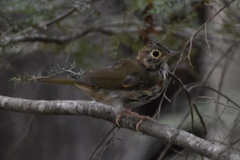
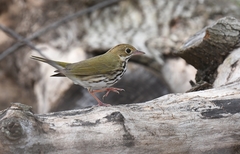
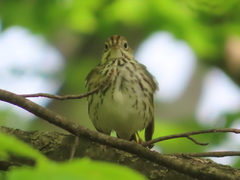
The ovenbird (Seiurus aurocapilla) is a small songbird of the New World warbler family Parulidae. It is the only species placed in the genus Seiurus. This migratory bird breeds in eastern North America and winters in Central America, many Caribbean islands, Florida and northern Venezuela.

Despite its name, it is not in the ovenbird family of birds. The ovenbird was formally described in 1766 by the Swedish naturalist Carl Linnaeus in the twelfth edition of his Systema Naturae under the binomial name Motacilla aurocapilla. The specific epithet combines Latin aurum meaning "gold" with -capillus meaning "-crowned". Linnaeus based his entry on "The golden-crowned thrush" that had been described and illustrated in 1758 by the English naturalist George Edwards in his book Gleanings of Natural History. Edwards had been given a specimen that had been collected on a ship off the coast of Hispanola. The ovenbird is now the only species placed in the genus Seiurus that was introduced by English zoologist William Swainson in 1827. Swainson did not specify the type species until a later publication in the same year. The genus name is from Ancient Greek σειουρος/seiouros meaning "wag... Wikipedia →

Sounds

Song0:33

United States · 2025

© Bobby Wilcox · XC1037293 · CC BY-NC-SA 4.0

Flight song0:14

Canada · 2025

© Andrew Spencer · XC1017604 · CC BY-NC-ND 4.0

Call0:41

Mexico · 2024

© Manuel Grosselet · XC943704 · CC BY-NC-SA 4.0

Global Distribution

Parks Where Found

# Park Country Daily sighting probability
1 Riding Mountain National Park 🇨🇦 Canada
~40%
2 Voyageurs National Park 🇺🇸 United States
~40%
3 Ciénaga de Zapata 🇨🇺 Cuba
~30%
4 Isle Royale National Park 🇺🇸 United States
~30%
5 Elk Island National Park 🇨🇦 Canada
~30%
6 Blue and John Crow Mountains National Park 🇯🇲 Jamaica
~30%
7 Shenandoah National Park 🇺🇸 United States
~30%
8 Point Pelee National Park 🇨🇦 Canada
~20%
9 Tikal National Park 🇬🇹 Guatemala
~20%
10 Arrecifes de Cozumel National Park 🇲🇽 Mexico
~20%
11 Biotopo Cerro Cahuí 🇬🇹 Guatemala
~20%
12 Pico Bonito National Park 🇭🇳 Honduras
~20%
13 Great Smoky Mountains National Park 🇺🇸 United States
~20%
14 Calakmul Biosphere Reserve 🇲🇽 Mexico
~20%
15 Cockscomb Basin Wildlife Sanctuary 🇧🇿 Belize
~20%
16 Cañón del Sumidero National Park 🇲🇽 Mexico
~20%
17 Acadia National Park 🇺🇸 United States
~20%
18 Gros Morne National Park 🇨🇦 Canada
~10%
19 Cape Breton Highlands National Park 🇨🇦 Canada
~10%
20 Sian Ka'an Biosphere Reserve 🇲🇽 Mexico
~10%
21 Cerro Azul Meámbar National Park 🇭🇳 Honduras
~10%
22 El Triunfo 🇲🇽 Mexico
~10%
23 Cusuco National Park 🇭🇳 Honduras
~10%
24 Everglades National Park 🇺🇸 United States
~10%
25 Celaque National Park 🇭🇳 Honduras
~10%
26 Los Haitises National Park 🇩🇴 Dominican Republic
~10%
27 Wood Buffalo National Park 🇨🇦 Canada
~10%
28 Rincón de la Vieja National Park 🇨🇷 Costa Rica
~10%
29 La Tigra National Park 🇭🇳 Honduras
~10%
30 Merritt Island National Wildlife Refuge 🇺🇸 United States
<5%
31 Congaree National Park 🇺🇸 United States
<5%
32 Lago de Yojoa 🇭🇳 Honduras
<5%
33 Carara National Park 🇨🇷 Costa Rica
<5%
34 Montes Azules Biosphere Reserve 🇲🇽 Mexico
<5%
35 Big Cypress National Preserve 🇺🇸 United States
<5%
36 Celestún Biosphere Reserve 🇲🇽 Mexico
<5%
37 Monteverde Cloud Forest Reserve 🇨🇷 Costa Rica
<5%
38 Tenorio Volcano National Park 🇨🇷 Costa Rica
<5%
39 Chagres National Park 🇵🇦 Panama
<5%
40 Arenal Volcano National Park 🇨🇷 Costa Rica
<5%
41 Santa Rosa National Park 🇨🇷 Costa Rica
<5%
42 La Amistad International Park (Panama) 🇵🇦 Panama
<5%
43 Poás Volcano National Park 🇨🇷 Costa Rica
<5%
44 Cahuita National Park 🇨🇷 Costa Rica
<5%
45 Ría Lagartos Biosphere Reserve 🇲🇽 Mexico
<5%
46 Gandoca-Manzanillo Wildlife Refuge 🇨🇷 Costa Rica
<5%
47 Bastimentos Island National Marine Park 🇵🇦 Panama
<5%
48 Braulio Carrillo National Park 🇨🇷 Costa Rica
<5%
49 Palo Verde National Park 🇨🇷 Costa Rica
<5%
50 Manuel Antonio National Park 🇨🇷 Costa Rica
<5%
51 Volcán Barú National Park 🇵🇦 Panama
<5%
52 Masaya Volcano National Park 🇳🇮 Nicaragua
<5%
53 Soberanía National Park 🇵🇦 Panama
<5%

Cities Where Found

# City Country Daily sighting probability
1 Santo Domingo 🇩🇴 Dominican Republic
~20%
2 Havana 🇨🇺 Cuba
~20%
3 Miami 🇺🇸 United States
~10%
4 New York City 🇺🇸 United States
~10%
5 Baltimore 🇺🇸 United States
~10%
6 Philadelphia 🇺🇸 United States
~10%
7 Chicago 🇺🇸 United States
~10%
8 Boston 🇺🇸 United States
~10%
9 Washington 🇺🇸 United States
<5%
10 Detroit 🇺🇸 United States
<5%

Zoos & Centres Where Found

# Zoo / Centre Country
1 National Zoological Park 🇺🇸 United States In captivity
2 Ralph Perkins II Wildlife Center and Woods Garden 🇺🇸 United States In captivity

Before you go

What are the chances of seeing an Ovenbird in Minneapolis [Saint Paul]?

Rare

Under 5% of wildlife watchers report an Ovenbird sighting in Minneapolis [Saint Paul] on a given day, based on 813 verified sightings from GBIF citizen-science data. It is the 101st most-seen of the 232 birds we can rate there. Over three days the chance rises to about 10%, and over a week to about 20%, if each day is a fresh chance.

When is the best time to see an Ovenbird in Minneapolis [Saint Paul]?

May and September

In those months about 10% of wildlife watchers report an Ovenbird in Minneapolis [Saint Paul] on a given day, against under 5% in June–August and October–April, the lowest months. Those are among Minneapolis [Saint Paul]'s wettest months, with about 100 mm of rain a month against 20 mm in January.

What time of day is best to see an Ovenbird?

Between 8 and 11 am

Across all the parks we cover, that three-hour window holds the most Ovenbird sightings with a recorded time, and about 9 in 10 of them come between 6 am and 6 pm: it is a daytime animal.

Is Minneapolis [Saint Paul] the best place to see an Ovenbird?

12th of 31

Of the 31 cities where we can rate Ovenbird sightings, Minneapolis [Saint Paul] ranks 12th at under 5%. The best odds are in Santo Domingo (Dominican Republic, about 20%), Havana (Cuba, about 20%) and Miami (United States, about 10%).

Which relatives of the Ovenbird live in Minneapolis [Saint Paul]?

Same family: Parulidae

The closest relatives of the Ovenbird that you can see in Minneapolis [Saint Paul] (family Parulidae, New World Warblers) are Yellow-rumped Warbler (about 20%), Common Yellowthroat (about 20%) and American Redstart (about 10%), with each one's daily chance of a sighting.

Where does the Ovenbird sighting chance come from?

GBIF citizen-science records

It is estimated from how often the Ovenbird is recorded against all the birds logged in Minneapolis [Saint Paul] (813 verified sightings), calibrated against known sighting rates. Figures are rounded to the nearest 10% because citizen-science data supports honest approximations, not decimals, and months with records from fewer than five people show "—". How it works.

← Back to Minneapolis [Saint Paul]