Louisiana Waterthrush

Louisiana Waterthrush

Parkesia motacilla

Silhouette: Andy Wilson · PhyloPic

LCLeast ConcernNTVUENCR
Daily sighting probability <5% · Rare
at Volcán Barú National Park

In 3 days <5% in a week ~10%

21 Verified sightings at Volcán Barú National Park From 2019 to 2026
6,156 In all 46 parks
September Best month
☀️ Diurnal When it's spotted

About the Louisiana Waterthrush

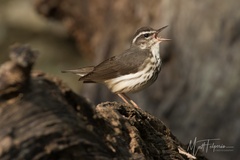
The Louisiana waterthrush (Parkesia motacilla) is a New World warbler, that breeds in eastern North America and winters in the West Indies and Central America. Plain brown above, it is white below, with black streaks and with buff flanks and undertail, distinguishing it from the closely related northern waterthrush. The habitats it prefers are streams and their surroundings, and other wet areas.

The Louisiana waterthrush breeds in eastern North America from southernmost Canada and south through the eastern United States, excluding Florida and the coast. It is migratory, wintering in Central America and the West Indies. This is a rare vagrant to the western United States. They are one of the earlier neotropical migrants to return to their breeding grounds in the spring, often completing their migration in late March or early April, which is almost two months before most other warblers reach their breeding grounds. They are also one of the earliest warblers to vacate their breeding grounds, with some departing as early as July; almost all will have left by late August.

The Louisiana waterthrush has a plain brown back and white underparts streaked with black... Wikipedia →

Sounds

Song0:57

United States · 2025

© Bobby Wilcox · XC1036413 · CC BY-NC-SA 4.0

Recording0:46

United States · 2023

© David A. Brinkman · XC805820 · CC BY-NC-SA 4.0

Call0:09

Mexico · 2022

© Manuel Grosselet · XC696427 · CC BY-NC-SA 4.0

Global Distribution

Parks Where Found

# Park Country Daily sighting probability
1 Los Haitises National Park 🇩🇴 Dominican Republic
~30%
2 Great Smoky Mountains National Park 🇺🇸 United States
~20%
3 Ciénaga de Zapata 🇨🇺 Cuba
~20%
4 Tikal National Park 🇬🇹 Guatemala
~10%
5 Montes Azules Biosphere Reserve 🇲🇽 Mexico
~10%
6 Cusuco National Park 🇭🇳 Honduras
~10%
7 Shenandoah National Park 🇺🇸 United States
~10%
8 El Triunfo 🇲🇽 Mexico
~10%
9 Los Quetzales National Park 🇨🇷 Costa Rica
~10%
10 Pico Bonito National Park 🇭🇳 Honduras
~10%
11 Cockscomb Basin Wildlife Sanctuary 🇧🇿 Belize
~10%
12 Blue and John Crow Mountains National Park 🇯🇲 Jamaica
~10%
13 Lago de Yojoa 🇭🇳 Honduras
~10%
14 Braulio Carrillo National Park 🇨🇷 Costa Rica
~10%
15 La Tigra National Park 🇭🇳 Honduras
<5%
16 Arenal Volcano National Park 🇨🇷 Costa Rica
<5%
17 Big Cypress National Preserve 🇺🇸 United States
<5%
18 Congaree National Park 🇺🇸 United States
<5%
19 Sian Ka'an Biosphere Reserve 🇲🇽 Mexico
<5%
20 Cumbres de Monterrey National Park 🇲🇽 Mexico
<5%
21 Calakmul Biosphere Reserve 🇲🇽 Mexico
<5%
22 Rincón de la Vieja National Park 🇨🇷 Costa Rica
<5%
23 Cañón del Sumidero National Park 🇲🇽 Mexico
<5%
24 Cerro Azul Meámbar National Park 🇭🇳 Honduras
<5%
25 Monteverde Cloud Forest Reserve 🇨🇷 Costa Rica
<5%
26 Arrecifes de Cozumel National Park 🇲🇽 Mexico
<5%
27 Tenorio Volcano National Park 🇨🇷 Costa Rica
<5%
28 Celestún Biosphere Reserve 🇲🇽 Mexico
<5%
29 Tapantí-Macizo de la Muerte National Park 🇨🇷 Costa Rica
<5%
30 Volcán Barú National Park 🇵🇦 Panama
<5%
31 La Amistad International Park (Panama) 🇵🇦 Panama
<5%
32 Manuel Antonio National Park 🇨🇷 Costa Rica
<5%
33 Point Pelee National Park 🇨🇦 Canada
<5%
34 Everglades National Park 🇺🇸 United States
<5%
35 Tayrona National Natural Park 🇨🇴 Colombia
<5%
36 Tortuguero National Park 🇨🇷 Costa Rica
<5%
37 Chagres National Park 🇵🇦 Panama
<5%
38 Chirripó National Park 🇨🇷 Costa Rica
<5%
39 Corcovado National Park 🇨🇷 Costa Rica
<5%
40 Soberanía National Park 🇵🇦 Panama
<5%
41 Parque Natural Metropolitano 🇵🇦 Panama
<5%
42 Merritt Island National Wildlife Refuge 🇺🇸 United States
<5%
43 Carara National Park 🇨🇷 Costa Rica
<5%
44 Piedras Blancas National Park 🇨🇷 Costa Rica
<5%
45 Poás Volcano National Park 🇨🇷 Costa Rica
<5%
46 Bastimentos Island National Marine Park 🇵🇦 Panama
<5%

Cities Where Found

# City Country Daily sighting probability
1 Havana 🇨🇺 Cuba
~10%
2 Santo Domingo 🇩🇴 Dominican Republic
~10%
3 San Pedro Sula 🇭🇳 Honduras
<5%
4 New York City 🇺🇸 United States
<5%
5 Puebla 🇲🇽 México
<5%
6 Mexico City 🇲🇽 México
<5%
7 Miami 🇺🇸 United States
<5%
8 Washington 🇺🇸 United States
<5%
9 Guadalajara 🇲🇽 México
<5%
10 San Antonio 🇺🇸 United States
<5%

Before you go

What are the chances of seeing a Louisiana Waterthrush in Volcán Barú National Park?

Rare

Under 5% of wildlife watchers report a Louisiana Waterthrush sighting in Volcán Barú National Park on a given day, based on 21 verified sightings from GBIF citizen-science data from 2019 to 2026. It is the 201st most-seen of the 296 birds we can rate there. Over three days the chance rises to under 5%, and over a week to about 10%, if each day is a fresh chance.

When is the best time to see a Louisiana Waterthrush in Volcán Barú National Park?

September

In that month about 10% of wildlife watchers report a Louisiana Waterthrush in Volcán Barú National Park on a given day, against under 5% in October to August, the lowest months.

What time of day is best to see a Louisiana Waterthrush?

Between 8 and 11 am

Across all the parks we cover, that three-hour window holds the most Louisiana Waterthrush sightings with a recorded time, and about 9 in 10 of them come between 6 am and 6 pm: it is a daytime animal.

Where does the Louisiana Waterthrush sighting chance come from?

GBIF citizen-science records

It is estimated from how often the Louisiana Waterthrush is recorded against all the birds logged in Volcán Barú National Park (21 verified sightings from 2019 to 2026), calibrated against known sighting rates. Figures are rounded to the nearest 10% because citizen-science data supports honest approximations, not decimals, and months with records from fewer than five people show "—". How it works.

← Back to Volcán Barú National Park
