


Completed


Eurasian Coot
Fulica atra
Silhouette: Andy Wilson · PhyloPic
- KingdomAnimalia (Animals)
- PhylumChordata (Chordates)
- ClassAves (Birds)
- OrderGruiformes (Cranes, Rails, and Allies)
- FamilyRallidae (Rails, Gallinules, and Coots)
- GenusFulica (Coots)
- SpeciesFulica atra (Eurasian Coot)
In 3 days ~30% in a week ~50%
79 Verified sightings at Białowieża National Park From 2019 to 2026
14,839 In all 43 parks
August Best month
☀️ Diurnal When it's spotted
About the Eurasian Coot
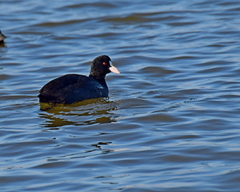
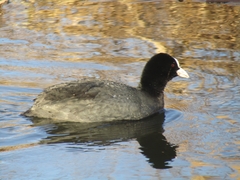
The Eurasian coot (Fulica atra), also known as the common coot or Australian coot, is a member of the rail and crake bird family, the Rallidae. It is found in Europe, Asia, Australia, New Zealand and parts of North Africa. It has a slaty-black body, a glossy black head and a white bill with a white frontal shield. The sexes are similar in appearance.
The Eurasian coot was formally described by the Swedish naturalist Carl Linnaeus in 1758 in the tenth edition of his Systema Naturae under its current binomial name Fulica atra. Linnaeus specified the locality as Europe but this is now restricted to Sweden. The binomial name is from Latin: Fulica means 'coot', and atra means 'black'.
Four subspecies are recognised: An extinct subspecies F. atra pontica has been described from the Chalcolithic (around 4800–4400 BP) from the Bulgarian Black Sea Coast. The Eurasian coot is 36–38... Wikipedia →
Recent sightings of Eurasian Coot in Białowieża National Park
LIVEiNaturalistGlobal Distribution
Parks Where Found
Cities Where Found
| # | City | Country | Daily sighting probability |
|---|---|---|---|
| 1 | Amsterdam | 🇳🇱 Netherlands | |
| 2 | Rotterdam [The Hague] | 🇳🇱 Netherlands | |
| 3 | Copenhagen | 🇩🇰 Denmark | |
| 4 | London | 🇬🇧 United Kingdom | |
| 5 | Turin | 🇮🇹 Italy | |
| 6 | Liverpool | 🇬🇧 United Kingdom | |
| 7 | Birmingham | 🇬🇧 United Kingdom | |
| 8 | Perth | 🇦🇺 Australia | |
| 9 | Brussels | 🇧🇪 Belgium | |
| 10 | Melbourne | 🇦🇺 Australia |
Zoos & Centres Where Found
| # | Zoo / Centre | Country | |
|---|---|---|---|
| 1 | Whipsnade Zoo | 🇬🇧 United Kingdom | |
| 2 | Beijing Wildlife Park | 🇨🇳 China | |
| 3 | Szeged Zoo | 🇭🇺 Hungary | |
| 4 | Cleland Wildlife Park | 🇦🇺 Australia | |
| 5 | Mansfield Zoo | 🇦🇺 Australia | |
| 6 | Budapest Zoo & Botanical Garden | 🇭🇺 Hungary | |
| 7 | Marshalls Animal Park | 🇳🇿 New Zealand | |
| 8 | Valencia Bioparc | 🇪🇸 Spain | |
| 9 | Moonlit Sanctuary Wildlife Conservation Park | 🇦🇺 Australia | |
| 10 | Adelaide Zoo | 🇦🇺 Australia | |
| 11 | The Menagerie, Stowe Gardens | 🇬🇧 United Kingdom | |
| 12 | Vodní park Čabárna | 🇨🇿 Czechia |
Closest Relatives at Białowieża National Park


Before you go
What are the chances of seeing a Eurasian Coot in Białowieża National Park?
With luck
About 10% of wildlife watchers report a Eurasian Coot sighting in Białowieża National Park on a given day, based on 79 verified sightings from GBIF citizen-science data from 2019 to 2026. It is the 103rd most-seen of the 182 birds we can rate there. Over three days the chance rises to about 30%, and over a week to about 50%, if each day is a fresh chance.
When is the best time to see a Eurasian Coot in Białowieża National Park?
April and August–September
In those months about 20% of wildlife watchers report a Eurasian Coot in Białowieża National Park on a given day, against under 5% in July and October–February, the lowest months.
What time of day is best to see a Eurasian Coot?
Between 10 am and 1 pm
Across all the parks we cover, that three-hour window holds the most Eurasian Coot sightings with a recorded time, and about 9 in 10 of them come between 6 am and 6 pm: it is a daytime animal.
Is Białowieża National Park the best place to see a Eurasian Coot?
21st of 43
Of the 43 parks where we can rate Eurasian Coot sightings, Białowieża National Park ranks 21st at about 10%. The best odds are in Doñana National Park (Spain, about 70%), Keoladeo National Park (India, about 70%) and Camargue (France, about 60%). All parks ranked.
Which relatives of the Eurasian Coot live in Białowieża National Park?
Same family: Rallidae
The closest relatives of the Eurasian Coot that you can see in Białowieża National Park (family Rallidae, Rails, Gallinules, and Coots) are Corn Crake (about 20%) and Water Rail (about 10%), with each one's daily chance of a sighting.
Where does the Eurasian Coot sighting chance come from?
GBIF citizen-science records
It is estimated from how often the Eurasian Coot is recorded against all the birds logged in Białowieża National Park (79 verified sightings from 2019 to 2026), calibrated against known sighting rates. Figures are rounded to the nearest 10% because citizen-science data supports honest approximations, not decimals, and months with records from fewer than five people show "—". How it works.
