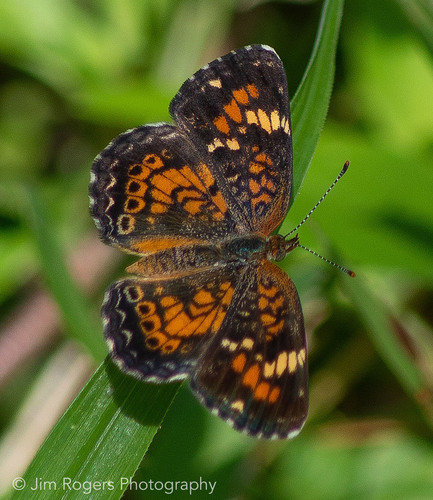
Julia Heliconian

Julia Heliconian

Dryas iulia

Daily sighting probability <5% · Rare
at Austin

In 3 days ~10% in a week ~30%

57 Verified sightings at Austin
1,913 In all 50 parks From 2019 to 2026
August Best month
☀️ Diurnal When it's spotted

About the Julia Heliconian

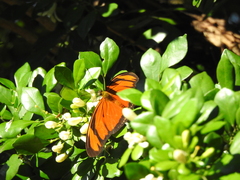
Dryas iulia (often incorrectly spelled julia), commonly called the Julia butterfly, Julia heliconian, the flame, or flambeau, is a species of brush-footed (or nymphalid) butterfly. The sole representative of its genus Dryas, it is native from Brazil to southern Texas and Florida, and in summer can sometimes be found as far north as eastern Nebraska. Over 15 subspecies have been described.

Its wingspan ranges from 82 to 92 mm, and it is colored orange (brighter in male specimens) with black markings; this species is somewhat unpalatable to birds and belongs to the "orange" Müllerian mimicry complex. This butterfly is a fast flier and frequents clearings, paths, and margins of forests and woodlands. It feeds on the nectar of flowers, such as lantanas (Lantana) and shepherd's-needle (Scandix pecten-veneris), and drinks the tears of caiman, the eye of which the butterfly irritates to produce tears. Its caterpillar feeds on leaves of passion vines, including Passiflora affinis and yellow passionflower (P. lutea) in Texas.

Its mating behavior is complex and involves a prolonged courtship whose outcome appears to be controlled by the female. This raises questions pertaining to the occurrence of the evolution of sexual conflict. The species is popular in butterfly houses because it is long-lived and active throughout the day. However, the caterpillars are spiky and may cause a skin rash. Wikipedia →

Global Distribution

Parks Where Found

# Park Country Daily sighting probability
1 Rincón de la Vieja National Park 🇨🇷 Costa Rica
~50%
2 Los Haitises National Park 🇩🇴 Dominican Republic
~40%
3 Iguazú National Park 🇦🇷 Argentina
~40%
4 Iguaçu National Park 🇧🇷 Brazil
~40%
5 Ría Lagartos Biosphere Reserve 🇲🇽 Mexico
~40%
6 Everglades National Park 🇺🇸 United States
~40%
7 Brownsberg Nature Park 🇸🇷 Suriname
~30%
8 Blue and John Crow Mountains National Park 🇯🇲 Jamaica
~30%
9 Cockscomb Basin Wildlife Sanctuary 🇧🇿 Belize
~30%
10 Parque Estadual Encontro das Águas 🇧🇷 Brazil
~30%
11 Biotopo Cerro Cahuí 🇬🇹 Guatemala
~20%
12 Iberá National Park 🇦🇷 Argentina
~20%
13 Tambopata National Reserve 🇵🇪 Peru
~20%
14 Carara National Park 🇨🇷 Costa Rica
~20%
15 Piedras Blancas National Park 🇨🇷 Costa Rica
~20%
16 Manu National Park 🇵🇪 Peru
~20%
17 Ostional Wildlife Refuge 🇨🇷 Costa Rica
~20%
18 Lago de Yojoa 🇭🇳 Honduras
~20%
19 Cabo Blanco Absolute Nature Reserve 🇨🇷 Costa Rica
~20%
20 Arrecifes de Cozumel National Park 🇲🇽 Mexico
~20%
21 Montes Azules Biosphere Reserve 🇲🇽 Mexico
~20%
22 Tortuguero National Park 🇨🇷 Costa Rica
~20%
23 Soberanía National Park 🇵🇦 Panama
~20%
24 Yasuní National Park 🇪🇨 Ecuador
~20%
25 Cuyabeno Wildlife Reserve 🇪🇨 Ecuador
~20%
26 Cumbres de Monterrey National Park 🇲🇽 Mexico
~20%
27 Arenal Volcano National Park 🇨🇷 Costa Rica
~20%
28 Braulio Carrillo National Park 🇨🇷 Costa Rica
~20%
29 Amacayacu National Natural Park 🇨🇴 Colombia
~20%
30 Tenorio Volcano National Park 🇨🇷 Costa Rica
~20%
31 Tayrona National Natural Park 🇨🇴 Colombia
~20%
32 Podocarpus National Park 🇪🇨 Ecuador
~20%
33 Tikal National Park 🇬🇹 Guatemala
~10%
34 Bastimentos Island National Marine Park 🇵🇦 Panama
~10%
35 Cahuita National Park 🇨🇷 Costa Rica
~10%
36 Manuel Antonio National Park 🇨🇷 Costa Rica
~10%
37 Sian Ka'an Biosphere Reserve 🇲🇽 Mexico
~10%
38 Calakmul Biosphere Reserve 🇲🇽 Mexico
~10%
39 Chirripó National Park 🇨🇷 Costa Rica
~10%
40 Tijuca National Park 🇧🇷 Brazil
~10%
41 Marino Ballena National Park 🇨🇷 Costa Rica
~10%
42 Monteverde Cloud Forest Reserve 🇨🇷 Costa Rica
~10%
43 La Amistad International Park (Panama) 🇵🇦 Panama
~10%
44 Parque Natural Metropolitano 🇵🇦 Panama
~10%
45 Farallones de Cali National Natural Park 🇨🇴 Colombia
~10%
46 Cañón del Sumidero National Park 🇲🇽 Mexico
~10%
47 Corcovado National Park 🇨🇷 Costa Rica
~10%
48 Big Cypress National Preserve 🇺🇸 United States
~10%
49 Tapantí-Macizo de la Muerte National Park 🇨🇷 Costa Rica
~10%
50 Merritt Island National Wildlife Refuge 🇺🇸 United States
~10%

Cities Where Found

# City Country Daily sighting probability
1 Curitiba 🇧🇷 Brazil
~30%
2 Porto Alegre 🇧🇷 Brazil
~30%
3 Santa Cruz de la Sierra 🇧🇴 Bolivia
~30%
4 Belém 🇧🇷 Brazil
~30%
5 San Pedro Sula 🇭🇳 Honduras
~30%
6 San José 🇨🇷 Costa Rica
~20%
7 Singapore 🇸🇬 Singapore
~20%
8 Kuala Lumpur 🇲🇾 Malaysia
~20%
9 Santo Domingo 🇩🇴 Dominican Republic
~20%
10 João Pessoa 🇧🇷 Brazil
~20%

Before you go

What are the chances of seeing a Julia Heliconian in Austin?

Rare

Under 5% of wildlife watchers report a Julia Heliconian sighting in Austin on a given day, based on 57 verified sightings from GBIF citizen-science data. It is the 452nd most-seen of the 1624 insects we can rate there. Over three days the chance rises to about 10%, and over a week to about 30%, if each day is a fresh chance.

When is the best time to see a Julia Heliconian in Austin?

August to November

In those months about 10% of wildlife watchers report a Julia Heliconian in Austin on a given day, against under 5% in December to July, the lowest months.

What time of day is best to see a Julia Heliconian?

Between 10 am and 1 pm

Across all the parks we cover, that three-hour window holds the most Julia Heliconian sightings with a recorded time, and about 9 in 10 of them come between 6 am and 6 pm: it is a daytime animal.

Is Austin the best place to see a Julia Heliconian?

30th of 34

Of the 34 cities where we can rate Julia Heliconian sightings, Austin ranks 30th at under 5%. The best odds are in Curitiba (Brazil, about 30%), Porto Alegre (Brazil, about 30%) and Santa Cruz de la Sierra (Bolivia, about 30%).

Which relatives of the Julia Heliconian live in Austin?

Same family: Nymphalidae

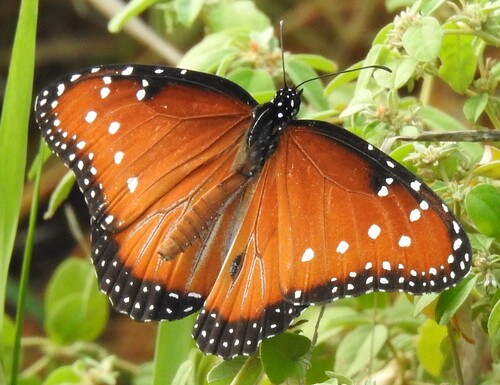
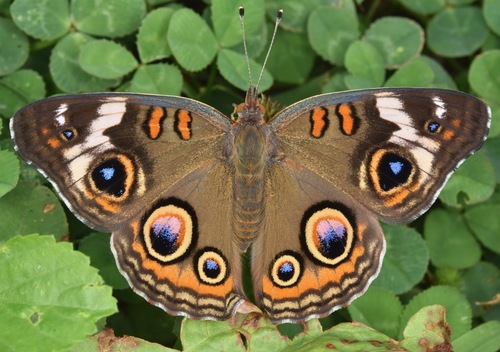
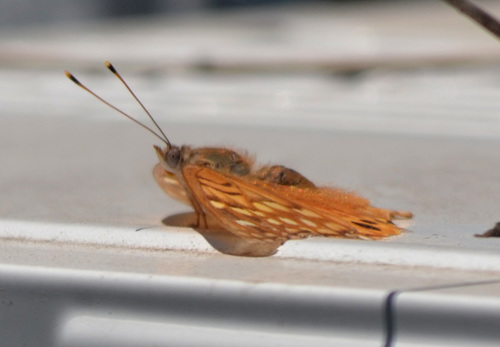
The closest relatives of the Julia Heliconian that you can see in Austin (family Nymphalidae, Brush-footed Butterflies) are Gulf Fritillary (about 40%), Monarch (about 30%) and Queen (about 30%), with each one's daily chance of a sighting.

Where does the Julia Heliconian sighting chance come from?

GBIF citizen-science records

It is estimated from how often the Julia Heliconian is recorded against all the insects logged in Austin (57 verified sightings), calibrated against known sighting rates. Figures are rounded to the nearest 10% because citizen-science data supports honest approximations, not decimals, and months with records from fewer than five people show "—". How it works.

← Back to Austin