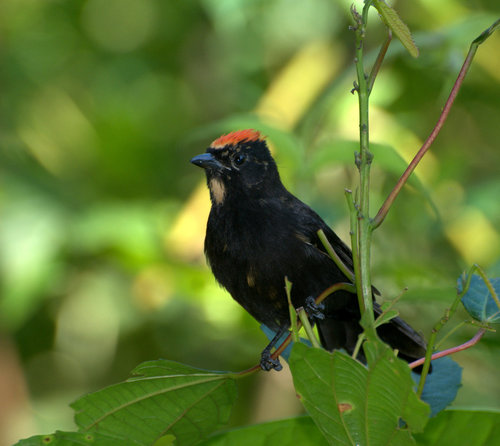
Green Honeycreeper

Green Honeycreeper

Chlorophanes spiza

Silhouette: Sheatherius · PhyloPic

LCLeast ConcernNTVUENCR
Daily sighting probability <5% · Rare
at Santos

In 3 days <5%

7 Verified sightings at Santos
28,185 In all 43 parks From 2019 to 2026
November Best month
☀️ Diurnal When it's spotted

About the Green Honeycreeper

The green honeycreeper (Chlorophanes spiza) is a species of bird in the family Thraupidae, the tanagers and allies. It is found in the tropical New World from southern Mexico south to Brazil, and on Trinidad. The green honeycreeper was formally described in 1758 by the Swedish naturalist Carl Linnaeus in the tenth edition of his Systema Naturae under the name Motacilla spiza. He specified the type locality as Suriname. The specific epithet is the Ancient Greek word for a common finch. Linnaeus based his description on the "green black-cap fly-catcher" that the English naturalist George Edwards had described and illustrated in his 1743 book A Natural History of Uncommon Birds. In 1853 the German naturalist Ludwig Reichenbach erected the genus Chlorophanes to accommodate the green honeycreeper. The name combines the Ancient Greek khlōros meaning green with -phanēs meaning showing.

For a time in the twentieth century the green honeycreeper and the golden-collared honeycreeper (Iridophanes pulcherrimus) were treated as conspecific. The genus Chlorphanes was placed in the family Coerebidae that was later merged into Thraupidae. A comprehensive molecular phylogenetic... Wikipedia →

Sounds

Call0:26

Ecuador · 2025

© Scott Olmstead · XC1064617 · CC BY-NC-SA 4.0

Song0:49

Colombia · 2019

© Juan Díaz Alván · XC534685 · CC BY-NC-SA 4.0

Call0:25

Brazil · 2025

© JAYRSON ARAUJO DE OLIVEIRA · XC1045026 · CC BY-NC-SA 4.0

Global Distribution

Parks Where Found

# Park Country Daily sighting probability
1 Farallones de Cali National Natural Park 🇨🇴 Colombia
~70%
2 Chagres National Park 🇵🇦 Panama
~60%
3 Arenal Volcano National Park 🇨🇷 Costa Rica
~50%
4 Brownsberg Nature Park 🇸🇷 Suriname
~50%
5 Tenorio Volcano National Park 🇨🇷 Costa Rica
~40%
6 Pico Bonito National Park 🇭🇳 Honduras
~30%
7 Braulio Carrillo National Park 🇨🇷 Costa Rica
~30%
8 Chirripó National Park 🇨🇷 Costa Rica
~30%
9 Soberanía National Park 🇵🇦 Panama
~20%
10 Podocarpus National Park 🇪🇨 Ecuador
~20%
11 Yasuní National Park 🇪🇨 Ecuador
~20%
12 Bastimentos Island National Marine Park 🇵🇦 Panama
~20%
13 Piedras Blancas National Park 🇨🇷 Costa Rica
~20%
14 Darién National Park 🇵🇦 Panama
~20%
15 Henri Pittier National Park 🇻🇪 Venezuela
~20%
16 Cockscomb Basin Wildlife Sanctuary 🇧🇿 Belize
~20%
17 San Lorenzo Protected Forest 🇵🇦 Panama
~10%
18 Manu National Park 🇵🇪 Peru
~10%
19 Carara National Park 🇨🇷 Costa Rica
~10%
20 Tapantí-Macizo de la Muerte National Park 🇨🇷 Costa Rica
~10%
21 Cusuco National Park 🇭🇳 Honduras
~10%
22 Corcovado National Park 🇨🇷 Costa Rica
~10%
23 La Amistad International Park (Panama) 🇵🇦 Panama
~10%
24 Parque Natural Metropolitano 🇵🇦 Panama
~10%
25 Marino Ballena National Park 🇨🇷 Costa Rica
~10%
26 Cerro Azul Meámbar National Park 🇭🇳 Honduras
~10%
27 Cuyabeno Wildlife Reserve 🇪🇨 Ecuador
~10%
28 Sierra de la Macarena National Park 🇨🇴 Colombia
~10%
29 Gandoca-Manzanillo Wildlife Refuge 🇨🇷 Costa Rica
<5%
30 Rincón de la Vieja National Park 🇨🇷 Costa Rica
<5%
31 Poás Volcano National Park 🇨🇷 Costa Rica
<5%
32 Cahuita National Park 🇨🇷 Costa Rica
<5%
33 Montes Azules Biosphere Reserve 🇲🇽 Mexico
<5%
34 Tambopata National Reserve 🇵🇪 Peru
<5%
35 Lago de Yojoa 🇭🇳 Honduras
<5%
36 Tikal National Park 🇬🇹 Guatemala
<5%
37 Anavilhanas National Park 🇧🇷 Brazil
<5%
38 Amacayacu National Natural Park 🇨🇴 Colombia
<5%
39 Manuel Antonio National Park 🇨🇷 Costa Rica
<5%
40 Tortuguero National Park 🇨🇷 Costa Rica
<5%
41 Volcán Barú National Park 🇵🇦 Panama
<5%
42 Los Nevados National Natural Park 🇨🇴 Colombia
<5%
43 Monteverde Cloud Forest Reserve 🇨🇷 Costa Rica
<5%

Cities Where Found

# City Country Daily sighting probability
1 Cali 🇨🇴 Colombia
<5%
2 Panama City 🇵🇦 Panama
<5%
3 Santos 🇧🇷 Brazil
<5%
4 Caracas 🇻🇪 Venezuela
<5%
5 San José 🇨🇷 Costa Rica
<5%

Zoos & Centres Where Found

# Zoo / Centre Country
1 Woodland Park Zoo 🇺🇸 United States In captivity
2 Memphis Zoo 🇺🇸 United States In captivity
3 La Paz Waterfall Gardens 🇨🇷 Costa Rica In captivity
4 Como Park Zoo and Conservatory 🇺🇸 United States In captivity
5 Como Zoo 🇺🇸 United States In captivity
6 Bird Kingdom 🇨🇦 Canada In captivity
7 Key West Butterfly and Nature Conservatory 🇺🇸 United States In captivity

Before you go

What are the chances of seeing a Green Honeycreeper in Santos?

Rare

Under 5% of wildlife watchers report a Green Honeycreeper sighting in Santos on a given day, based on 7 verified sightings from GBIF citizen-science data. It is the 174th most-seen of the 203 birds we can rate there. Over three days the chance rises to under 5%, if each day is a fresh chance.

When is the best time to see a Green Honeycreeper in Santos?

Any time of year

In every month with enough records, under 5% of wildlife watchers report a Green Honeycreeper in Santos on a given day, so our monthly data shows no clear season.

What time of day is best to see a Green Honeycreeper?

Between noon and 3 pm

Across all the parks we cover, that three-hour window holds the most Green Honeycreeper sightings with a recorded time, and about 9 in 10 of them come between 6 am and 6 pm: it is a daytime animal.

Is Santos the best place to see a Green Honeycreeper?

Among the best

Of the 5 cities where we can rate Green Honeycreeper sightings, Santos ranks 3rd at under 5%, level with the leaders once rounded. The best odds are in Cali (Colombia, under 5%) and Panama City (Panama, under 5%).

Which relatives of the Green Honeycreeper live in Santos?

Same family: Thraupidae

The closest relatives of the Green Honeycreeper that you can see in Santos (family Thraupidae, Tanagers and Allies) are Palm Tanager (about 80%), Bananaquit (about 70%) and Sayaca Tanager (about 60%), with each one's daily chance of a sighting.

Where does the Green Honeycreeper sighting chance come from?

GBIF citizen-science records

It is estimated from how often the Green Honeycreeper is recorded against all the birds logged in Santos (7 verified sightings), calibrated against known sighting rates. Figures are rounded to the nearest 10% because citizen-science data supports honest approximations, not decimals, and months with records from fewer than five people show "—". How it works.

← Back to Santos