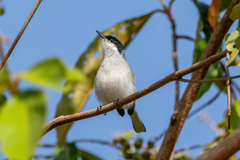
Tropical Gnatcatcher

Tropical Gnatcatcher

Polioptila plumbea

Silhouette: Sheatherius · PhyloPic

LCLeast ConcernNTVUENCR
Daily sighting probability ~10% · With luck
at Corcovado National Park

In 3 days ~40% in a week ~70%

416 Verified sightings at Corcovado National Park From 2019 to 2026
12,078 In all 41 parks
June Best month
☀️ Diurnal When it's spotted

About the Tropical Gnatcatcher

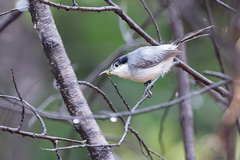
The tropical gnatcatcher (Polioptila plumbea) is a small active insectivorous songbird, which is a resident species throughout a large part of northern South America. It was formerly considered as conspecific with the white-browed gnatcatcher and the Marañón gnatcatcher.

The tropical gnatcatcher was formally described in 1788 by the German naturalist Johann Friedrich Gmelin in his revised and expanded edition of Carl Linnaeus's Systema Naturae. He placed it in the genus Todus, coined the binomial name Todus plumbeus and specified the type locality as Suriname in South America. The specific epithet plumbeus is Latin meaning "plumbeous" or "lead-coloured". Gmelin based his account on the "Plumbeous tody" that had been described in 1782 by the English ornithologist John Latham in his book A General Synopsis of Birds. Latham had examined a specimen in the collection of the British Museum. The tropical gnatcatcher is now one of 17 gnatcatchers placed in the genus Polioptila that was introduced in 1855 by the English zoologist Philip Sclater.

The tropical gnatcatcher was formerly considered to conspecific with the white-browed gnatcatcher (Polioptila bilineata) and the Marañón... Wikipedia →

Sounds

Song0:33

Brazil · 2026

© JAYRSON ARAUJO DE OLIVEIRA · XC1186276 · CC BY-NC-SA 4.0

Call0:29

Brazil · 2023

© Mateus Gonçalves Santos · XC804362 · CC BY-NC-SA 4.0

Chamado1:01

Brazil · 2015

© Caio Brito · XC427835 · CC BY-NC-SA 4.0

Global Distribution

Parks Where Found

# Park Country Daily sighting probability
1 Coiba National Park 🇵🇦 Panama
~50%
2 Machalilla National Park 🇪🇨 Ecuador
~50%
3 Bastimentos Island National Marine Park 🇵🇦 Panama
~30%
4 Soberanía National Park 🇵🇦 Panama
~30%
5 San Lorenzo Protected Forest 🇵🇦 Panama
~30%
6 Santa Rosa National Park 🇨🇷 Costa Rica
~20%
7 Gandoca-Manzanillo Wildlife Refuge 🇨🇷 Costa Rica
~20%
8 Chapada Diamantina National Park 🇧🇷 Brazil
~20%
9 Carara National Park 🇨🇷 Costa Rica
~20%
10 Chagres National Park 🇵🇦 Panama
~20%
11 Piedras Blancas National Park 🇨🇷 Costa Rica
~20%
12 Cahuita National Park 🇨🇷 Costa Rica
~20%
13 Pico Bonito National Park 🇭🇳 Honduras
~20%
14 Corcovado National Park 🇨🇷 Costa Rica
~10%
15 La Amistad International Park (Panama) 🇵🇦 Panama
~10%
16 Cabo Blanco Absolute Nature Reserve 🇨🇷 Costa Rica
~10%
17 Calakmul Biosphere Reserve 🇲🇽 Mexico
~10%
18 Rincón de la Vieja National Park 🇨🇷 Costa Rica
~10%
19 Parque Natural Metropolitano 🇵🇦 Panama
~10%
20 Tikal National Park 🇬🇹 Guatemala
~10%
21 Henri Pittier National Park 🇻🇪 Venezuela
~10%
22 Cusuco National Park 🇭🇳 Honduras
~10%
23 Anavilhanas National Park 🇧🇷 Brazil
~10%
24 Braulio Carrillo National Park 🇨🇷 Costa Rica
~10%
25 Las Baulas Marine National Park 🇨🇷 Costa Rica
~10%
26 Marino Ballena National Park 🇨🇷 Costa Rica
~10%
27 Palo Verde National Park 🇨🇷 Costa Rica
~10%
28 Manuel Antonio National Park 🇨🇷 Costa Rica
~10%
29 Darién National Park 🇵🇦 Panama
<5%
30 Tapantí-Macizo de la Muerte National Park 🇨🇷 Costa Rica
<5%
31 Tortuguero National Park 🇨🇷 Costa Rica
<5%
32 Montes Azules Biosphere Reserve 🇲🇽 Mexico
<5%
33 Chirripó National Park 🇨🇷 Costa Rica
<5%
34 Ostional Wildlife Refuge 🇨🇷 Costa Rica
<5%
35 Cockscomb Basin Wildlife Sanctuary 🇧🇿 Belize
<5%
36 Sian Ka'an Biosphere Reserve 🇲🇽 Mexico
<5%
37 Tenorio Volcano National Park 🇨🇷 Costa Rica
<5%
38 Arenal Volcano National Park 🇨🇷 Costa Rica
<5%
39 Yasuní National Park 🇪🇨 Ecuador
<5%
40 Monteverde Cloud Forest Reserve 🇨🇷 Costa Rica
<5%
41 Poás Volcano National Park 🇨🇷 Costa Rica
<5%

Cities Where Found

# City Country Daily sighting probability
1 Guayaquil 🇪🇨 Ecuador
~30%
2 Valencia 🇻🇪 Venezuela
~20%
3 Maracaibo 🇻🇪 Venezuela
~20%
4 Fortaleza 🇧🇷 Brazil
~10%
5 João Pessoa 🇧🇷 Brazil
~10%
6 Natal 🇧🇷 Brazil
~10%
7 Belém 🇧🇷 Brazil
<5%
8 Salvador 🇧🇷 Brazil
<5%
9 Caracas 🇻🇪 Venezuela
<5%
10 Maceió 🇧🇷 Brazil
<5%

Before you go

What are the chances of seeing a Tropical Gnatcatcher in Corcovado National Park?

With luck

About 10% of wildlife watchers report a Tropical Gnatcatcher sighting in Corcovado National Park on a given day, based on 416 verified sightings from GBIF citizen-science data from 2019 to 2026. It is the 97th most-seen of the 332 birds we can rate there. Over three days the chance rises to about 40%, and over a week to about 70%, if each day is a fresh chance.

When is the best time to see a Tropical Gnatcatcher in Corcovado National Park?

June

In that month about 30% of wildlife watchers report a Tropical Gnatcatcher in Corcovado National Park on a given day, against under 5% in October, the lowest month.

What time of day is best to see a Tropical Gnatcatcher?

Between 7 and 10 am

Across all the parks we cover, that three-hour window holds the most Tropical Gnatcatcher sightings with a recorded time, and about 9 in 10 of them come between 6 am and 6 pm: it is a daytime animal.

Where does the Tropical Gnatcatcher sighting chance come from?

GBIF citizen-science records

It is estimated from how often the Tropical Gnatcatcher is recorded against all the birds logged in Corcovado National Park (416 verified sightings from 2019 to 2026), calibrated against known sighting rates. Figures are rounded to the nearest 10% because citizen-science data supports honest approximations, not decimals, and months with records from fewer than five people show "—". How it works.

← Back to Corcovado National Park