Smooth-billed Ani

Smooth-billed Ani

Crotophaga ani

Silhouette: Andy Wilson · PhyloPic

LCLeast ConcernNTVUENCR
Daily sighting probability ~20% · Possible
at Campinas

In 3 days ~50% in a week ~80%

84 Verified sightings at Campinas
21,600 In all 50 parks From 2019 to 2026
March Best month
☀️ Diurnal When it's spotted

About the Smooth-billed Ani

The smooth-billed ani (Crotophaga ani) is a bird in the cuckoo family. It is a resident breeding species from southern Florida, the Caribbean, parts of Central America, south to western Ecuador, Brazil, northern Argentina and southern Chile. It was introduced to Galápagos around the 1960s and is potentially impacting native and endemic species across the archipelago.

The smooth-billed ani was described and illustrated in 1648 by the German naturalist Georg Marcgrave in his Historia Naturalis Brasiliae. He used the name "Ani" but did not explain the origin of the word. It probably comes from the word Anim in the Tupi language which means "social bird". In 1756 the Irish physician Patrick Browne used the name Crotophaga for the species in his The Civil and Natural History of Jamaica. Browne's name combines the Ancient Greek krotōn meaning "tick" with -phagos meaning "-eating". Browne wrote that the smooth-billed anis "live chiefly upon ticks and other small vermin; and may be frequently seen jumping about all cows and oxen in the fields". When the Swedish naturalist Carl Linnaeus updated his Systema Naturae for the tenth edition in 1758 he included the smooth-billed ani... Wikipedia →

Sounds

Call0:12

Brazil · 2026

© JAYRSON ARAUJO DE OLIVEIRA · XC1163759 · CC BY-NC-SA 4.0

Alarm call1:15

Ecuador · 2026

© Leander Khil · XC1156335 · CC BY-NC-SA 4.0

Song0:04

Brazil · 2021

© Ricardo José Mitidieri · XC645167 · CC BY-NC-SA 4.0

Global Distribution

Parks Where Found

# Park Country Daily sighting probability
1 Parque Estadual Encontro das Águas 🇧🇷 Brazil
~70%
2 Galápagos Islands 🇪🇨 Ecuador
~50%
3 Caroni Swamp 🇹🇹 Trinidad and Tobago
~40%
4 Los Haitises National Park 🇩🇴 Dominican Republic
~40%
5 Piedras Blancas National Park 🇨🇷 Costa Rica
~40%
6 San Lorenzo Protected Forest 🇵🇦 Panama
~30%
7 Iberá National Park 🇦🇷 Argentina
~30%
8 Chapada dos Guimarães National Park 🇧🇷 Brazil
~30%
9 Yasuní National Park 🇪🇨 Ecuador
~30%
10 Amacayacu National Natural Park 🇨🇴 Colombia
~30%
11 Emas National Park 🇧🇷 Brazil
~30%
12 Iguazú National Park 🇦🇷 Argentina
~30%
13 Serra da Canastra National Park 🇧🇷 Brazil
~30%
14 Ciénaga de Zapata 🇨🇺 Cuba
~30%
15 Soberanía National Park 🇵🇦 Panama
~30%
16 Iguaçu National Park 🇧🇷 Brazil
~30%
17 Manu National Park 🇵🇪 Peru
~30%
18 Main Ridge Forest Reserve 🇹🇹 Trinidad and Tobago
~30%
19 Sierra de la Macarena National Park 🇨🇴 Colombia
~20%
20 Cuyabeno Wildlife Reserve 🇪🇨 Ecuador
~20%
21 Jaragua National Park 🇩🇴 Dominican Republic
~20%
22 Chapada Diamantina National Park 🇧🇷 Brazil
~20%
23 Blue and John Crow Mountains National Park 🇯🇲 Jamaica
~10%
24 Anavilhanas National Park 🇧🇷 Brazil
~10%
25 El Impenetrable National Park 🇦🇷 Argentina
~10%
26 Marino Ballena National Park 🇨🇷 Costa Rica
~10%
27 Farallones de Cali National Natural Park 🇨🇴 Colombia
~10%
28 Tambopata National Reserve 🇵🇪 Peru
~10%
29 Utría National Natural Park 🇨🇴 Colombia
~10%
30 Henri Pittier National Park 🇻🇪 Venezuela
~10%
31 Corcovado National Park 🇨🇷 Costa Rica
~10%
32 Machalilla National Park 🇪🇨 Ecuador
~10%
33 Darién National Park 🇵🇦 Panama
~10%
34 Serra dos Órgãos National Park 🇧🇷 Brazil
~10%
35 Manuel Antonio National Park 🇨🇷 Costa Rica
~10%
36 Tayrona National Natural Park 🇨🇴 Colombia
<5%
37 Los Nevados National Natural Park 🇨🇴 Colombia
<5%
38 Chagres National Park 🇵🇦 Panama
<5%
39 Brownsberg Nature Park 🇸🇷 Suriname
<5%
40 Itatiaia National Park 🇧🇷 Brazil
<5%
41 Arrecifes de Cozumel National Park 🇲🇽 Mexico
<5%
42 Everglades National Park 🇺🇸 United States
<5%
43 Parque Natural Metropolitano 🇵🇦 Panama
<5%
44 La Amistad International Park (Panama) 🇵🇦 Panama
<5%
45 Tijuca National Park 🇧🇷 Brazil
<5%
46 Chingaza National Natural Park 🇨🇴 Colombia
<5%
47 Podocarpus National Park 🇪🇨 Ecuador
<5%
48 Chirripó National Park 🇨🇷 Costa Rica
<5%
49 Merritt Island National Wildlife Refuge 🇺🇸 United States
<5%
50 Carara National Park 🇨🇷 Costa Rica
<5%

Cities Where Found

# City Country Daily sighting probability
1 Fortaleza 🇧🇷 Brazil
~50%
2 Natal 🇧🇷 Brazil
~50%
3 Santa Cruz de la Sierra 🇧🇴 Bolivia
~40%
4 São Luís 🇧🇷 Brazil
~40%
5 Recife 🇧🇷 Brazil
~40%
6 Cali 🇨🇴 Colombia
~40%
7 Barranquilla 🇨🇴 Colombia
~40%
8 Goiânia 🇧🇷 Brazil
~40%
9 Belém 🇧🇷 Brazil
~30%
10 Havana 🇨🇺 Cuba
~30%

Before you go

What are the chances of seeing a Smooth-billed Ani in Campinas?

Possible

About 20% of wildlife watchers report a Smooth-billed Ani sighting in Campinas on a given day, based on 84 verified sightings from GBIF citizen-science data. It is the 33rd most-seen of the 149 birds we can rate there. Over three days the chance rises to about 50%, and over a week to about 80%, if each day is a fresh chance.

When is the best time to see a Smooth-billed Ani in Campinas?

January to March

In those months about 30% of wildlife watchers report a Smooth-billed Ani in Campinas on a given day, against about 10% in May, August and December, the lowest months. Those are among Campinas's wettest months, with about 180 mm of rain a month against 30 mm in August.

What time of day is best to see a Smooth-billed Ani?

Between 8 and 11 am

Across all the parks we cover, that three-hour window holds the most Smooth-billed Ani sightings with a recorded time, and nearly all of them come between 6 am and 6 pm: it is a daytime animal.

Is Campinas the best place to see a Smooth-billed Ani?

15th of 34

Of the 34 cities where we can rate Smooth-billed Ani sightings, Campinas ranks 15th at about 20%. The best odds are in Fortaleza (Brazil, about 50%), Natal (Brazil, about 50%) and Santa Cruz de la Sierra (Bolivia, about 40%).

Which relatives of the Smooth-billed Ani live in Campinas?

Same family: Cuculidae

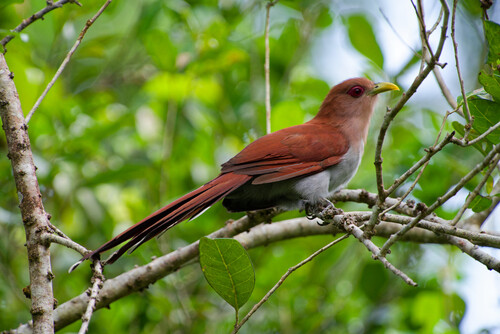
The closest relatives of the Smooth-billed Ani that you can see in Campinas (family Cuculidae, Cuckoos) are Squirrel Cuckoo (about 20%) and Guira Cuckoo (about 10%), with each one's daily chance of a sighting.

Where does the Smooth-billed Ani sighting chance come from?

GBIF citizen-science records

It is estimated from how often the Smooth-billed Ani is recorded against all the birds logged in Campinas (84 verified sightings), calibrated against known sighting rates. Figures are rounded to the nearest 10% because citizen-science data supports honest approximations, not decimals, and months with records from fewer than five people show "—". How it works.

← Back to Campinas