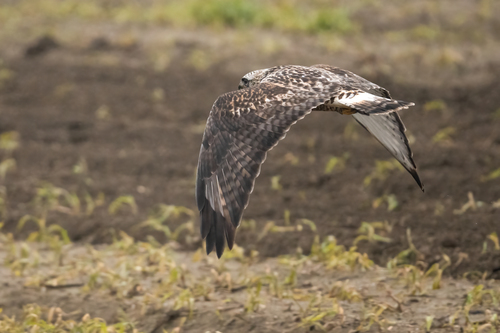
Hen Harrier

Hen Harrier

Circus cyaneus

Silhouette: Andy Wilson · PhyloPic

LCLeast ConcernNTVUENCR
Daily sighting probability ~20% · Possible
at Point Pelee National Park

In 3 days ~40% in a week ~70%

2,520 Verified sightings at Point Pelee National Park From 2019 to 2026
14,335 In all 71 parks
January Best month
☀️ Diurnal When it's spotted

About the Hen Harrier

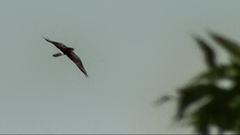
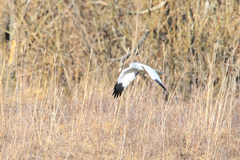
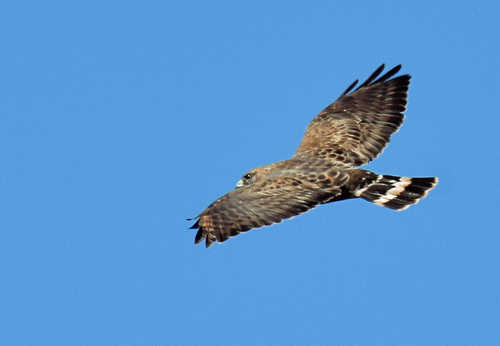
The hen harrier (Circus cyaneus) is a bird of prey. It breeds in open areas such as marshes and grasslands in Eurasia and is migratory, moving further south outside of the breeding season. Birds in milder regions, such as France and Great Britain, may be resident year-round, but the higher altitudes are largely deserted in winter. The species is sexually dimorphic; males are smaller and mostly grey and white with black wingtips, whereas females average larger and are predominantly brown and have buff underparts with brown barring. Both sexes have a white rump patch, although it is more noticeable on females and juveniles.

The term "hen harrier" refers to its former habit of preying on free-ranging fowl. The northern harrier (Circus hudsonius) was formerly considered to be a subspecies of the hen harrier. In 1758 the English naturalist George Edwards included an illustration and a description of the hen harrier in the first volume of his Gleanings of Natural History. He used the English name "The blue hawk". Edwards based his hand-coloured etching on a bird that had been shot near London. When in 1766 the Swedish naturalist Carl Linnaeus updated his Systema Naturae for... Wikipedia →

Sounds

Alarm call0:19

France · 2022

© Robin et Julien SOURIOU · XC973843 · CC BY-NC-SA 4.0

Begging call0:13

Netherlands · 2023

© Michel Veldt · XC833698 · CC BY-NC-SA 4.0

Call0:09

United Kingdom · 2021

© Peter Stronach · XC674537 · CC BY-NC-SA 4.0

Global Distribution

Parks Where Found

# Park Country Daily sighting probability
1 Padre Island National Seashore 🇺🇸 United States
~30%
2 Merritt Island National Wildlife Refuge 🇺🇸 United States
~20%
3 Denali National Park 🇺🇸 United States
~20%
4 Everglades National Park 🇺🇸 United States
~20%
5 Kiskunság National Park 🇭🇺 Hungary
~20%
6 Point Pelee National Park 🇨🇦 Canada
~20%
7 Hortobágy National Park 🇭🇺 Hungary
~20%
8 Katmai National Park 🇺🇸 United States
~20%
9 Ciénaga de Zapata 🇨🇺 Cuba
~10%
10 Manas National Park 🇮🇳 India
~10%
11 Wadden Sea National Park 🇩🇪 Germany
~10%
12 Kluane National Park 🇨🇦 Canada
~10%
13 Wood Buffalo National Park 🇨🇦 Canada
~10%
14 El Vizcaíno Biosphere Reserve 🇲🇽 Mexico
~10%
15 Grand Teton National Park 🇺🇸 United States
~10%
16 Badlands National Park 🇺🇸 United States
~10%
17 Yellowstone National Park 🇺🇸 United States
~10%
18 Fertő-Hanság National Park 🇭🇺 Hungary
~10%
19 Biebrza National Park 🇵🇱 Poland
~10%
20 Kaziranga National Park 🇮🇳 India
~10%
21 Gros Morne National Park 🇨🇦 Canada
~10%
22 Cape Breton Highlands National Park 🇨🇦 Canada
~10%
23 Big Cypress National Preserve 🇺🇸 United States
~10%
24 Wrangell-St. Elias National Park 🇺🇸 United States
~10%
25 Palo Verde National Park 🇨🇷 Costa Rica
~10%
26 Great Smoky Mountains National Park 🇺🇸 United States
~10%
27 Death Valley National Park 🇺🇸 United States
~10%
28 Channel Islands National Park 🇺🇸 United States
~10%
29 Camargue 🇫🇷 France
<5%
30 Doñana National Park 🇪🇸 Spain
<5%
31 Jaragua National Park 🇩🇴 Dominican Republic
<5%
32 Redwood National Park 🇺🇸 United States
<5%
33 Elk Island National Park 🇨🇦 Canada
<5%
34 Riding Mountain National Park 🇨🇦 Canada
<5%
35 Shenandoah National Park 🇺🇸 United States
<5%
36 Chitwan National Park 🇳🇵 Nepal
<5%
37 Acadia National Park 🇺🇸 United States
<5%
38 Guadalupe Mountains National Park 🇺🇸 United States
<5%
39 Namdapha National Park 🇮🇳 India
<5%
40 Isle Royale National Park 🇺🇸 United States
<5%
41 Jasper National Park 🇨🇦 Canada
<5%
42 Glacier National Park 🇺🇸 United States
<5%
43 Cévennes National Park 🇫🇷 France
<5%
44 Big Bend National Park 🇺🇸 United States
<5%
45 Ría Lagartos Biosphere Reserve 🇲🇽 Mexico
<5%
46 Voyageurs National Park 🇺🇸 United States
<5%
47 Pacific Rim National Park Reserve 🇨🇦 Canada
<5%
48 Pyrénées National Park 🇫🇷 France
<5%
49 Banff National Park 🇨🇦 Canada
<5%
50 Cairngorms National Park 🇬🇧 United Kingdom
<5%
51 Grand Canyon National Park 🇺🇸 United States
<5%
52 Olympic National Park 🇺🇸 United States
<5%
53 Białowieża National Park 🇵🇱 Poland
<5%
54 Cumbres de Monterrey National Park 🇲🇽 Mexico
<5%
55 Monfragüe National Park 🇪🇸 Spain
<5%
56 Great Bear Rainforest 🇨🇦 Canada
<5%
57 Picos de Europa National Park 🇪🇸 Spain
<5%
58 Saguaro National Park 🇺🇸 United States
<5%
59 Jim Corbett National Park 🇮🇳 India
<5%
60 Rocky Mountain National Park 🇺🇸 United States
<5%
61 Zion National Park 🇺🇸 United States
<5%
62 Celestún Biosphere Reserve 🇲🇽 Mexico
<5%
63 Congaree National Park 🇺🇸 United States
<5%
64 Arrecifes de Cozumel National Park 🇲🇽 Mexico
<5%
65 Royal Manas National Park 🇧🇹 Bhutan
<5%
66 Joshua Tree National Park 🇺🇸 United States
<5%
67 Snowdonia National Park 🇬🇧 United Kingdom
<5%
68 Manuel Antonio National Park 🇨🇷 Costa Rica
<5%
69 Parque Natural Metropolitano 🇵🇦 Panama
<5%
70 Soberanía National Park 🇵🇦 Panama
<5%
71 La Amistad International Park (Panama) 🇵🇦 Panama
<5%

Cities Where Found

# City Country Daily sighting probability
1 Novosibirsk 🇷🇺 Russia
~10%
2 León 🇲🇽 México
~10%
3 Daegu 🇰🇷 South Korea
~10%
4 San Francisco 🇺🇸 United States
<5%
5 San Diego 🇺🇸 United States
<5%
6 Beijing 🇨🇳 China
<5%
7 Vancouver 🇨🇦 Canada
<5%
8 Mesa 🇺🇸 United States
<5%
9 Los Angeles 🇺🇸 United States
<5%
10 Toluca 🇲🇽 México
<5%

Zoos & Centres Where Found

# Zoo / Centre Country
1 Birds of prey 🇨🇦 Canada In captivity
2 Zoológico del Altiplano 🇲🇽 Mexico In captivity
3 California Raptor Center 🇺🇸 United States In captivity
4 Carolina Raptor Center 🇺🇸 United States In captivity
5 akwarium warszawskiego ZOO 🇵🇱 Poland In captivity
6 Chouette à voir! 🇨🇦 Canada In captivity

Before you go

What are the chances of seeing a Hen Harrier in Point Pelee National Park?

Possible

About 20% of wildlife watchers report a Hen Harrier sighting in Point Pelee National Park on a given day, based on 2,520 verified sightings from GBIF citizen-science data from 2019 to 2026. It is the 91st most-seen of the 278 birds we can rate there. Over three days the chance rises to about 40%, and over a week to about 70%, if each day is a fresh chance.

When is the best time to see a Hen Harrier in Point Pelee National Park?

January, September and November

In those months about 50% of wildlife watchers report a Hen Harrier in Point Pelee National Park on a given day, against under 5% in July, the lowest month.

What time of day is best to see a Hen Harrier?

Between 10 am and 1 pm

Across all the parks we cover, that three-hour window holds the most Hen Harrier sightings with a recorded time, and nearly all of them come between 6 am and 6 pm: it is a daytime animal.

Which relatives of the Hen Harrier live in Point Pelee National Park?

Same family: Accipitridae

The closest relatives of the Hen Harrier that you can see in Point Pelee National Park (family Accipitridae, Hawks, Eagles, and Kites) are Bald Eagle (about 50%), Red-tailed Hawk (about 20%) and Sharp-shinned Hawk (about 10%), with each one's daily chance of a sighting.

Where does the Hen Harrier sighting chance come from?

GBIF citizen-science records

It is estimated from how often the Hen Harrier is recorded against all the birds logged in Point Pelee National Park (2,520 verified sightings from 2019 to 2026), calibrated against known sighting rates. Figures are rounded to the nearest 10% because citizen-science data supports honest approximations, not decimals, and months with records from fewer than five people show "—". How it works.

← Back to Point Pelee National Park