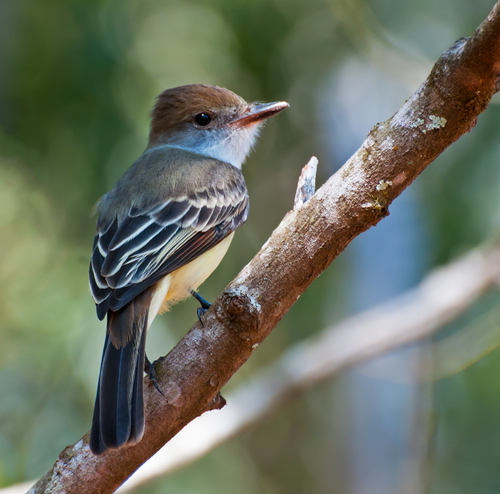
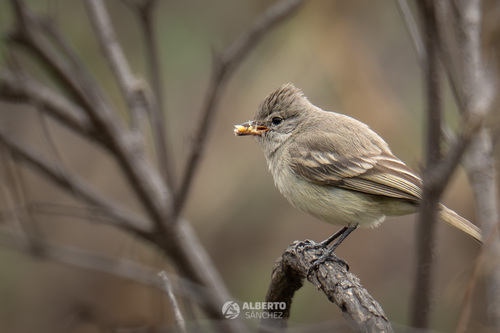
Sulphur-bellied Flycatcher

Sulphur-bellied Flycatcher

Myiodynastes luteiventris

Silhouette: Emily Willoughby · PhyloPic

LCLeast ConcernNTVUENCR
Daily sighting probability ~10% · With luck
at San Pedro Sula

In 3 days ~20% in a week ~40%

51 Verified sightings at San Pedro Sula
8,038 In all 51 parks From 2019 to 2026
September Best month
☀️ Diurnal When it's spotted

About the Sulphur-bellied Flycatcher

The sulphur-bellied flycatcher (Myiodynastes luteiventris) is a large member of the family Tyrannidae, the tyrant flycatchers. It is regularly found from southern Arizona in the United States south to Bolivia and occurs casually or as a vagrant further north, east, and south of its usual range.

The sulphur-bellied flycatcher is monotypic. Because there is much clinal variation in size and plumage, several subspecies have been proposed but not accepted. The sulphur-bellied flycatcher and the streaked flycatcher (M. maculatus) are sister species.

The sulphur-bellied flycatcher is about 20 cm (7.9 in) long and weighs about 40 to 57 g (1.4 to 2.0 oz). The sexes have the same plumage. Adults have a pale hoary gray or grayish white forecrown and supercilium. They have a brownish gray to olive crown with blackish streaks and a large, usually hidden, canary-yellow patch in the center. They have dusky lores; the color extends to the ear coverts and forms a dark "mask". Below the mask is a wide white stripe with thin dusky streaks and below that a thin dusky stripe. Their nape and upperparts to the upper rump are light olive with a buffy tinge... Wikipedia →

Sounds

Call0:57

Mexico · 2026

© Richard E. Webster · XC1182811 · CC BY-NC-SA 4.0

Song0:49

Mexico · 2022

© Manuel Grosselet · XC741560 · CC BY-NC-SA 4.0

Song?0:08

Mexico · 2003

© Peter Boesman · XC226066 · CC BY-NC-ND 4.0

Global Distribution

Parks Where Found

# Park Country Daily sighting probability
1 Tikal National Park 🇬🇹 Guatemala
~20%
2 Cañón del Sumidero National Park 🇲🇽 Mexico
~20%
3 Montes Azules Biosphere Reserve 🇲🇽 Mexico
~10%
4 Cerro Azul Meámbar National Park 🇭🇳 Honduras
~10%
5 Lago de Yojoa 🇭🇳 Honduras
~10%
6 Rincón de la Vieja National Park 🇨🇷 Costa Rica
~10%
7 Cumbres de Monterrey National Park 🇲🇽 Mexico
~10%
8 Santa Rosa National Park 🇨🇷 Costa Rica
~10%
9 El Triunfo 🇲🇽 Mexico
~10%
10 Biotopo Cerro Cahuí 🇬🇹 Guatemala
~10%
11 Cusuco National Park 🇭🇳 Honduras
~10%
12 Arenal Volcano National Park 🇨🇷 Costa Rica
~10%
13 Cockscomb Basin Wildlife Sanctuary 🇧🇿 Belize
~10%
14 Calakmul Biosphere Reserve 🇲🇽 Mexico
~10%
15 Monteverde Cloud Forest Reserve 🇨🇷 Costa Rica
~10%
16 Masaya Volcano National Park 🇳🇮 Nicaragua
~10%
17 Sian Ka'an Biosphere Reserve 🇲🇽 Mexico
~10%
18 Amboró National Park 🇧🇴 Bolivia
~10%
19 Pico Bonito National Park 🇭🇳 Honduras
~10%
20 Tenorio Volcano National Park 🇨🇷 Costa Rica
~10%
21 Ostional Wildlife Refuge 🇨🇷 Costa Rica
~10%
22 Yasuní National Park 🇪🇨 Ecuador
~10%
23 Manu National Park 🇵🇪 Peru
~10%
24 Las Baulas Marine National Park 🇨🇷 Costa Rica
~10%
25 Parque Natural Metropolitano 🇵🇦 Panama
<5%
26 Palo Verde National Park 🇨🇷 Costa Rica
<5%
27 Braulio Carrillo National Park 🇨🇷 Costa Rica
<5%
28 Cahuita National Park 🇨🇷 Costa Rica
<5%
29 Carara National Park 🇨🇷 Costa Rica
<5%
30 Tapantí-Macizo de la Muerte National Park 🇨🇷 Costa Rica
<5%
31 Soberanía National Park 🇵🇦 Panama
<5%
32 La Tigra National Park 🇭🇳 Honduras
<5%
33 Poás Volcano National Park 🇨🇷 Costa Rica
<5%
34 Bastimentos Island National Marine Park 🇵🇦 Panama
<5%
35 Tambopata National Reserve 🇵🇪 Peru
<5%
36 Manuel Antonio National Park 🇨🇷 Costa Rica
<5%
37 Gandoca-Manzanillo Wildlife Refuge 🇨🇷 Costa Rica
<5%
38 Cabo Blanco Absolute Nature Reserve 🇨🇷 Costa Rica
<5%
39 La Amistad International Park (Panama) 🇵🇦 Panama
<5%
40 Darién National Park 🇵🇦 Panama
<5%
41 Marino Ballena National Park 🇨🇷 Costa Rica
<5%
42 Corcovado National Park 🇨🇷 Costa Rica
<5%
43 Tortuguero National Park 🇨🇷 Costa Rica
<5%
44 Piedras Blancas National Park 🇨🇷 Costa Rica
<5%
45 Sierra de la Macarena National Park 🇨🇴 Colombia
<5%
46 Chagres National Park 🇵🇦 Panama
<5%
47 Tayrona National Natural Park 🇨🇴 Colombia
<5%
48 Chirripó National Park 🇨🇷 Costa Rica
<5%
49 Volcán Barú National Park 🇵🇦 Panama
<5%
50 Los Quetzales National Park 🇨🇷 Costa Rica
<5%
51 Farallones de Cali National Natural Park 🇨🇴 Colombia
<5%

Cities Where Found

# City Country Daily sighting probability
1 San Pedro Sula 🇭🇳 Honduras
~10%
2 Monterrey 🇲🇽 México
~10%
3 San Salvador 🇸🇻 El Salvador
~10%
4 San José 🇨🇷 Costa Rica
<5%
5 Bogota 🇨🇴 Colombia
<5%
6 Miami 🇺🇸 United States
<5%
7 Mexico City 🇲🇽 México
<5%
8 Quito 🇪🇨 Ecuador
<5%
9 Medellín 🇨🇴 Colombia
<5%
10 Panama City 🇵🇦 Panama
<5%

Before you go

What are the chances of seeing a Sulphur-bellied Flycatcher in San Pedro Sula?

With luck

About 10% of wildlife watchers report a Sulphur-bellied Flycatcher sighting in San Pedro Sula on a given day, based on 51 verified sightings from GBIF citizen-science data. It is the 70th most-seen of the 187 birds we can rate there. Over three days the chance rises to about 20%, and over a week to about 40%, if each day is a fresh chance.

When is the best time to see a Sulphur-bellied Flycatcher in San Pedro Sula?

May and July–September

In those months about 20% of wildlife watchers report a Sulphur-bellied Flycatcher in San Pedro Sula on a given day, against under 5% in October to March, the lowest months.

What time of day is best to see a Sulphur-bellied Flycatcher?

Between 7 and 10 am

Across all the parks we cover, that three-hour window holds the most Sulphur-bellied Flycatcher sightings with a recorded time, and about 9 in 10 of them come between 6 am and 6 pm: it is a daytime animal.

Is San Pedro Sula the best place to see a Sulphur-bellied Flycatcher?

Yes

Of the 18 cities where we can rate Sulphur-bellied Flycatcher sightings, San Pedro Sula has the highest daily chance: about 10%. Next come Monterrey (México, about 10%) and San Salvador (El Salvador, about 10%).

Which relatives of the Sulphur-bellied Flycatcher live in San Pedro Sula?

Same family: Tyrannidae

The closest relatives of the Sulphur-bellied Flycatcher that you can see in San Pedro Sula (family Tyrannidae, Tyrant Flycatchers) are Tropical Kingbird (about 80%), Social Flycatcher (about 70%) and Great Kiskadee (about 60%), with each one's daily chance of a sighting.

Where does the Sulphur-bellied Flycatcher sighting chance come from?

GBIF citizen-science records

It is estimated from how often the Sulphur-bellied Flycatcher is recorded against all the birds logged in San Pedro Sula (51 verified sightings), calibrated against known sighting rates. Figures are rounded to the nearest 10% because citizen-science data supports honest approximations, not decimals, and months with records from fewer than five people show "—". How it works.

← Back to San Pedro Sula