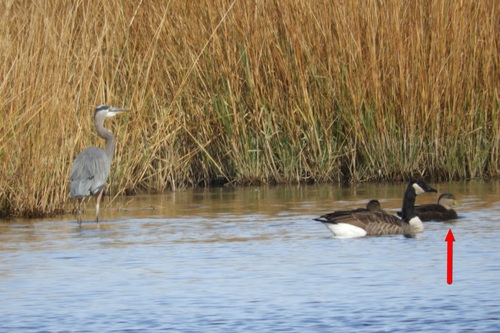
Black-bellied Whistling-Duck

Black-bellied Whistling-Duck

Dendrocygna autumnalis

Silhouette: Sheatherius · PhyloPic

LCLeast ConcernNTVUENCR
Daily sighting probability <5% · Rare
at Washington

In 3 days <5%

16 Verified sightings at Washington
10,857 In all 48 parks From 2019 to 2026
May Best month
☀️ Diurnal When it's spotted

About the Black-bellied Whistling-Duck

The black-bellied whistling duck (Dendrocygna autumnalis) or black-bellied tree duck, is a whistling duck that before 2000 bred mainly from the southernmost United States to south-central South America. It can be found year-round in much of the United States. It has been recorded in every eastern state and adjacent Canadian province. Since it is one of only two whistling duck species native to North America, it is occasionally just known as the "whistling duck" or "Mexican squealer" in the southern USA.

In 1751 the English naturalist George Edwards included an illustration and a description of the black-bellied whistling duck in the fourth volume of his A Natural History of Uncommon Birds. He used the English name "The red-billed whistling duck". Edwards based his hand-coloured etching on a live bird kept at the home of Admiral Charles Wager in Chelsea, London. Edwards was told that the bird had come from the West Indies. When in 1758 the Swedish naturalist Carl Linnaeus updated his Systema Naturae for the tenth edition, he placed the black-bellied whistling duck with the ducks, geese and swans in the genus Anas. Linnaeus included a brief description, coined the binomial... Wikipedia →

Sounds

Call1:26

French Guiana · 2024

© Tristan Guillebot de Nerville · XC1150324 · CC BY-NC-SA 4.0

Nocturnal flight call0:04

United States · 2025

© Contina Lab at UTRGV Brownsville · XC1008043 · CC BY 4.0

Song0:06

Mexico · 2024

© Leonardo Guzman Hernandez · XC920149 · CC BY-NC-SA 4.0

Global Distribution

Parks Where Found

# Park Country Daily sighting probability
1 Palo Verde National Park 🇨🇷 Costa Rica
~70%
2 Lago de Yojoa 🇭🇳 Honduras
~30%
3 Iberá National Park 🇦🇷 Argentina
~30%
4 Soberanía National Park 🇵🇦 Panama
~30%
5 Caroni Swamp 🇹🇹 Trinidad and Tobago
~20%
6 Montes Azules Biosphere Reserve 🇲🇽 Mexico
~20%
7 Cerro Azul Meámbar National Park 🇭🇳 Honduras
~20%
8 Marino Ballena National Park 🇨🇷 Costa Rica
~20%
9 Arrecifes de Cozumel National Park 🇲🇽 Mexico
~20%
10 Anavilhanas National Park 🇧🇷 Brazil
~10%
11 Piedras Blancas National Park 🇨🇷 Costa Rica
~10%
12 El Impenetrable National Park 🇦🇷 Argentina
~10%
13 Carara National Park 🇨🇷 Costa Rica
~10%
14 Ostional Wildlife Refuge 🇨🇷 Costa Rica
~10%
15 Manuel Antonio National Park 🇨🇷 Costa Rica
~10%
16 Las Baulas Marine National Park 🇨🇷 Costa Rica
~10%
17 Ría Lagartos Biosphere Reserve 🇲🇽 Mexico
~10%
18 Parque Estadual Encontro das Águas 🇧🇷 Brazil
~10%
19 Padre Island National Seashore 🇺🇸 United States
~10%
20 La Amistad International Park (Panama) 🇵🇦 Panama
~10%
21 Bastimentos Island National Marine Park 🇵🇦 Panama
~10%
22 Santa Rosa National Park 🇨🇷 Costa Rica
~10%
23 Gandoca-Manzanillo Wildlife Refuge 🇨🇷 Costa Rica
<5%
24 Chagres National Park 🇵🇦 Panama
<5%
25 Sierra de la Macarena National Park 🇨🇴 Colombia
<5%
26 Merritt Island National Wildlife Refuge 🇺🇸 United States
<5%
27 Parque Natural Metropolitano 🇵🇦 Panama
<5%
28 Tortuguero National Park 🇨🇷 Costa Rica
<5%
29 Cañón del Sumidero National Park 🇲🇽 Mexico
<5%
30 Corcovado National Park 🇨🇷 Costa Rica
<5%
31 Cumbres de Monterrey National Park 🇲🇽 Mexico
<5%
32 Big Cypress National Preserve 🇺🇸 United States
<5%
33 Henri Pittier National Park 🇻🇪 Venezuela
<5%
34 Braulio Carrillo National Park 🇨🇷 Costa Rica
<5%
35 Cabo Blanco Absolute Nature Reserve 🇨🇷 Costa Rica
<5%
36 Calakmul Biosphere Reserve 🇲🇽 Mexico
<5%
37 Arenal Volcano National Park 🇨🇷 Costa Rica
<5%
38 Darién National Park 🇵🇦 Panama
<5%
39 Celestún Biosphere Reserve 🇲🇽 Mexico
<5%
40 Amacayacu National Natural Park 🇨🇴 Colombia
<5%
41 Everglades National Park 🇺🇸 United States
<5%
42 Pico Bonito National Park 🇭🇳 Honduras
<5%
43 Tenorio Volcano National Park 🇨🇷 Costa Rica
<5%
44 Tikal National Park 🇬🇹 Guatemala
<5%
45 Tambopata National Reserve 🇵🇪 Peru
<5%
46 Manu National Park 🇵🇪 Peru
<5%
47 Farallones de Cali National Natural Park 🇨🇴 Colombia
<5%
48 Poás Volcano National Park 🇨🇷 Costa Rica
<5%

Cities Where Found

# City Country Daily sighting probability
1 Houston 🇺🇸 United States
~30%
2 San Antonio 🇺🇸 United States
~20%
3 Guayaquil 🇪🇨 Ecuador
~20%
4 Monterrey 🇲🇽 México
~20%
5 León 🇲🇽 México
~20%
6 Campo Grande 🇧🇷 Brazil
~10%
7 Santa Cruz de la Sierra 🇧🇴 Bolivia
~10%
8 Miami 🇺🇸 United States
~10%
9 Vitória 🇧🇷 Brazil
~10%
10 Austin 🇺🇸 United States
~10%

Zoos & Centres Where Found

# Zoo / Centre Country
1 Disney's Animal Kingdom 🇺🇸 United States In captivity
2 Moscow Zoo 🇷🇺 Russia In captivity
3 National Zoological Park 🇺🇸 United States In captivity
4 Dresden Zoo 🇩🇪 Germany In captivity
5 Planckendael Zoo 🇧🇪 Belgium In captivity
6 Barcelona Zoo 🇪🇸 Spain In captivity
7 Parc Phœnix 🇫🇷 France In captivity
8 Walsrode World Bird Park 🇩🇪 Germany In captivity
9 Zoo Miami 🇺🇸 United States In captivity
10 Slimbridge Wetland Centre 🇬🇧 United Kingdom In captivity
11 Phoenix Zoo 🇺🇸 United States In captivity
12 Jacksonville Zoo and Gardens 🇺🇸 United States In captivity
13 Wildlife World Zoo 🇺🇸 United States In captivity
14 Parque Municipal Summit 🇵🇦 Panama In captivity
15 Africam Safari 🇲🇽 Mexico In captivity
16 Xcaret 🇲🇽 Mexico In captivity
17 Antalya Zoo 🇹🇷 Türkiye In captivity
18 Parc animalier de Gramat 🇫🇷 France In captivity
19 Guadalajara Zoo 🇲🇽 Mexico In captivity
20 Ukumarí Biopark 🇨🇴 Colombia In captivity
21 Oklahoma City Zoo and Botanical Garden 🇺🇸 United States In captivity
22 Kyiv Zoo 🇺🇦 Ukraine In captivity
23 Terra Natura Benidorm 🇪🇸 Spain In captivity
24 Brevard Zoo 🇺🇸 United States In captivity
25 Zacango Zoo 🇲🇽 Mexico In captivity
26 ZooTampa 🇺🇸 United States In captivity
27 Metro Richmond Zoo 🇺🇸 United States In captivity
28 Zoológico la pastroa 🇲🇽 Mexico In captivity
29 Arizona-Sonora Desert Museum 🇺🇸 United States In captivity
30 Jijamata Udyaan 🇮🇳 India In captivity
31 San Antonio Zoo 🇺🇸 United States In captivity
32 Tierpark Hagenbeck 🇩🇪 Germany In captivity
33 Cameron Park Zoo 🇺🇸 United States In captivity
34 Cologne Zoological Garden 🇩🇪 Germany In captivity
35 Philadelphia Zoo 🇺🇸 United States In captivity
36 Chapultepec Zoo 🇲🇽 Mexico In captivity
37 Bosque Rodrigues Alves 🇧🇷 Brazil In captivity
38 Connecticut's Beardsley Zoo 🇺🇸 United States In captivity
39 Bird Paradise 🇸🇬 Singapore In captivity
40 Aquarama Barcelona 🇪🇸 Spain In captivity
41 Rainforest Wild Asia 🇸🇬 Singapore In captivity
42 Zoo das Aves 🇧🇷 Brazil In captivity
43 Amaru 🇪🇨 Ecuador In captivity
44 Biotropica 🇫🇷 France In captivity
45 La Paz Waterfall Gardens 🇨🇷 Costa Rica In captivity
46 Vogelpark Avifauna 🇳🇱 Netherlands In captivity
47 Aviario Nacional de Colombia 🇨🇴 Colombia In captivity
48 Zoologischer Garten Halle 🇩🇪 Germany In captivity
49 Bramble Park Zoo 🇺🇸 United States In captivity
50 Safari Masai Mara 🇲🇽 Mexico In captivity

Before you go

What are the chances of seeing a Black-bellied Whistling-Duck in Washington?

Rare

Under 5% of wildlife watchers report a Black-bellied Whistling-Duck sighting in Washington on a given day, based on 16 verified sightings from GBIF citizen-science data. It is the 257th most-seen of the 267 birds we can rate there. Over three days the chance rises to under 5%, if each day is a fresh chance.

When is the best time to see a Black-bellied Whistling-Duck in Washington?

Any time of year

In every month with enough records, under 5% of wildlife watchers report a Black-bellied Whistling-Duck in Washington on a given day, so our monthly data shows no clear season.

What time of day is best to see a Black-bellied Whistling-Duck?

Between 9 am and noon

Across all the parks we cover, that three-hour window holds the most Black-bellied Whistling-Duck sightings with a recorded time, and about 9 in 10 of them come between 6 am and 6 pm: it is a daytime animal.

Is Washington the best place to see a Black-bellied Whistling-Duck?

37th of 37

Of the 37 cities where we can rate Black-bellied Whistling-Duck sightings, Washington ranks 37th at under 5%. The best odds are in Houston (United States, about 30%), San Antonio (United States, about 20%) and Guayaquil (Ecuador, about 20%).

Which relatives of the Black-bellied Whistling-Duck live in Washington?

Same family: Anatidae

The closest relatives of the Black-bellied Whistling-Duck that you can see in Washington (family Anatidae, Ducks, Geese, and Swans) are Mallard (about 40%), Canada Goose (about 40%) and Wood Duck (about 10%), with each one's daily chance of a sighting.

Where does the Black-bellied Whistling-Duck sighting chance come from?

GBIF citizen-science records

It is estimated from how often the Black-bellied Whistling-Duck is recorded against all the birds logged in Washington (16 verified sightings), calibrated against known sighting rates. Figures are rounded to the nearest 10% because citizen-science data supports honest approximations, not decimals, and months with records from fewer than five people show "—". How it works.

← Back to Washington