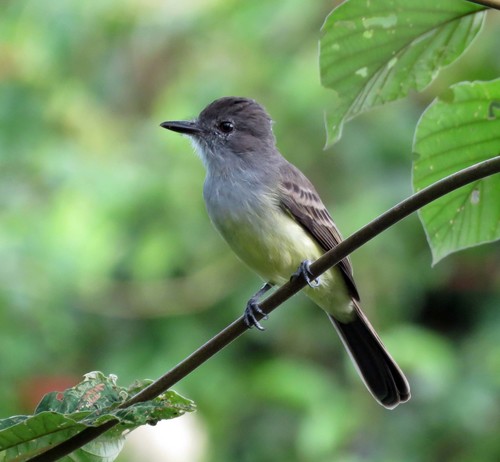
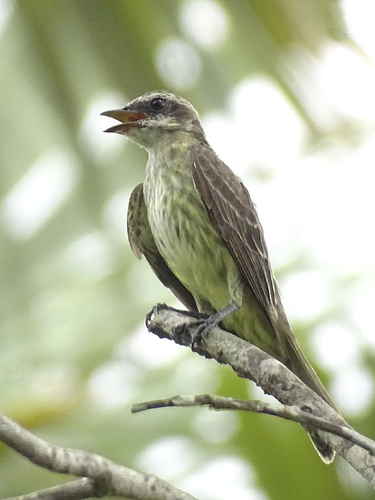
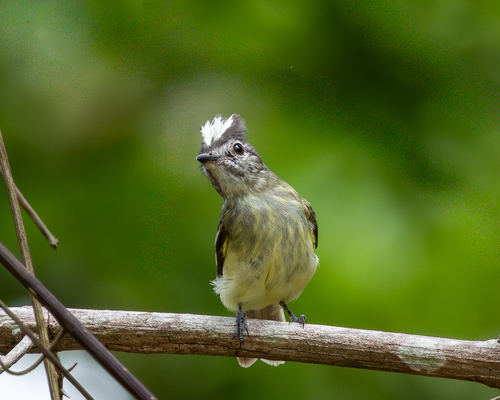
Ochre-bellied Flycatcher

Ochre-bellied Flycatcher

Mionectes oleagineus

Silhouette: Emily Willoughby · PhyloPic

LCLeast ConcernNTVUENCR
Daily sighting probability ~20% · Possible
at Sierra de la Macarena National Park

In 3 days ~50% in a week ~80%

192 Verified sightings at Sierra de la Macarena National Park From 2019 to 2026
10,415 In all 51 parks
August Best month
☀️ Diurnal When it's spotted

About the Ochre-bellied Flycatcher

The ochre-bellied flycatcher (Mionectes oleagineus) is a small bird of the tyrant flycatcher family. It is found in Mexico, Central America, Trinidad and Tobago, and northern South America. For a time in the mid-twentieth century the ochre-bellied flycatcher was placed in genus Pipromorpha, which by the 1980s had been merged into Mionectes. A study published in 2008 suggested that Pipromorpha be resurrected for this species and two others but that action has not been followed. The study did reveal that, rather than the uplifting of the Andes giving rise to the ochre-bellied flycatcher's subspecies, at least four separate lineages including some trans-Andean movement are responsible. It also suggested that the ochre-bellied flycatcher might comprise more than one species.

As of late 2024 the ochre-bellied flycatcher had these seven subspecies: The ochre-bellied flycatcher... Wikipedia →

Sounds

Call0:19

Ecuador · 2025

© Manuel Sánchez-Nivicela · XC1155356 · CC BY-NC-ND 4.0

Song1:22

Costa Rica · 2024

© Scott Olmstead · XC949656 · CC BY-NC-SA 4.0

Begging call0:35

Ecuador · 2004

© John V. Moore · XC258745 · CC BY-NC-SA 4.0

Global Distribution

Parks Where Found

# Park Country Daily sighting probability
1 Pico Bonito National Park 🇭🇳 Honduras
~20%
2 Piedras Blancas National Park 🇨🇷 Costa Rica
~20%
3 Tikal National Park 🇬🇹 Guatemala
~20%
4 Serra dos Órgãos National Park 🇧🇷 Brazil
~20%
5 Cockscomb Basin Wildlife Sanctuary 🇧🇿 Belize
~20%
6 Sierra de la Macarena National Park 🇨🇴 Colombia
~20%
7 Cusuco National Park 🇭🇳 Honduras
~20%
8 Tayrona National Natural Park 🇨🇴 Colombia
~20%
9 Main Ridge Forest Reserve 🇹🇹 Trinidad and Tobago
~20%
10 Darién National Park 🇵🇦 Panama
~20%
11 Amacayacu National Natural Park 🇨🇴 Colombia
~10%
12 Cerro Azul Meámbar National Park 🇭🇳 Honduras
~10%
13 El Triunfo 🇲🇽 Mexico
~10%
14 Rincón de la Vieja National Park 🇨🇷 Costa Rica
~10%
15 Chagres National Park 🇵🇦 Panama
~10%
16 Carara National Park 🇨🇷 Costa Rica
~10%
17 Montes Azules Biosphere Reserve 🇲🇽 Mexico
~10%
18 Braulio Carrillo National Park 🇨🇷 Costa Rica
~10%
19 Corcovado National Park 🇨🇷 Costa Rica
~10%
20 Bastimentos Island National Marine Park 🇵🇦 Panama
~10%
21 Arenal Volcano National Park 🇨🇷 Costa Rica
~10%
22 Tenorio Volcano National Park 🇨🇷 Costa Rica
~10%
23 Soberanía National Park 🇵🇦 Panama
~10%
24 San Lorenzo Protected Forest 🇵🇦 Panama
~10%
25 La Tigra National Park 🇭🇳 Honduras
~10%
26 Gandoca-Manzanillo Wildlife Refuge 🇨🇷 Costa Rica
~10%
27 La Amistad International Park (Panama) 🇵🇦 Panama
~10%
28 Yasuní National Park 🇪🇨 Ecuador
~10%
29 Tambopata National Reserve 🇵🇪 Peru
~10%
30 Calakmul Biosphere Reserve 🇲🇽 Mexico
~10%
31 Lago de Yojoa 🇭🇳 Honduras
~10%
32 Manu National Park 🇵🇪 Peru
~10%
33 Celaque National Park 🇭🇳 Honduras
<5%
34 Coiba National Park 🇵🇦 Panama
<5%
35 Parque Natural Metropolitano 🇵🇦 Panama
<5%
36 Chirripó National Park 🇨🇷 Costa Rica
<5%
37 Cahuita National Park 🇨🇷 Costa Rica
<5%
38 Marino Ballena National Park 🇨🇷 Costa Rica
<5%
39 Manuel Antonio National Park 🇨🇷 Costa Rica
<5%
40 Farallones de Cali National Natural Park 🇨🇴 Colombia
<5%
41 Tapantí-Macizo de la Muerte National Park 🇨🇷 Costa Rica
<5%
42 Chapada dos Guimarães National Park 🇧🇷 Brazil
<5%
43 Anavilhanas National Park 🇧🇷 Brazil
<5%
44 Cuyabeno Wildlife Reserve 🇪🇨 Ecuador
<5%
45 Machalilla National Park 🇪🇨 Ecuador
<5%
46 Tortuguero National Park 🇨🇷 Costa Rica
<5%
47 Monteverde Cloud Forest Reserve 🇨🇷 Costa Rica
<5%
48 Cañón del Sumidero National Park 🇲🇽 Mexico
<5%
49 Cabo Blanco Absolute Nature Reserve 🇨🇷 Costa Rica
<5%
50 Los Nevados National Natural Park 🇨🇴 Colombia
<5%
51 Poás Volcano National Park 🇨🇷 Costa Rica
<5%

Cities Where Found

# City Country Daily sighting probability
1 San Salvador 🇸🇻 El Salvador
~10%
2 Cali 🇨🇴 Colombia
<5%
3 San José 🇨🇷 Costa Rica
<5%
4 Panama City 🇵🇦 Panama
<5%

Before you go

What are the chances of seeing an Ochre-bellied Flycatcher in Sierra de la Macarena National Park?

Possible

About 20% of wildlife watchers report an Ochre-bellied Flycatcher sighting in Sierra de la Macarena National Park on a given day, based on 192 verified sightings from GBIF citizen-science data from 2019 to 2026. It is the 57th most-seen of the 418 birds we can rate there. Over three days the chance rises to about 50%, and over a week to about 80%, if each day is a fresh chance.

When is the best time to see an Ochre-bellied Flycatcher in Sierra de la Macarena National Park?

May and August

In those months about 30% of wildlife watchers report an Ochre-bellied Flycatcher in Sierra de la Macarena National Park on a given day, against under 5% in September, the lowest month.

What time of day is best to see an Ochre-bellied Flycatcher?

Between 8 and 11 am

Across all the parks we cover, that three-hour window holds the most Ochre-bellied Flycatcher sightings with a recorded time, and about 8 in 10 of them come between 6 am and 6 pm: it is a daytime animal.

Is Sierra de la Macarena National Park the best place to see an Ochre-bellied Flycatcher?

Among the best

Of the 51 parks where we can rate Ochre-bellied Flycatcher sightings, Sierra de la Macarena National Park ranks 6th at about 20%, level with the leaders once rounded. The best odds are in Pico Bonito National Park (Honduras, about 20%), Piedras Blancas National Park (Costa Rica, about 20%) and Tikal National Park (Guatemala, about 20%).

Which relatives of the Ochre-bellied Flycatcher live in Sierra de la Macarena National Park?

Same family: Tyrannidae

The closest relatives of the Ochre-bellied Flycatcher that you can see in Sierra de la Macarena National Park (family Tyrannidae, Tyrant Flycatchers) are Tropical Kingbird (about 60%), Great Kiskadee (about 30%) and Rusty-margined Flycatcher (about 30%), with each one's daily chance of a sighting.

Where does the Ochre-bellied Flycatcher sighting chance come from?

GBIF citizen-science records

It is estimated from how often the Ochre-bellied Flycatcher is recorded against all the birds logged in Sierra de la Macarena National Park (192 verified sightings from 2019 to 2026), calibrated against known sighting rates. Figures are rounded to the nearest 10% because citizen-science data supports honest approximations, not decimals, and months with records from fewer than five people show "—". How it works.

← Back to Sierra de la Macarena National Park