Northern Rough-winged Swallow

Northern Rough-winged Swallow

Stelgidopteryx serripennis

Silhouette: Sheatherius · PhyloPic

LCLeast ConcernNTVUENCR
Daily sighting probability ~20% · Possible
at Los Angeles

In 3 days ~40% in a week ~70%

15,479 Verified sightings at Los Angeles
15,150 In all 78 parks From 2019 to 2026
June Best month
☀️ Diurnal When it's spotted

About the Northern Rough-winged Swallow

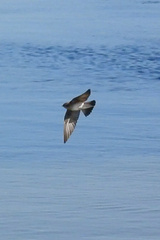
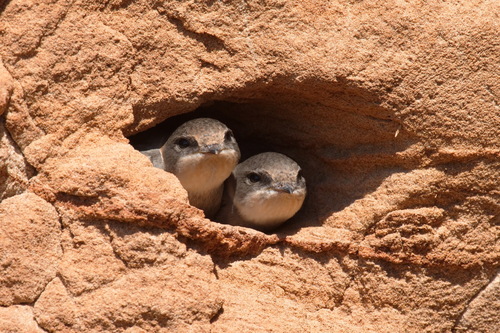
The northern rough-winged swallow (Stelgidopteryx serripennis) is a small, migratory swallow. It is very similar to the southern rough-winged swallow, Stelgidopteryx ruficollis. The genus name, Stelgidopteryx, is from Ancient Greek and means "scraper wing" and the species name, serripennis, is derived from Latin and means "saw feather". In the common name, "rough-winged" refers to the serrated edge feathers on the wing of this bird; this feature would only be apparent when holding this bird.

Six subspecies of the northern rough-winged swallow are currently recognized. Stelgidopteryx serripennis serripennis is the nominate subspecies and can be found to occur in southern Alaska and Canada to the southern United States. They are found to usually winter in southern Florida and from southwestern Mexico to Panama. It was described by Audubon in 1838.

Stelgidopteryx serripennis psammochrous was described by Ludlow Griscom in 1929. It breeds in the southwestern US and winters from central Mexico to Panama. It can be differentiated from the nominate race by being paler, especially on the crown and rump.

Stelgidopteryx serripennis fulvipennis is... Wikipedia →

Sounds

Flight call0:41

Mexico · 2023

© Manuel Grosselet · XC782422 · CC BY-NC-SA 4.0

Call0:22

United States · 2020

© Russ Wigh · XC567239 · CC BY-NC-SA 4.0

Song0:09

United States · 2020

© Paul Marvin · XC534846 · CC BY-NC-SA 4.0

Global Distribution

Parks Where Found

# Park Country Daily sighting probability
1 Tikal National Park 🇬🇹 Guatemala
~40%
2 Lago de Yojoa 🇭🇳 Honduras
~40%
3 Cañón del Sumidero National Park 🇲🇽 Mexico
~30%
4 Sian Ka'an Biosphere Reserve 🇲🇽 Mexico
~20%
5 Cerro Azul Meámbar National Park 🇭🇳 Honduras
~20%
6 Montes Azules Biosphere Reserve 🇲🇽 Mexico
~20%
7 Arenal Volcano National Park 🇨🇷 Costa Rica
~20%
8 Death Valley National Park 🇺🇸 United States
~20%
9 Big Bend National Park 🇺🇸 United States
~10%
10 Cusuco National Park 🇭🇳 Honduras
~10%
11 Cabo Pulmo National Park 🇲🇽 Mexico
~10%
12 Channel Islands National Park 🇺🇸 United States
~10%
13 Point Pelee National Park 🇨🇦 Canada
~10%
14 Bahía de Loreto National Park 🇲🇽 Mexico
~10%
15 Zion National Park 🇺🇸 United States
~10%
16 Tenorio Volcano National Park 🇨🇷 Costa Rica
~10%
17 Carara National Park 🇨🇷 Costa Rica
~10%
18 El Vizcaíno Biosphere Reserve 🇲🇽 Mexico
~10%
19 Tortuguero National Park 🇨🇷 Costa Rica
~10%
20 Banff National Park 🇨🇦 Canada
~10%
21 Celestún Biosphere Reserve 🇲🇽 Mexico
~10%
22 Grand Teton National Park 🇺🇸 United States
~10%
23 Great Smoky Mountains National Park 🇺🇸 United States
~10%
24 Badlands National Park 🇺🇸 United States
~10%
25 Cumbres de Monterrey National Park 🇲🇽 Mexico
~10%
26 Redwood National Park 🇺🇸 United States
~10%
27 Reserva de la Biosfera Mariposa Monarca 🇲🇽 Mexico
~10%
28 Rincón de la Vieja National Park 🇨🇷 Costa Rica
~10%
29 Yosemite National Park 🇺🇸 United States
~10%
30 Palo Verde National Park 🇨🇷 Costa Rica
~10%
31 Ría Lagartos Biosphere Reserve 🇲🇽 Mexico
~10%
32 La Tigra National Park 🇭🇳 Honduras
~10%
33 Braulio Carrillo National Park 🇨🇷 Costa Rica
<5%
34 Yellowstone National Park 🇺🇸 United States
<5%
35 Jasper National Park 🇨🇦 Canada
<5%
36 Pacific Rim National Park Reserve 🇨🇦 Canada
<5%
37 Saguaro National Park 🇺🇸 United States
<5%
38 Glacier National Park 🇺🇸 United States
<5%
39 Everglades National Park 🇺🇸 United States
<5%
40 Tapantí-Macizo de la Muerte National Park 🇨🇷 Costa Rica
<5%
41 Arrecifes de Cozumel National Park 🇲🇽 Mexico
<5%
42 El Triunfo 🇲🇽 Mexico
<5%
43 Olympic National Park 🇺🇸 United States
<5%
44 Padre Island National Seashore 🇺🇸 United States
<5%
45 Celaque National Park 🇭🇳 Honduras
<5%
46 Biotopo Cerro Cahuí 🇬🇹 Guatemala
<5%
47 Calakmul Biosphere Reserve 🇲🇽 Mexico
<5%
48 Pico Bonito National Park 🇭🇳 Honduras
<5%
49 Sequoia and Kings Canyon National Parks 🇺🇸 United States
<5%
50 Poás Volcano National Park 🇨🇷 Costa Rica
<5%
51 Great Bear Rainforest 🇨🇦 Canada
<5%
52 Big Cypress National Preserve 🇺🇸 United States
<5%
53 Las Baulas Marine National Park 🇨🇷 Costa Rica
<5%
54 Shenandoah National Park 🇺🇸 United States
<5%
55 Piedras Blancas National Park 🇨🇷 Costa Rica
<5%
56 Cockscomb Basin Wildlife Sanctuary 🇧🇿 Belize
<5%
57 Monteverde Cloud Forest Reserve 🇨🇷 Costa Rica
<5%
58 Grand Canyon National Park 🇺🇸 United States
<5%
59 Chirripó National Park 🇨🇷 Costa Rica
<5%
60 Gandoca-Manzanillo Wildlife Refuge 🇨🇷 Costa Rica
<5%
61 Los Haitises National Park 🇩🇴 Dominican Republic
<5%
62 Guadalupe Mountains National Park 🇺🇸 United States
<5%
63 Congaree National Park 🇺🇸 United States
<5%
64 Cahuita National Park 🇨🇷 Costa Rica
<5%
65 Ciénaga de Zapata 🇨🇺 Cuba
<5%
66 Parque Natural Metropolitano 🇵🇦 Panama
<5%
67 Joshua Tree National Park 🇺🇸 United States
<5%
68 Santa Rosa National Park 🇨🇷 Costa Rica
<5%
69 Soberanía National Park 🇵🇦 Panama
<5%
70 Manuel Antonio National Park 🇨🇷 Costa Rica
<5%
71 Marino Ballena National Park 🇨🇷 Costa Rica
<5%
72 Rocky Mountain National Park 🇺🇸 United States
<5%
73 La Amistad International Park (Panama) 🇵🇦 Panama
<5%
74 Corcovado National Park 🇨🇷 Costa Rica
<5%
75 Los Quetzales National Park 🇨🇷 Costa Rica
<5%
76 Merritt Island National Wildlife Refuge 🇺🇸 United States
<5%
77 Bastimentos Island National Marine Park 🇵🇦 Panama
<5%
78 Acadia National Park 🇺🇸 United States
<5%

Cities Where Found

# City Country Daily sighting probability
1 Mesa 🇺🇸 United States
~30%
2 Tegucigalpa 🇭🇳 Honduras
~30%
3 León 🇲🇽 México
~20%
4 Monterrey 🇲🇽 México
~20%
5 Ciudad Juárez 🇲🇽 México
~20%
6 Chicago 🇺🇸 United States
~20%
7 Guatemala City 🇬🇹 Guatemala
~20%
8 Los Angeles 🇺🇸 United States
~20%
9 San Luis Potosí 🇲🇽 México
~20%
10 Phoenix 🇺🇸 United States
~10%

Before you go

What are the chances of seeing a Northern Rough-winged Swallow in Los Angeles?

Possible

About 20% of wildlife watchers report a Northern Rough-winged Swallow sighting in Los Angeles on a given day, based on 15,479 verified sightings from GBIF citizen-science data. It is the 57th most-seen of the 426 birds we can rate there. Over three days the chance rises to about 40%, and over a week to about 70%, if each day is a fresh chance.

When is the best time to see a Northern Rough-winged Swallow in Los Angeles?

May and June

In those months about 40% of wildlife watchers report a Northern Rough-winged Swallow in Los Angeles on a given day, against under 5% in September to January, the lowest months. Those are among Los Angeles's driest months, with about 5 mm of rain a month against 75 mm in February.

What time of day is best to see a Northern Rough-winged Swallow?

Between 7 and 10 am

Across all the parks we cover, that three-hour window holds the most Northern Rough-winged Swallow sightings with a recorded time, and about 9 in 10 of them come between 6 am and 6 pm: it is a daytime animal.

Is Los Angeles the best place to see a Northern Rough-winged Swallow?

8th of 46

Of the 46 cities where we can rate Northern Rough-winged Swallow sightings, Los Angeles ranks 8th at about 20%. The best odds are in Mesa (United States, about 30%), Tegucigalpa (Honduras, about 30%) and León (México, about 20%).

Which relatives of the Northern Rough-winged Swallow live in Los Angeles?

Same family: Hirundinidae

The closest relatives of the Northern Rough-winged Swallow that you can see in Los Angeles (family Hirundinidae, Swallows and Martins) are Barn Swallow (about 20%), Tree Swallow (about 10%) and Cliff Swallow (about 10%), with each one's daily chance of a sighting.

Where does the Northern Rough-winged Swallow sighting chance come from?

GBIF citizen-science records

It is estimated from how often the Northern Rough-winged Swallow is recorded against all the birds logged in Los Angeles (15,479 verified sightings), calibrated against known sighting rates. Figures are rounded to the nearest 10% because citizen-science data supports honest approximations, not decimals, and months with records from fewer than five people show "—". How it works.

← Back to Los Angeles