Black-winged Kite

Black-winged Kite

Elanus caeruleus

Silhouette: Catherine Yasuda · PhyloPic

LCLeast ConcernNTVUENCR
Daily sighting probability <5% · Rare
at Royal Bardia National Park

In 3 days ~10% in a week ~20%

16 Verified sightings at Royal Bardia National Park From 2019 to 2026
14,231 In all 85 parks
January Best month
☀️ Diurnal When it's spotted

About the Black-winged Kite

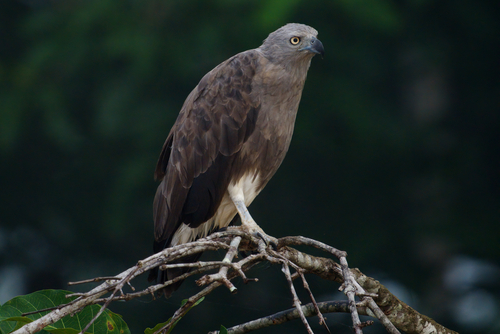
The black-winged kite (Elanus caeruleus), also known as the black-shouldered kite (not to be confused with the closely related Australian species of the same name), is a small diurnal bird of prey in the family Accipitridae best known for its habit of hovering over open grasslands in the manner of the much smaller kestrels. This Palearctic and Afrotropical species was sometimes combined with the Australian black-shouldered kite (Elanus axillaris) and the white-tailed kite (Elanus leucurus) of North and South America which together form a superspecies. This kite is distinctive, with long wings; white, grey and black plumage; and owl-like forward-facing eyes with red irises. The owl-like behaviour is even more pronounced in the letter-winged kite (Elanus scriptus), a nocturnal relative in Australia. Although mainly seen on plains, they are sometimes seen on grassy slopes of hills in the higher elevation regions of Asia. They are not migratory, but show nomadism in response to weather and food availability. They are well adapted to utilize periodic upsurges in rodent populations and can raise multiple broods in a single year unlike most birds of prey. Populations in southern Europe have grown in response to human activities, particularly agriculture and livestock rearing. It is now present in Southwest France. Wikipedia →

Sounds

Call0:45

Spain · 2025

© Esperanza Poveda · XC1062554 · CC BY-NC-SA 4.0

Begging call1:00

France · 2023

Sonothèque ADVL · XC823662 · CC0

Alarm call0:26

France · 2022

© Manceau Lionel · XC801406 · CC BY-NC-SA 4.0

Global Distribution

Parks Where Found

# Park Country Daily sighting probability
1 West Coast National Park 🇿🇦 South Africa
~70%
2 Pilanesberg National Park 🇿🇦 South Africa
~40%
3 Samburu National Reserve 🇰🇪 Kenya
~40%
4 Nairobi National Park 🇰🇪 Kenya
~40%
5 Lake Nakuru National Park 🇰🇪 Kenya
~30%
6 Serengeti National Park 🇹🇿 Tanzania
~30%
7 Addo Elephant National Park 🇿🇦 South Africa
~30%
8 Akagera National Park 🇷🇼 Rwanda
~30%
9 Tsavo East National Park 🇰🇪 Kenya
~30%
10 Masai Mara National Reserve 🇰🇪 Kenya
~30%
11 Mkomazi National Park 🇹🇿 Tanzania
~30%
12 Tarangire National Park 🇹🇿 Tanzania
~30%
13 Udawalawe National Park 🇱🇰 Sri Lanka
~20%
14 Keoladeo National Park 🇮🇳 India
~20%
15 Ranthambore National Park 🇮🇳 India
~20%
16 Awash National Park 🇪🇹 Ethiopia
~20%
17 Ruaha National Park 🇹🇿 Tanzania
~20%
18 Jim Corbett National Park 🇮🇳 India
~20%
19 Horton Plains National Park 🇱🇰 Sri Lanka
~20%
20 Queen Elizabeth National Park 🇺🇬 Uganda
~20%
21 Ngorongoro Conservation Area 🇹🇿 Tanzania
~20%
22 Satpura National Park 🇮🇳 India
~20%
23 Kidepo Valley National Park 🇺🇬 Uganda
~20%
24 Meru National Park 🇰🇪 Kenya
~20%
25 Way Kambas National Park 🇮🇩 Indonesia
~20%
26 De Hoop Nature Reserve 🇿🇦 South Africa
~20%
27 uMkhuze Game Reserve 🇿🇦 South Africa
~20%
28 Golden Gate Highlands National Park 🇿🇦 South Africa
~20%
29 Manas National Park 🇮🇳 India
~10%
30 Kruger National Park 🇿🇦 South Africa
~10%
31 Kanha National Park 🇮🇳 India
~10%
32 Murchison Falls National Park 🇺🇬 Uganda
~10%
33 Bandhavgarh National Park 🇮🇳 India
~10%
34 Waterberg Plateau Park 🇳🇦 Namibia
~10%
35 Bandipur National Park 🇮🇳 India
~10%
36 Gir National Park 🇮🇳 India
~10%
37 Kerinci Seblat National Park 🇮🇩 Indonesia
~10%
38 Amboseli National Park 🇰🇪 Kenya
~10%
39 Moremi Game Reserve 🇧🇼 Botswana
~10%
40 Hluhluwe-Imfolozi Park 🇿🇦 South Africa
~10%
41 Kgalagadi Transfrontier Park 🇿🇦 South Africa
~10%
42 Tsavo West National Park 🇰🇪 Kenya
~10%
43 Lake Mburo National Park 🇺🇬 Uganda
~10%
44 Aberdare National Park 🇰🇪 Kenya
~10%
45 Kaziranga National Park 🇮🇳 India
~10%
46 Kafue National Park 🇿🇲 Zambia
~10%
47 Chitwan National Park 🇳🇵 Nepal
~10%
48 Nagarhole National Park 🇮🇳 India
~10%
49 Lower Zambezi National Park 🇿🇲 Zambia
~10%
50 Mikumi National Park 🇹🇿 Tanzania
~10%
51 Monfragüe National Park 🇪🇸 Spain
~10%
52 South Luangwa National Park 🇿🇲 Zambia
<5%
53 Hwange National Park 🇿🇼 Zimbabwe
<5%
54 Sierra Nevada National Park 🇪🇸 Spain
<5%
55 Arusha National Park 🇹🇿 Tanzania
<5%
56 Mana Pools National Park 🇿🇼 Zimbabwe
<5%
57 Khao Yai National Park 🇹🇭 Thailand
<5%
58 Garden Route National Park 🇿🇦 South Africa
<5%
59 Chobe National Park 🇧🇼 Botswana
<5%
60 Lake Manyara National Park 🇹🇿 Tanzania
<5%
61 Mudumalai National Park 🇮🇳 India
<5%
62 Etosha National Park 🇳🇦 Namibia
<5%
63 Virunga National Park 🇨🇩 Democratic Republic of the Congo
<5%
64 Royal Bardia National Park 🇳🇵 Nepal
<5%
65 Periyar National Park 🇮🇳 India
<5%
66 Niokolo-Koba National Park 🇸🇳 Senegal
<5%
67 Wilpattu National Park 🇱🇰 Sri Lanka
<5%
68 iSimangaliso Wetland Park 🇿🇦 South Africa
<5%
69 Doñana National Park 🇪🇸 Spain
<5%
70 Minneriya National Park 🇱🇰 Sri Lanka
<5%
71 Table Mountain National Park 🇿🇦 South Africa
<5%
72 Cévennes National Park 🇫🇷 France
<5%
73 Sundarbans National Park 🇮🇳 India
<5%
74 Eravikulam National Park 🇮🇳 India
<5%
75 Yala National Park 🇱🇰 Sri Lanka
<5%
76 Semuliki National Park 🇺🇬 Uganda
<5%
77 Namdapha National Park 🇮🇳 India
<5%
78 Pyrénées National Park 🇫🇷 France
<5%
79 Kibale National Park 🇺🇬 Uganda
<5%
80 Taroko National Park 🇹🇼 Taiwan
<5%
81 Bwindi Impenetrable National Park 🇺🇬 Uganda
<5%
82 Camargue 🇫🇷 France
<5%
83 Kinabatangan Wildlife Sanctuary 🇲🇾 Malaysia
<5%
84 Taman Negara National Park 🇲🇾 Malaysia
<5%
85 Kaeng Krachan National Park 🇹🇭 Thailand
<5%

Cities Where Found

# City Country Daily sighting probability
1 Quanzhou 🇨🇳 China
~40%
2 Luxor 🇪🇬 Egypt
~40%
3 Vasai-Virar 🇮🇳 India
~40%
4 Jaipur 🇮🇳 India
~30%
5 Indore 🇮🇳 India
~20%
6 Maiduguri 🇳🇬 Nigeria
~20%
7 Ranchi 🇮🇳 India
~20%
8 Tel Aviv 🇮🇱 Israel
~20%
9 Bhopal 🇮🇳 India
~20%
10 N'Djamena 🇹🇩 Chad
~20%

Zoos & Centres Where Found

# Zoo / Centre Country
1 Safari World 🇹🇭 Thailand In captivity
2 Bandung Zoo 🇮🇩 Indonesia In captivity
3 Dullstroom Bird Of Prey & Rehabilitation Centre 🇿🇦 South Africa In captivity
4 Kuala Lumpur Bird Park 🇲🇾 Malaysia In captivity
5 Zoo del Pirineu 🇪🇸 Spain In captivity

Before you go

What are the chances of seeing a Black-winged Kite in Royal Bardia National Park?

Rare

Under 5% of wildlife watchers report a Black-winged Kite sighting in Royal Bardia National Park on a given day, based on 16 verified sightings from GBIF citizen-science data from 2019 to 2026. It is the 188th most-seen of the 233 birds we can rate there. Over three days the chance rises to about 10%, and over a week to about 20%, if each day is a fresh chance.

When is the best time to see a Black-winged Kite in Royal Bardia National Park?

January, July and September

In those months about 10% of wildlife watchers report a Black-winged Kite in Royal Bardia National Park on a given day, against under 5% in February–June and October–December, the lowest months. Those are among Royal Bardia National Park's wettest months, with about 290 mm of rain a month against almost none in November. August has too few records to rate.

What time of day is best to see a Black-winged Kite?

Between 8 and 11 am

Across all the parks we cover, that three-hour window holds the most Black-winged Kite sightings with a recorded time, and about 9 in 10 of them come between 6 am and 6 pm: it is a daytime animal.

Which relatives of the Black-winged Kite live in Royal Bardia National Park?

Same family: Accipitridae

The closest relatives of the Black-winged Kite that you can see in Royal Bardia National Park (family Accipitridae, Hawks, Eagles, and Kites) are Crested Serpent Eagle (about 50%), Crested Hawk-Eagle (about 40%) and Oriental Honey-buzzard (about 30%), with each one's daily chance of a sighting.

Where does the Black-winged Kite sighting chance come from?

GBIF citizen-science records

It is estimated from how often the Black-winged Kite is recorded against all the birds logged in Royal Bardia National Park (16 verified sightings from 2019 to 2026), calibrated against known sighting rates. Figures are rounded to the nearest 10% because citizen-science data supports honest approximations, not decimals, and months with records from fewer than five people show "—". How it works.

← Back to Royal Bardia National Park