Collared Forest Falcon

Collared Forest Falcon

Micrastur semitorquatus

Silhouette: Unknown (photo), John E. McCormack, Michael G. Harvey, Brant C. Faircloth, Nicholas G. Crawford, Travis C. Glenn, Robb T. Brumfield & T. Michael Keesey · PhyloPic

LCLeast ConcernNTVUENCR
Daily sighting probability <5% · Rare
at Tapantí-Macizo de la Muerte National Park

In 3 days <5% in a week ~10%

76 Verified sightings at Tapantí-Macizo de la Muerte National Park From 2019 to 2026
5,341 In all 59 parks
September Best month
☀️ Diurnal When it's spotted

About the Collared Forest Falcon

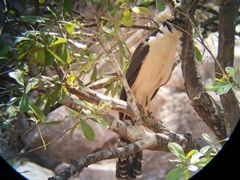
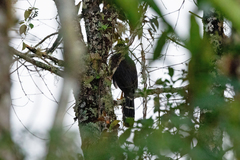
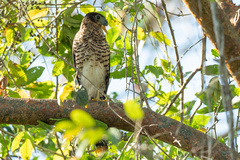
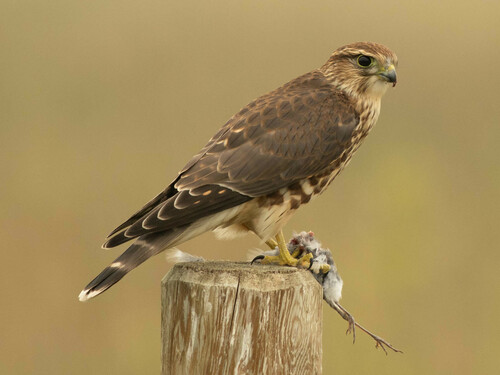
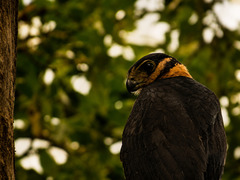
The collared forest falcon (Micrastur semitorquatus) is a species of bird of prey in the family Falconidae. It is the largest member of the Micrastur genus and a common inhabitant of tropical rainforests in Latin America. Hiding in the dense forest canopy, they are a secretive bird often only recognized by their distinctive call. With a morphology or body type allowing them to be agile in their forested habitat, their diet comprises a wide variety of prey from smaller frogs (20 g) to adult turkeys (2.7-3.2 kg).

Nesting occurs mainly in the cavities of Spanish cedar trees, which are also a key species exploited by the local logging industry. This is a potential conservation concern for the collared forest falcon. The collared forest falcon has a dark coloured back with a white neck and breast. The species has three morphological variants (morphs): pale, tawny and dark. The former two have a light coloured collar at the back of their neck, which explains their name. This is the largest species of the forest falcon genus, with a total length of 46 to 58 cm (18 to 23 in), wingspan of 72 to 86 cm (28 to 34 in) and male weights of 467 to 646 g (1.030 to 1.424 lb), averaging... Wikipedia →

Sounds

Song0:04

Argentina · 2026

© Faustino Hollmann · XC1176801 · CC BY-NC-SA 4.0

Call0:58

Ecuador · 2024

© Manuel Sánchez-Nivicela · XC1142549 · CC BY-NC-ND 4.0

Duet0:32

Brazil · 2017

© Rodrigo Y Castro · XC915055 · CC BY-NC-SA 4.0

Global Distribution

Parks Where Found

# Park Country Daily sighting probability
1 El Triunfo 🇲🇽 Mexico
~20%
2 Carara National Park 🇨🇷 Costa Rica
~10%
3 Cerro Azul Meámbar National Park 🇭🇳 Honduras
~10%
4 Cumbres de Monterrey National Park 🇲🇽 Mexico
~10%
5 Calakmul Biosphere Reserve 🇲🇽 Mexico
~10%
6 Pico Bonito National Park 🇭🇳 Honduras
~10%
7 Montes Azules Biosphere Reserve 🇲🇽 Mexico
~10%
8 La Tigra National Park 🇭🇳 Honduras
~10%
9 Soberanía National Park 🇵🇦 Panama
~10%
10 Celaque National Park 🇭🇳 Honduras
~10%
11 Santa Rosa National Park 🇨🇷 Costa Rica
~10%
12 Cockscomb Basin Wildlife Sanctuary 🇧🇿 Belize
~10%
13 Piedras Blancas National Park 🇨🇷 Costa Rica
~10%
14 Lago de Yojoa 🇭🇳 Honduras
~10%
15 Corcovado National Park 🇨🇷 Costa Rica
~10%
16 Tambopata National Reserve 🇵🇪 Peru
<5%
17 Palo Verde National Park 🇨🇷 Costa Rica
<5%
18 Iguazú National Park 🇦🇷 Argentina
<5%
19 Serra dos Órgãos National Park 🇧🇷 Brazil
<5%
20 Rincón de la Vieja National Park 🇨🇷 Costa Rica
<5%
21 Sian Ka'an Biosphere Reserve 🇲🇽 Mexico
<5%
22 Cabo Blanco Absolute Nature Reserve 🇨🇷 Costa Rica
<5%
23 Braulio Carrillo National Park 🇨🇷 Costa Rica
<5%
24 Iguaçu National Park 🇧🇷 Brazil
<5%
25 Tikal National Park 🇬🇹 Guatemala
<5%
26 Cusuco National Park 🇭🇳 Honduras
<5%
27 Gandoca-Manzanillo Wildlife Refuge 🇨🇷 Costa Rica
<5%
28 Ostional Wildlife Refuge 🇨🇷 Costa Rica
<5%
29 Marino Ballena National Park 🇨🇷 Costa Rica
<5%
30 Chagres National Park 🇵🇦 Panama
<5%
31 Manuel Antonio National Park 🇨🇷 Costa Rica
<5%
32 Tayrona National Natural Park 🇨🇴 Colombia
<5%
33 Manu National Park 🇵🇪 Peru
<5%
34 Amboró National Park 🇧🇴 Bolivia
<5%
35 Celestún Biosphere Reserve 🇲🇽 Mexico
<5%
36 Tortuguero National Park 🇨🇷 Costa Rica
<5%
37 Cahuita National Park 🇨🇷 Costa Rica
<5%
38 Darién National Park 🇵🇦 Panama
<5%
39 Cuyabeno Wildlife Reserve 🇪🇨 Ecuador
<5%
40 Biotopo Cerro Cahuí 🇬🇹 Guatemala
<5%
41 Las Baulas Marine National Park 🇨🇷 Costa Rica
<5%
42 Cañón del Sumidero National Park 🇲🇽 Mexico
<5%
43 La Amistad International Park (Panama) 🇵🇦 Panama
<5%
44 Machalilla National Park 🇪🇨 Ecuador
<5%
45 Parque Natural Metropolitano 🇵🇦 Panama
<5%
46 Monteverde Cloud Forest Reserve 🇨🇷 Costa Rica
<5%
47 Parque Estadual Encontro das Águas 🇧🇷 Brazil
<5%
48 Amacayacu National Natural Park 🇨🇴 Colombia
<5%
49 Itatiaia National Park 🇧🇷 Brazil
<5%
50 Arenal Volcano National Park 🇨🇷 Costa Rica
<5%
51 Tenorio Volcano National Park 🇨🇷 Costa Rica
<5%
52 Bastimentos Island National Marine Park 🇵🇦 Panama
<5%
53 Tapantí-Macizo de la Muerte National Park 🇨🇷 Costa Rica
<5%
54 Yasuní National Park 🇪🇨 Ecuador
<5%
55 Los Nevados National Natural Park 🇨🇴 Colombia
<5%
56 Poás Volcano National Park 🇨🇷 Costa Rica
<5%
57 Volcán Barú National Park 🇵🇦 Panama
<5%
58 Los Quetzales National Park 🇨🇷 Costa Rica
<5%
59 Farallones de Cali National Natural Park 🇨🇴 Colombia
<5%

Cities Where Found

# City Country Daily sighting probability
1 San Pedro Sula 🇭🇳 Honduras
<5%
2 João Pessoa 🇧🇷 Brazil
<5%
3 San Salvador 🇸🇻 El Salvador
<5%
4 Managua 🇳🇮 Nicaragua
<5%
5 San José 🇨🇷 Costa Rica
<5%
6 Curitiba 🇧🇷 Brazil
<5%
7 Guatemala City 🇬🇹 Guatemala
<5%
8 Panama City 🇵🇦 Panama
<5%
9 São Paulo 🇧🇷 Brazil
<5%

Zoos & Centres Where Found

# Zoo / Centre Country
1 Auto Safari Chapin 🇬🇹 Guatemala In captivity
2 GüiráOga 🇦🇷 Argentina In captivity

Before you go

What are the chances of seeing a Collared Forest Falcon in Tapantí-Macizo de la Muerte National Park?

Rare

Under 5% of wildlife watchers report a Collared Forest Falcon sighting in Tapantí-Macizo de la Muerte National Park on a given day, based on 76 verified sightings from GBIF citizen-science data from 2019 to 2026. It is the 338th most-seen of the 467 birds we can rate there. Over three days the chance rises to under 5%, and over a week to about 10%, if each day is a fresh chance.

When is the best time to see a Collared Forest Falcon in Tapantí-Macizo de la Muerte National Park?

September

In that month about 10% of wildlife watchers report a Collared Forest Falcon in Tapantí-Macizo de la Muerte National Park on a given day, against under 5% in October to August, the lowest months.

What time of day is best to see a Collared Forest Falcon?

Between 8 and 11 am

Across all the parks we cover, that three-hour window holds the most Collared Forest Falcon sightings with a recorded time, and about 9 in 10 of them come between 6 am and 6 pm: it is a daytime animal.

Is Tapantí-Macizo de la Muerte National Park the best place to see a Collared Forest Falcon?

53rd of 59

Of the 59 parks where we can rate Collared Forest Falcon sightings, Tapantí-Macizo de la Muerte National Park ranks 53rd at under 5%. The best odds are in El Triunfo (Mexico, about 20%), Carara National Park (Costa Rica, about 10%) and Cerro Azul Meámbar National Park (Honduras, about 10%).

Where does the Collared Forest Falcon sighting chance come from?

GBIF citizen-science records

It is estimated from how often the Collared Forest Falcon is recorded against all the birds logged in Tapantí-Macizo de la Muerte National Park (76 verified sightings from 2019 to 2026), calibrated against known sighting rates. Figures are rounded to the nearest 10% because citizen-science data supports honest approximations, not decimals, and months with records from fewer than five people show "—". How it works.

← Back to Tapantí-Macizo de la Muerte National Park