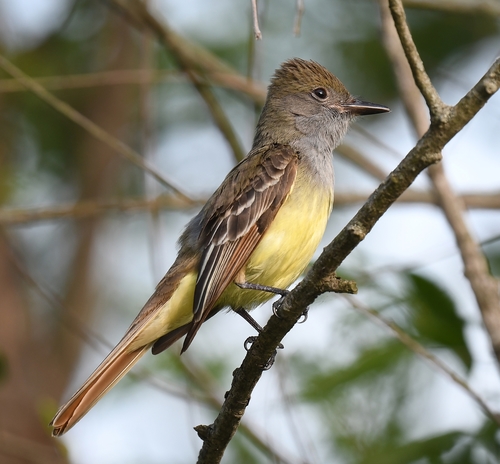
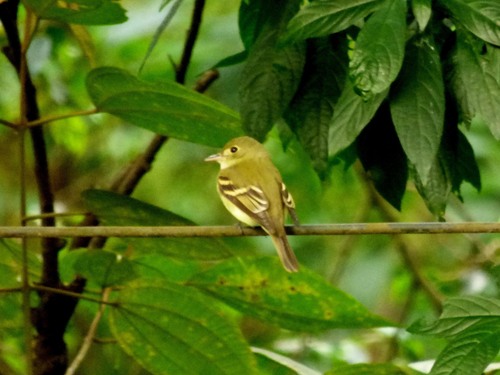
Olive-sided Flycatcher

Olive-sided Flycatcher

Contopus cooperi

Silhouette: Andy Wilson · PhyloPic

LCLeast ConcernNTVUENCR
Daily sighting probability <5% · Rare
at Baltimore

In 3 days <5%

19 Verified sightings at Baltimore
7,285 In all 73 parks From 2019 to 2026
May Best month
☀️ Diurnal When it's spotted

About the Olive-sided Flycatcher

The olive-sided flycatcher (Contopus cooperi) is a small to medium sized passerine bird in the family Tyrannidae, the tyrant flycatcher family. It is a migratory species that travels from South America to North America to breed during the summer. It is an agile flyer and mainly consumes flying insects caught in flight. Since 2016, this species has been assessed as being near-threatened globally (IUCN) and threatened in Canada (SRA) due to its declining populations.

The olive-sided flycatcher is a small to medium-sized passerine, smaller than an American robin, but bigger than sparrows. It can be identified by its olive-grey or grey-brownish plumage above with a white mid-breast section and throat. The olive tones on its back and wings are seen mainly in optimal light and when the feathers are freshly moulted. The sides of the breast area are grey and make the bird look like it is wearing a vest. It has a relatively long bill and long wings for its size. Sometimes, some of its head feathers can be raised, which make it look like it has a small crest. Male and female look similar. Olive-sided flycatchers perch in upright positions on top of dead... Wikipedia →

Sounds

Song1:08

United States · 2026

© Greg Irving · XC1154299 · CC BY-NC-SA 4.0

Call0:44

Canada · 2018

© MARK BRENNAN · XC1014659 · CC BY-NC-SA 4.0

Uncertain0:38

United States · 2021

© Ron Overholtz · XC657764 · CC BY-NC-SA 4.0

Global Distribution

Parks Where Found

# Park Country Daily sighting probability
1 Glacier National Park 🇺🇸 United States
~30%
2 Yosemite National Park 🇺🇸 United States
~20%
3 Gros Morne National Park 🇨🇦 Canada
~10%
4 Sequoia and Kings Canyon National Parks 🇺🇸 United States
~10%
5 Grand Teton National Park 🇺🇸 United States
~10%
6 Wrangell-St. Elias National Park 🇺🇸 United States
~10%
7 Guadalupe Mountains National Park 🇺🇸 United States
~10%
8 Kluane National Park 🇨🇦 Canada
~10%
9 Olympic National Park 🇺🇸 United States
~10%
10 Bastimentos Island National Marine Park 🇵🇦 Panama
<5%
11 Big Bend National Park 🇺🇸 United States
<5%
12 Rocky Mountain National Park 🇺🇸 United States
<5%
13 Death Valley National Park 🇺🇸 United States
<5%
14 Rincón de la Vieja National Park 🇨🇷 Costa Rica
<5%
15 Irazú Volcano National Park 🇨🇷 Costa Rica
<5%
16 Yellowstone National Park 🇺🇸 United States
<5%
17 Cahuita National Park 🇨🇷 Costa Rica
<5%
18 Banff National Park 🇨🇦 Canada
<5%
19 La Tigra National Park 🇭🇳 Honduras
<5%
20 Tapantí-Macizo de la Muerte National Park 🇨🇷 Costa Rica
<5%
21 Braulio Carrillo National Park 🇨🇷 Costa Rica
<5%
22 La Amistad International Park (Panama) 🇵🇦 Panama
<5%
23 Tenorio Volcano National Park 🇨🇷 Costa Rica
<5%
24 Gandoca-Manzanillo Wildlife Refuge 🇨🇷 Costa Rica
<5%
25 Chagres National Park 🇵🇦 Panama
<5%
26 Los Quetzales National Park 🇨🇷 Costa Rica
<5%
27 Riding Mountain National Park 🇨🇦 Canada
<5%
28 Cockscomb Basin Wildlife Sanctuary 🇧🇿 Belize
<5%
29 Celaque National Park 🇭🇳 Honduras
<5%
30 Tortuguero National Park 🇨🇷 Costa Rica
<5%
31 Monteverde Cloud Forest Reserve 🇨🇷 Costa Rica
<5%
32 Soberanía National Park 🇵🇦 Panama
<5%
33 Cañón del Sumidero National Park 🇲🇽 Mexico
<5%
34 Cape Breton Highlands National Park 🇨🇦 Canada
<5%
35 Arenal Volcano National Park 🇨🇷 Costa Rica
<5%
36 Denali National Park 🇺🇸 United States
<5%
37 Henri Pittier National Park 🇻🇪 Venezuela
<5%
38 Volcán Barú National Park 🇵🇦 Panama
<5%
39 Biotopo Cerro Cahuí 🇬🇹 Guatemala
<5%
40 Podocarpus National Park 🇪🇨 Ecuador
<5%
41 Poás Volcano National Park 🇨🇷 Costa Rica
<5%
42 Santa Rosa National Park 🇨🇷 Costa Rica
<5%
43 Anavilhanas National Park 🇧🇷 Brazil
<5%
44 Point Pelee National Park 🇨🇦 Canada
<5%
45 Cumbres de Monterrey National Park 🇲🇽 Mexico
<5%
46 Yasuní National Park 🇪🇨 Ecuador
<5%
47 Pacific Rim National Park Reserve 🇨🇦 Canada
<5%
48 Cusuco National Park 🇭🇳 Honduras
<5%
49 Cerro Azul Meámbar National Park 🇭🇳 Honduras
<5%
50 Piedras Blancas National Park 🇨🇷 Costa Rica
<5%
51 Elk Island National Park 🇨🇦 Canada
<5%
52 Grand Canyon National Park 🇺🇸 United States
<5%
53 Pico Bonito National Park 🇭🇳 Honduras
<5%
54 Parque Natural Metropolitano 🇵🇦 Panama
<5%
55 Redwood National Park 🇺🇸 United States
<5%
56 Corcovado National Park 🇨🇷 Costa Rica
<5%
57 Zion National Park 🇺🇸 United States
<5%
58 Lago de Yojoa 🇭🇳 Honduras
<5%
59 Chirripó National Park 🇨🇷 Costa Rica
<5%
60 Carara National Park 🇨🇷 Costa Rica
<5%
61 Great Bear Rainforest 🇨🇦 Canada
<5%
62 Tikal National Park 🇬🇹 Guatemala
<5%
63 Jasper National Park 🇨🇦 Canada
<5%
64 Marino Ballena National Park 🇨🇷 Costa Rica
<5%
65 Chingaza National Natural Park 🇨🇴 Colombia
<5%
66 Manuel Antonio National Park 🇨🇷 Costa Rica
<5%
67 Farallones de Cali National Natural Park 🇨🇴 Colombia
<5%
68 Los Nevados National Natural Park 🇨🇴 Colombia
<5%
69 Acadia National Park 🇺🇸 United States
<5%
70 Manu National Park 🇵🇪 Peru
<5%
71 Channel Islands National Park 🇺🇸 United States
<5%
72 Saguaro National Park 🇺🇸 United States
<5%
73 Shenandoah National Park 🇺🇸 United States
<5%

Cities Where Found

# City Country Daily sighting probability
1 Bogota 🇨🇴 Colombia
~10%
2 Quito 🇪🇨 Ecuador
~10%
3 Mexico City 🇲🇽 México
<5%
4 Toluca 🇲🇽 México
<5%
5 Miami 🇺🇸 United States
<5%
6 Guatemala City 🇬🇹 Guatemala
<5%
7 Torreón 🇲🇽 México
<5%
8 Calgary 🇨🇦 Canada
<5%
9 Chicago 🇺🇸 United States
<5%
10 San José 🇨🇷 Costa Rica
<5%

Before you go

What are the chances of seeing an Olive-sided Flycatcher in Baltimore?

Rare

Under 5% of wildlife watchers report an Olive-sided Flycatcher sighting in Baltimore on a given day, based on 19 verified sightings from GBIF citizen-science data. It is the 226th most-seen of the 246 birds we can rate there. Over three days the chance rises to under 5%, if each day is a fresh chance.

When is the best time to see an Olive-sided Flycatcher in Baltimore?

Any time of year

In every month with enough records, under 5% of wildlife watchers report an Olive-sided Flycatcher in Baltimore on a given day, so our monthly data shows no clear season.

What time of day is best to see an Olive-sided Flycatcher?

Between 8 and 11 am

Across all the parks we cover, that three-hour window holds the most Olive-sided Flycatcher sightings with a recorded time, and about 9 in 10 of them come between 6 am and 6 pm: it is a daytime animal.

Is Baltimore the best place to see an Olive-sided Flycatcher?

39th of 44

Of the 44 cities where we can rate Olive-sided Flycatcher sightings, Baltimore ranks 39th at under 5%. The best odds are in Bogota (Colombia, about 10%), Quito (Ecuador, about 10%) and Mexico City (México, under 5%).

Where does the Olive-sided Flycatcher sighting chance come from?

GBIF citizen-science records

It is estimated from how often the Olive-sided Flycatcher is recorded against all the birds logged in Baltimore (19 verified sightings), calibrated against known sighting rates. Figures are rounded to the nearest 10% because citizen-science data supports honest approximations, not decimals, and months with records from fewer than five people show "—". How it works.

← Back to Baltimore