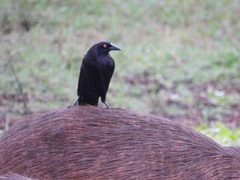
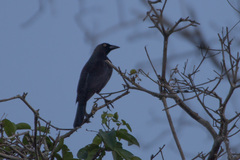
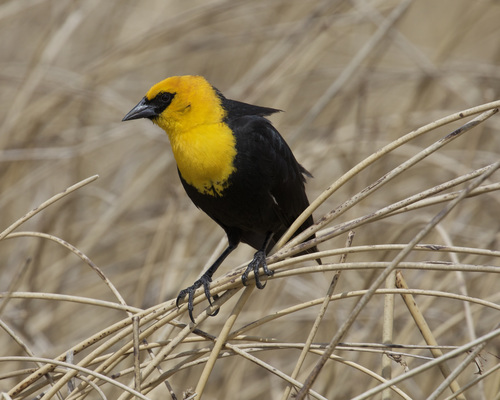
Giant Cowbird

Giant Cowbird

Molothrus oryzivorus

Silhouette: Andy Wilson · PhyloPic

LCLeast ConcernNTVUENCR
Daily sighting probability <5% · Rare
at Manuel Antonio National Park

In 3 days ~10% in a week ~20%

54 Verified sightings at Manuel Antonio National Park From 2019 to 2026
6,314 In all 50 parks
April Best month
☀️ Diurnal When it's spotted

About the Giant Cowbird

The giant cowbird (Molothrus oryzivorus) is a large passerine bird in the New World family Icteridae. It breeds from southern Mexico south to northern Argentina, and on Trinidad and Tobago. It may have relatively recently colonised the latter island. It is a brood parasite and lays its eggs in the nests of other birds.

The giant cowbird was formally described in 1788 by the German naturalist Johann Friedrich Gmelin in his revised and expanded edition of Carl Linnaeus's Systema Naturae. He placed it with the orioles in the genus Oriolus and coined the binomial name Oriolus oryzivorus. Gmelin based his account on the "rice bird" from Cayenne that had been described in 1782 by the English ornithologist John Latham in his multi-volume work A General Synopsis of Birds. The specific epithet is from Latin oryza meaning "rice" and -vorus meaning "eating". The giant cowbird is now one of six cowbirds placed in the genus Molothrus that was introduced in 1832 by William Swainson.

Two subspecies are recognised: Wikipedia →

Sounds

Call0:27

Brazil · 2026

© JAYRSON ARAUJO DE OLIVEIRA · XC1163746 · CC BY-NC-SA 4.0

Song0:16

Colombia · 2021

© Mauricio Cuellar Ramirez (@Birding.travel) · XC694080 · CC BY-NC-SA 4.0

Recording1:01

Brazil · 2019

© Marco Manhães · XC666421 · CC BY-NC-SA 4.0

Global Distribution

Parks Where Found

# Park Country Daily sighting probability
1 Amboró National Park 🇧🇴 Bolivia
~30%
2 Main Ridge Forest Reserve 🇹🇹 Trinidad and Tobago
~30%
3 Yasuní National Park 🇪🇨 Ecuador
~20%
4 Parque Estadual Encontro das Águas 🇧🇷 Brazil
~20%
5 Tambopata National Reserve 🇵🇪 Peru
~20%
6 Cuyabeno Wildlife Reserve 🇪🇨 Ecuador
~20%
7 Iguaçu National Park 🇧🇷 Brazil
~10%
8 Manu National Park 🇵🇪 Peru
~10%
9 Iguazú National Park 🇦🇷 Argentina
~10%
10 Amacayacu National Natural Park 🇨🇴 Colombia
~10%
11 Chapada dos Guimarães National Park 🇧🇷 Brazil
~10%
12 Lago de Yojoa 🇭🇳 Honduras
~10%
13 Serra da Canastra National Park 🇧🇷 Brazil
~10%
14 Bastimentos Island National Marine Park 🇵🇦 Panama
~10%
15 San Lorenzo Protected Forest 🇵🇦 Panama
~10%
16 Caroni Swamp 🇹🇹 Trinidad and Tobago
~10%
17 Pico Bonito National Park 🇭🇳 Honduras
~10%
18 Cerro Azul Meámbar National Park 🇭🇳 Honduras
~10%
19 Tikal National Park 🇬🇹 Guatemala
~10%
20 Cusuco National Park 🇭🇳 Honduras
~10%
21 Sierra de la Macarena National Park 🇨🇴 Colombia
~10%
22 La Amistad International Park (Panama) 🇵🇦 Panama
~10%
23 Brownsberg Nature Park 🇸🇷 Suriname
<5%
24 Braulio Carrillo National Park 🇨🇷 Costa Rica
<5%
25 Soberanía National Park 🇵🇦 Panama
<5%
26 Gandoca-Manzanillo Wildlife Refuge 🇨🇷 Costa Rica
<5%
27 Anavilhanas National Park 🇧🇷 Brazil
<5%
28 Tortuguero National Park 🇨🇷 Costa Rica
<5%
29 Manuel Antonio National Park 🇨🇷 Costa Rica
<5%
30 Cockscomb Basin Wildlife Sanctuary 🇧🇿 Belize
<5%
31 Rincón de la Vieja National Park 🇨🇷 Costa Rica
<5%
32 Henri Pittier National Park 🇻🇪 Venezuela
<5%
33 Machalilla National Park 🇪🇨 Ecuador
<5%
34 Piedras Blancas National Park 🇨🇷 Costa Rica
<5%
35 Arenal Volcano National Park 🇨🇷 Costa Rica
<5%
36 Tayrona National Natural Park 🇨🇴 Colombia
<5%
37 Chagres National Park 🇵🇦 Panama
<5%
38 Los Nevados National Natural Park 🇨🇴 Colombia
<5%
39 Chirripó National Park 🇨🇷 Costa Rica
<5%
40 Marino Ballena National Park 🇨🇷 Costa Rica
<5%
41 Podocarpus National Park 🇪🇨 Ecuador
<5%
42 Tenorio Volcano National Park 🇨🇷 Costa Rica
<5%
43 Itatiaia National Park 🇧🇷 Brazil
<5%
44 Carara National Park 🇨🇷 Costa Rica
<5%
45 Farallones de Cali National Natural Park 🇨🇴 Colombia
<5%
46 Tapantí-Macizo de la Muerte National Park 🇨🇷 Costa Rica
<5%
47 Corcovado National Park 🇨🇷 Costa Rica
<5%
48 Parque Natural Metropolitano 🇵🇦 Panama
<5%
49 Poás Volcano National Park 🇨🇷 Costa Rica
<5%
50 Monteverde Cloud Forest Reserve 🇨🇷 Costa Rica
<5%

Cities Where Found

# City Country Daily sighting probability
1 Santa Cruz de la Sierra 🇧🇴 Bolivia
~10%
2 Belém 🇧🇷 Brazil
<5%
3 Guayaquil 🇪🇨 Ecuador
<5%
4 Barranquilla 🇨🇴 Colombia
<5%
5 San Pedro Sula 🇭🇳 Honduras
<5%
6 Medellín 🇨🇴 Colombia
<5%
7 San José 🇨🇷 Costa Rica
<5%
8 Caracas 🇻🇪 Venezuela
<5%
9 Panama City 🇵🇦 Panama
<5%
10 Bogota 🇨🇴 Colombia
<5%

Zoos & Centres Where Found

# Zoo / Centre Country
1 Parque das Aves 🇧🇷 Brazil In captivity

Before you go

What are the chances of seeing a Giant Cowbird in Manuel Antonio National Park?

Rare

Under 5% of wildlife watchers report a Giant Cowbird sighting in Manuel Antonio National Park on a given day, based on 54 verified sightings from GBIF citizen-science data from 2019 to 2026. It is the 151st most-seen of the 325 birds we can rate there. Over three days the chance rises to about 10%, and over a week to about 20%, if each day is a fresh chance.

When is the best time to see a Giant Cowbird in Manuel Antonio National Park?

April and September–November

In those months about 10% of wildlife watchers report a Giant Cowbird in Manuel Antonio National Park on a given day, against under 5% in May–August and December–March, the lowest months.

What time of day is best to see a Giant Cowbird?

Between 7 and 10 am

Across all the parks we cover, that three-hour window holds the most Giant Cowbird sightings with a recorded time, and about 9 in 10 of them come between 6 am and 6 pm: it is a daytime animal.

Is Manuel Antonio National Park the best place to see a Giant Cowbird?

29th of 50

Of the 50 parks where we can rate Giant Cowbird sightings, Manuel Antonio National Park ranks 29th at under 5%. The best odds are in Amboró National Park (Bolivia, about 30%), Main Ridge Forest Reserve (Trinidad and Tobago, about 30%) and Yasuní National Park (Ecuador, about 20%).

Where does the Giant Cowbird sighting chance come from?

GBIF citizen-science records

It is estimated from how often the Giant Cowbird is recorded against all the birds logged in Manuel Antonio National Park (54 verified sightings from 2019 to 2026), calibrated against known sighting rates. Figures are rounded to the nearest 10% because citizen-science data supports honest approximations, not decimals, and months with records from fewer than five people show "—". How it works.

← Back to Manuel Antonio National Park