Shiny Cowbird

Shiny Cowbird

Molothrus bonariensis

Silhouette: Andy Wilson · PhyloPic

LCLeast ConcernNTVUENCR
Daily sighting probability <5% · Rare
at Everglades National Park

In 3 days ~10% in a week ~30%

406 Verified sightings at Everglades National Park From 2019 to 2026
8,542 In all 60 parks
July Best month
☀️ Diurnal When it's spotted

About the Shiny Cowbird

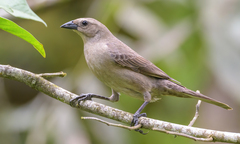
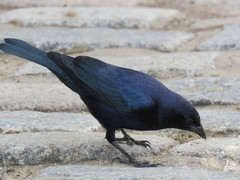
The shiny cowbird (Molothrus bonariensis) is a passerine bird in the New World family Icteridae. It breeds in most of South America except for dense forests and areas of high altitude such as mountains. Since 1900 the shiny cowbird's range has shifted northward, and it was recorded in the Caribbean islands as well as the United States, where it is found breeding in southern Florida. It is a bird associated with open habitats, including disturbed land from agriculture and deforestation.

Adults are sexually dimorphic. Males are all black with a purple-blue iridescence. The female is smaller, with dull brown plumage that is sometimes paler on the underparts. Females of the species can be distinguished from the female brown-headed cowbird by their longer, finer bills and flatter heads. The shiny cowbird's diet consists mainly of insects, other arthropods and seeds, and they have been recorded foraging for grains in cattle troughs.

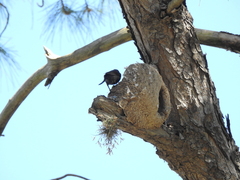
Like most other cowbirds, it is an obligate brood parasite, laying its eggs in the nests of many other bird species such as the rufous-collared sparrow. Different host species show different responses to their nests being parasitised, with behaviours ranging from accepting and caring for the cowbird eggs, to rejecting the eggs from the nest. As the shiny cowbird is an effective generalist brood parasite, it can be considered the South American counterpart to the brown-headed cowbird. Wikipedia →

Sounds

Song1:10

Brazil · 2025

© JAYRSON ARAUJO DE OLIVEIRA · XC1008474 · CC BY-NC-SA 4.0

Begging call0:24

Uruguay · 2024

© Pedro Rinaldi · XC944182 · CC BY-NC-SA 4.0

Call0:19

Brazil · 2024

© Glauko Corrêa · XC893237 · CC BY-NC-SA 4.0

Global Distribution

Parks Where Found

# Park Country Daily sighting probability
1 Iberá National Park 🇦🇷 Argentina
~40%
2 Chapada dos Guimarães National Park 🇧🇷 Brazil
~30%
3 El Palmar National Park 🇦🇷 Argentina
~30%
4 Tayrona National Natural Park 🇨🇴 Colombia
~30%
5 Itatiaia National Park 🇧🇷 Brazil
~30%
6 Main Ridge Forest Reserve 🇹🇹 Trinidad and Tobago
~30%
7 Serra da Canastra National Park 🇧🇷 Brazil
~30%
8 Anavilhanas National Park 🇧🇷 Brazil
~20%
9 Serra dos Órgãos National Park 🇧🇷 Brazil
~20%
10 Machalilla National Park 🇪🇨 Ecuador
~20%
11 El Impenetrable National Park 🇦🇷 Argentina
~20%
12 Emas National Park 🇧🇷 Brazil
~10%
13 Iguazú National Park 🇦🇷 Argentina
~10%
14 Iguaçu National Park 🇧🇷 Brazil
~10%
15 Chapada Diamantina National Park 🇧🇷 Brazil
~10%
16 Península Valdés 🇦🇷 Argentina
~10%
17 Farallones de Cali National Natural Park 🇨🇴 Colombia
~10%
18 Caroni Swamp 🇹🇹 Trinidad and Tobago
~10%
19 Soberanía National Park 🇵🇦 Panama
~10%
20 San Lorenzo Protected Forest 🇵🇦 Panama
~10%
21 Piedras Blancas National Park 🇨🇷 Costa Rica
~10%
22 Blue and John Crow Mountains National Park 🇯🇲 Jamaica
~10%
23 Nahuel Huapi National Park 🇦🇷 Argentina
~10%
24 Ciénaga de Zapata 🇨🇺 Cuba
~10%
25 Cuyabeno Wildlife Reserve 🇪🇨 Ecuador
~10%
26 Parque Estadual Encontro das Águas 🇧🇷 Brazil
~10%
27 Henri Pittier National Park 🇻🇪 Venezuela
~10%
28 Los Nevados National Natural Park 🇨🇴 Colombia
<5%
29 Yasuní National Park 🇪🇨 Ecuador
<5%
30 Braulio Carrillo National Park 🇨🇷 Costa Rica
<5%
31 Everglades National Park 🇺🇸 United States
<5%
32 Los Haitises National Park 🇩🇴 Dominican Republic
<5%
33 Amacayacu National Natural Park 🇨🇴 Colombia
<5%
34 Manuel Antonio National Park 🇨🇷 Costa Rica
<5%
35 Chagres National Park 🇵🇦 Panama
<5%
36 Volcán Barú National Park 🇵🇦 Panama
<5%
37 Tijuca National Park 🇧🇷 Brazil
<5%
38 La Amistad International Park (Panama) 🇵🇦 Panama
<5%
39 Chirripó National Park 🇨🇷 Costa Rica
<5%
40 Sierra de la Macarena National Park 🇨🇴 Colombia
<5%
41 Big Cypress National Preserve 🇺🇸 United States
<5%
42 Corcovado National Park 🇨🇷 Costa Rica
<5%
43 Arenal Volcano National Park 🇨🇷 Costa Rica
<5%
44 Cabo Blanco Absolute Nature Reserve 🇨🇷 Costa Rica
<5%
45 Parque Natural Metropolitano 🇵🇦 Panama
<5%
46 Marino Ballena National Park 🇨🇷 Costa Rica
<5%
47 Gandoca-Manzanillo Wildlife Refuge 🇨🇷 Costa Rica
<5%
48 Manu National Park 🇵🇪 Peru
<5%
49 Rincón de la Vieja National Park 🇨🇷 Costa Rica
<5%
50 Tambopata National Reserve 🇵🇪 Peru
<5%
51 Las Baulas Marine National Park 🇨🇷 Costa Rica
<5%
52 Cahuita National Park 🇨🇷 Costa Rica
<5%
53 Chingaza National Natural Park 🇨🇴 Colombia
<5%
54 Los Quetzales National Park 🇨🇷 Costa Rica
<5%
55 Podocarpus National Park 🇪🇨 Ecuador
<5%
56 Carara National Park 🇨🇷 Costa Rica
<5%
57 Bastimentos Island National Marine Park 🇵🇦 Panama
<5%
58 Tapantí-Macizo de la Muerte National Park 🇨🇷 Costa Rica
<5%
59 Tenorio Volcano National Park 🇨🇷 Costa Rica
<5%
60 Monteverde Cloud Forest Reserve 🇨🇷 Costa Rica
<5%

Cities Where Found

# City Country Daily sighting probability
1 Montevideo 🇺🇾 Uruguay
~60%
2 Mendoza 🇦🇷 Argentina
~60%
3 Santiago 🇨🇱 Chile
~60%
4 Asuncion 🇵🇾 Paraguay
~60%
5 Buenos Aires 🇦🇷 Argentina
~50%
6 Bogota 🇨🇴 Colombia
~50%
7 Curitiba 🇧🇷 Brazil
~50%
8 Cordoba 🇦🇷 Argentina
~50%
9 Brasilia 🇧🇷 Brazil
~40%
10 Rosario 🇦🇷 Argentina
~40%

Zoos & Centres Where Found

# Zoo / Centre Country
1 Bioparque Wakatá 🇨🇴 Colombia In captivity

Before you go

What are the chances of seeing a Shiny Cowbird in Everglades National Park?

Rare

Under 5% of wildlife watchers report a Shiny Cowbird sighting in Everglades National Park on a given day, based on 406 verified sightings from GBIF citizen-science data from 2019 to 2026. It is the 132nd most-seen of the 273 birds we can rate there. Over three days the chance rises to about 10%, and over a week to about 30%, if each day is a fresh chance.

When is the best time to see a Shiny Cowbird in Everglades National Park?

April and June–July

In those months about 20% of wildlife watchers report a Shiny Cowbird in Everglades National Park on a given day, against under 5% in September to March, the lowest months.

What time of day is best to see a Shiny Cowbird?

Between 9 am and noon

Across all the parks we cover, that three-hour window holds the most Shiny Cowbird sightings with a recorded time, and about 9 in 10 of them come between 6 am and 6 pm: it is a daytime animal.

Where does the Shiny Cowbird sighting chance come from?

GBIF citizen-science records

It is estimated from how often the Shiny Cowbird is recorded against all the birds logged in Everglades National Park (406 verified sightings from 2019 to 2026), calibrated against known sighting rates. Figures are rounded to the nearest 10% because citizen-science data supports honest approximations, not decimals, and months with records from fewer than five people show "—". How it works.

← Back to Everglades National Park