Southern Lapwing

Southern Lapwing

Vanellus chilensis

Silhouette: Edwin Price · PhyloPic

LCLeast ConcernNTVUENCR
Daily sighting probability ~20% · Possible
at Carara National Park

In 3 days ~40% in a week ~70%

1,337 Verified sightings at Carara National Park From 2019 to 2026
28,328 In all 61 parks
August Best month
☀️ Diurnal When it's spotted

About the Southern Lapwing

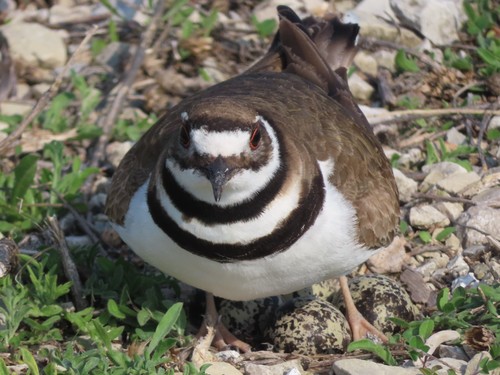
The southern lapwing (Vanellus chilensis), commonly called quero-quero in Brazil, or tero in Argentina and Uruguay, tero-tero in Paraguay, and queltehue in Chile is a wader in the order Charadriiformes. It is a common and widespread resident throughout South America, except in densely forested regions (e.g. most of the Amazon), the higher parts of the Andes, and the arid coast of a large part of western South America. This bird is particularly common in the basin of the Río de la Plata. It has also been spreading through Central America in recent years. It reached Trinidad in 1961, Tobago in 1974, and has rapidly increased on both islands, sporadically making its way North to Barbados where one pair mated, nested, and produced chicks in 2007.

This lapwing is the only crested wader in South America. It is 32 to 38 cm (13 to 15 in) in length and weighs approximately 250 to 425 g (8.8 to 15.0 oz). The upperparts are mainly brownish grey, with a bronze glossing on the shoulders. The head is particularly striking; mainly grey with a black forehead and throat patch extending onto the black breast. A white border separates the black of the face from the grey of the head and... Wikipedia →

Sounds

Duet0:08

Brazil · 2026

© JAYRSON ARAUJO DE OLIVEIRA · XC1163749 · CC BY-NC-SA 4.0

Call0:50

Ecuador · 2025

© Manuel Sánchez-Nivicela · XC1142514 · CC BY-NC-ND 4.0

Song0:10

Brazil · 2023

© Franciel da Silva Lima · XC1137787 · CC BY-NC-ND 4.0

Global Distribution

Parks Where Found

# Park Country Daily sighting probability
1 Iberá National Park 🇦🇷 Argentina
~80%
2 Nahuel Huapi National Park 🇦🇷 Argentina
~60%
3 Torres del Paine National Park 🇨🇱 Chile
~60%
4 Iguazú National Park 🇦🇷 Argentina
~60%
5 Iguaçu National Park 🇧🇷 Brazil
~60%
6 Vicente Pérez Rosales National Park 🇨🇱 Chile
~50%
7 Chapada dos Guimarães National Park 🇧🇷 Brazil
~50%
8 El Palmar National Park 🇦🇷 Argentina
~50%
9 Emas National Park 🇧🇷 Brazil
~50%
10 San Lorenzo Protected Forest 🇵🇦 Panama
~40%
11 Parque Estadual Encontro das Águas 🇧🇷 Brazil
~40%
12 Palo Verde National Park 🇨🇷 Costa Rica
~30%
13 Sierra de la Macarena National Park 🇨🇴 Colombia
~30%
14 Tierra del Fuego National Park 🇦🇷 Argentina
~30%
15 Soberanía National Park 🇵🇦 Panama
~30%
16 Península Valdés 🇦🇷 Argentina
~30%
17 Cuyabeno Wildlife Reserve 🇪🇨 Ecuador
~30%
18 Caroni Swamp 🇹🇹 Trinidad and Tobago
~30%
19 Marino Ballena National Park 🇨🇷 Costa Rica
~30%
20 Los Nevados National Natural Park 🇨🇴 Colombia
~30%
21 Piedras Blancas National Park 🇨🇷 Costa Rica
~20%
22 El Impenetrable National Park 🇦🇷 Argentina
~20%
23 Serra dos Órgãos National Park 🇧🇷 Brazil
~20%
24 Serra da Canastra National Park 🇧🇷 Brazil
~20%
25 Yasuní National Park 🇪🇨 Ecuador
~20%
26 Carara National Park 🇨🇷 Costa Rica
~20%
27 Farallones de Cali National Natural Park 🇨🇴 Colombia
~10%
28 La Amistad International Park (Panama) 🇵🇦 Panama
~10%
29 Main Ridge Forest Reserve 🇹🇹 Trinidad and Tobago
~10%
30 Chingaza National Natural Park 🇨🇴 Colombia
~10%
31 Henri Pittier National Park 🇻🇪 Venezuela
~10%
32 Manuel Antonio National Park 🇨🇷 Costa Rica
~10%
33 Tijuca National Park 🇧🇷 Brazil
~10%
34 Manu National Park 🇵🇪 Peru
~10%
35 Parque Natural Metropolitano 🇵🇦 Panama
~10%
36 Bastimentos Island National Marine Park 🇵🇦 Panama
~10%
37 Gandoca-Manzanillo Wildlife Refuge 🇨🇷 Costa Rica
~10%
38 Tambopata National Reserve 🇵🇪 Peru
~10%
39 Rincón de la Vieja National Park 🇨🇷 Costa Rica
~10%
40 Ostional Wildlife Refuge 🇨🇷 Costa Rica
~10%
41 Tayrona National Natural Park 🇨🇴 Colombia
~10%
42 Darién National Park 🇵🇦 Panama
~10%
43 Las Baulas Marine National Park 🇨🇷 Costa Rica
~10%
44 Braulio Carrillo National Park 🇨🇷 Costa Rica
~10%
45 Santa Rosa National Park 🇨🇷 Costa Rica
~10%
46 Chapada Diamantina National Park 🇧🇷 Brazil
~10%
47 Amacayacu National Natural Park 🇨🇴 Colombia
~10%
48 Chagres National Park 🇵🇦 Panama
<5%
49 Anavilhanas National Park 🇧🇷 Brazil
<5%
50 Tortuguero National Park 🇨🇷 Costa Rica
<5%
51 Corcovado National Park 🇨🇷 Costa Rica
<5%
52 Volcán Barú National Park 🇵🇦 Panama
<5%
53 Arenal Volcano National Park 🇨🇷 Costa Rica
<5%
54 Poás Volcano National Park 🇨🇷 Costa Rica
<5%
55 Cabo Blanco Absolute Nature Reserve 🇨🇷 Costa Rica
<5%
56 Tenorio Volcano National Park 🇨🇷 Costa Rica
<5%
57 Itatiaia National Park 🇧🇷 Brazil
<5%
58 Chirripó National Park 🇨🇷 Costa Rica
<5%
59 Cahuita National Park 🇨🇷 Costa Rica
<5%
60 Tapantí-Macizo de la Muerte National Park 🇨🇷 Costa Rica
<5%
61 Monteverde Cloud Forest Reserve 🇨🇷 Costa Rica
<5%

Cities Where Found

# City Country Daily sighting probability
1 Curitiba 🇧🇷 Brazil
~80%
2 Porto Alegre 🇧🇷 Brazil
~70%
3 Rosario 🇦🇷 Argentina
~60%
4 Campo Grande 🇧🇷 Brazil
~60%
5 Montevideo 🇺🇾 Uruguay
~60%
6 Cordoba 🇦🇷 Argentina
~60%
7 Bogota 🇨🇴 Colombia
~60%
8 Brasilia 🇧🇷 Brazil
~50%
9 Belém 🇧🇷 Brazil
~50%
10 Goiânia 🇧🇷 Brazil
~50%

Zoos & Centres Where Found

# Zoo / Centre Country
1 Prague Zoo 🇨🇿 Czechia In captivity
2 Parque das Aves 🇧🇷 Brazil In captivity
3 Zoo Pilsen 🇨🇿 Czechia In captivity
4 Abilene Zoological Gardens 🇺🇸 United States In captivity
5 Parque Municipal Summit 🇵🇦 Panama In captivity
6 Terra Natura Benidorm 🇪🇸 Spain In captivity
7 Houston Zoo 🇺🇸 United States In captivity
8 Philadelphia Zoo 🇺🇸 United States In captivity
9 Aviario Nacional de Colombia 🇨🇴 Colombia In captivity
10 The Abilene Zoo 🇺🇸 United States In captivity
11 Bird Park Steinen 🇩🇪 Germany In captivity
12 Buttonwood Park Zoo 🇺🇸 United States In captivity
13 Mississippi Aquarium 🇺🇸 United States In captivity
14 Parque Loro Sexi 🇪🇸 Spain In captivity
15 Rákosův pavilon 🇨🇿 Czechia In captivity
16 Velemlokárium 🇨🇿 Czechia In captivity
17 Acuario de Almuñécar 🇪🇸 Spain In captivity
18 GüiráOga 🇦🇷 Argentina In captivity

Before you go

What are the chances of seeing a Southern Lapwing in Carara National Park?

Possible

About 20% of wildlife watchers report a Southern Lapwing sighting in Carara National Park on a given day, based on 1,337 verified sightings from GBIF citizen-science data from 2019 to 2026. It is the 102nd most-seen of the 414 birds we can rate there. Over three days the chance rises to about 40%, and over a week to about 70%, if each day is a fresh chance.

When is the best time to see a Southern Lapwing in Carara National Park?

February–September and November–December

In those months about 20% of wildlife watchers report a Southern Lapwing in Carara National Park on a given day, against about 10% in January and October, the lowest months.

What time of day is best to see a Southern Lapwing?

Between 1 and 4 pm

Across all the parks we cover, that three-hour window holds the most Southern Lapwing sightings with a recorded time, and about 9 in 10 of them come between 6 am and 6 pm: it is a daytime animal.

Which relatives of the Southern Lapwing live in Carara National Park?

Same family: Charadriidae

The closest relatives of the Southern Lapwing that you can see in Carara National Park (family Charadriidae, Plovers and Lapwings) are Semipalmated Plover (about 20%) and Black-bellied Plover (about 10%), with each one's daily chance of a sighting.

Where does the Southern Lapwing sighting chance come from?

GBIF citizen-science records

It is estimated from how often the Southern Lapwing is recorded against all the birds logged in Carara National Park (1,337 verified sightings from 2019 to 2026), calibrated against known sighting rates. Figures are rounded to the nearest 10% because citizen-science data supports honest approximations, not decimals, and months with records from fewer than five people show "—". How it works.

← Back to Carara National Park