Little Blue Heron

Little Blue Heron

Egretta caerulea

Silhouette: L. Shyamal · PhyloPic

LCLeast ConcernNTVUENCR
Daily sighting probability ~20% · Possible
at Miami

In 3 days ~50% in a week ~80%

7,289 Verified sightings at Miami
40,429 In all 71 parks From 2019 to 2026
January Best month
☀️ Diurnal When it's spotted

About the Little Blue Heron

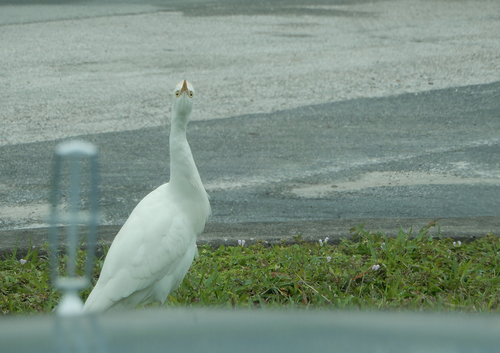
The little blue heron (Egretta caerulea) is a small heron of the genus Egretta. It is a small, darkly colored heron with a two-toned bill. Juveniles are entirely white, bearing resemblance to the snowy egret. During the breeding season, adults develop different coloration on the head, legs, and feet.

They have a range that encompasses much of the Americas, from the United States to northern South America. Some populations are migratory. They can be found in both saltwater and freshwater ecosystems. Their preference for either one depends on where they live.

Nesting behaviors are documented by numerous sources. The adults build nests in trees, in colonies with other bird species. The number of eggs laid varies from place to place. The young mature quickly, requiring little attention from adults after about nineteen days of age. Both young and adults are sometimes preyed on by other species. Adults hunt fish, crabs, and other small animals. As with clutch sizes, diet can vary regionally.

The population of E. caerulea is declining. Many possible reasons for this have been proposed. Exposure to heavy metals has been found to have detrimental effects on young birds. The little... Wikipedia →

Sounds

Call0:13

United States · 2023

© Valerie Heemstra · XC796335 · CC BY-NC-SA 4.0

Alarm call0:07

Brazil · 2021

© Fernando Igor de Godoy · XC707612 · CC BY-NC-SA 4.0

Flight call0:05

United States · 2020

© Bruce Lagerquist · XC527913 · CC BY-NC-SA 4.0

Global Distribution

Parks Where Found

# Park Country Daily sighting probability
1 Caroni Swamp 🇹🇹 Trinidad and Tobago
~90%
2 Merritt Island National Wildlife Refuge 🇺🇸 United States
~70%
3 Palo Verde National Park 🇨🇷 Costa Rica
~60%
4 Tortuguero National Park 🇨🇷 Costa Rica
~60%
5 Ría Lagartos Biosphere Reserve 🇲🇽 Mexico
~60%
6 Big Cypress National Preserve 🇺🇸 United States
~50%
7 Everglades National Park 🇺🇸 United States
~50%
8 El Vizcaíno Biosphere Reserve 🇲🇽 Mexico
~50%
9 San Lorenzo Protected Forest 🇵🇦 Panama
~50%
10 Lago de Yojoa 🇭🇳 Honduras
~40%
11 Celestún Biosphere Reserve 🇲🇽 Mexico
~40%
12 Ostional Wildlife Refuge 🇨🇷 Costa Rica
~40%
13 Ciénaga de Zapata 🇨🇺 Cuba
~40%
14 Carara National Park 🇨🇷 Costa Rica
~40%
15 Montes Azules Biosphere Reserve 🇲🇽 Mexico
~40%
16 Los Haitises National Park 🇩🇴 Dominican Republic
~30%
17 Piedras Blancas National Park 🇨🇷 Costa Rica
~30%
18 Arrecifes de Cozumel National Park 🇲🇽 Mexico
~30%
19 Bahía de Loreto National Park 🇲🇽 Mexico
~30%
20 Corcovado National Park 🇨🇷 Costa Rica
~20%
21 Gandoca-Manzanillo Wildlife Refuge 🇨🇷 Costa Rica
~20%
22 Biotopo Cerro Cahuí 🇬🇹 Guatemala
~20%
23 Coiba National Park 🇵🇦 Panama
~20%
24 Las Baulas Marine National Park 🇨🇷 Costa Rica
~20%
25 Main Ridge Forest Reserve 🇹🇹 Trinidad and Tobago
~20%
26 Cerro Azul Meámbar National Park 🇭🇳 Honduras
~20%
27 Bastimentos Island National Marine Park 🇵🇦 Panama
~20%
28 Utría National Natural Park 🇨🇴 Colombia
~20%
29 Soberanía National Park 🇵🇦 Panama
~20%
30 Cahuita National Park 🇨🇷 Costa Rica
~20%
31 Marino Ballena National Park 🇨🇷 Costa Rica
~20%
32 La Amistad International Park (Panama) 🇵🇦 Panama
~10%
33 Cabo Blanco Absolute Nature Reserve 🇨🇷 Costa Rica
~10%
34 Jaragua National Park 🇩🇴 Dominican Republic
~10%
35 Manuel Antonio National Park 🇨🇷 Costa Rica
~10%
36 Sian Ka'an Biosphere Reserve 🇲🇽 Mexico
~10%
37 Tayrona National Natural Park 🇨🇴 Colombia
~10%
38 Padre Island National Seashore 🇺🇸 United States
~10%
39 Manu National Park 🇵🇪 Peru
~10%
40 Calakmul Biosphere Reserve 🇲🇽 Mexico
~10%
41 Tikal National Park 🇬🇹 Guatemala
~10%
42 Braulio Carrillo National Park 🇨🇷 Costa Rica
~10%
43 Santa Rosa National Park 🇨🇷 Costa Rica
~10%
44 Chagres National Park 🇵🇦 Panama
~10%
45 Isla del Coco National Park 🇨🇷 Costa Rica
~10%
46 Rincón de la Vieja National Park 🇨🇷 Costa Rica
~10%
47 Parque Estadual Encontro das Águas 🇧🇷 Brazil
~10%
48 Sierra de la Macarena National Park 🇨🇴 Colombia
<5%
49 Parque Natural Metropolitano 🇵🇦 Panama
<5%
50 Congaree National Park 🇺🇸 United States
<5%
51 Tambopata National Reserve 🇵🇪 Peru
<5%
52 Cañón del Sumidero National Park 🇲🇽 Mexico
<5%
53 Darién National Park 🇵🇦 Panama
<5%
54 Cuyabeno Wildlife Reserve 🇪🇨 Ecuador
<5%
55 Celaque National Park 🇭🇳 Honduras
<5%
56 Henri Pittier National Park 🇻🇪 Venezuela
<5%
57 Arenal Volcano National Park 🇨🇷 Costa Rica
<5%
58 Blue and John Crow Mountains National Park 🇯🇲 Jamaica
<5%
59 Pico Bonito National Park 🇭🇳 Honduras
<5%
60 Amacayacu National Natural Park 🇨🇴 Colombia
<5%
61 Machalilla National Park 🇪🇨 Ecuador
<5%
62 Yasuní National Park 🇪🇨 Ecuador
<5%
63 Tenorio Volcano National Park 🇨🇷 Costa Rica
<5%
64 Galápagos Islands 🇪🇨 Ecuador
<5%
65 Farallones de Cali National Natural Park 🇨🇴 Colombia
<5%
66 Tijuca National Park 🇧🇷 Brazil
<5%
67 Big Bend National Park 🇺🇸 United States
<5%
68 Acadia National Park 🇺🇸 United States
<5%
69 Tapantí-Macizo de la Muerte National Park 🇨🇷 Costa Rica
<5%
70 Los Quetzales National Park 🇨🇷 Costa Rica
<5%
71 Monteverde Cloud Forest Reserve 🇨🇷 Costa Rica
<5%

Cities Where Found

# City Country Daily sighting probability
1 São Luís 🇧🇷 Brazil
~30%
2 Panama City 🇵🇦 Panama
~30%
3 Orlando 🇺🇸 United States
~30%
4 Miami 🇺🇸 United States
~20%
5 Barranquilla 🇨🇴 Colombia
~20%
6 Havana 🇨🇺 Cuba
~20%
7 Lima 🇵🇪 Peru
~20%
8 Vitória 🇧🇷 Brazil
~20%
9 Houston 🇺🇸 United States
~10%
10 San Diego 🇺🇸 United States
~10%

Zoos & Centres Where Found

# Zoo / Centre Country
1 Busch Gardens Tampa 🇺🇸 United States In captivity
2 Columbus Zoo and Aquarium 🇺🇸 United States In captivity
3 The Maryland Zoo 🇺🇸 United States In captivity
4 Jacksonville Zoo and Gardens 🇺🇸 United States In captivity
5 Cameron Park Zoo 🇺🇸 United States In captivity
6 Hutchinson Zoo 🇺🇸 United States In captivity
7 St. Augustine Alligator Farm Zoological Park 🇺🇸 United States In captivity
8 Florida Aquarium 🇺🇸 United States In captivity
9 South Carolina Aquarium 🇺🇸 United States In captivity

Before you go

What are the chances of seeing a Little Blue Heron in Miami?

Possible

About 20% of wildlife watchers report a Little Blue Heron sighting in Miami on a given day, based on 7,289 verified sightings from GBIF citizen-science data. It is the 34th most-seen of the 325 birds we can rate there. Over three days the chance rises to about 50%, and over a week to about 80%, if each day is a fresh chance.

When is the best time to see a Little Blue Heron in Miami?

November to March

In those months about 30% of wildlife watchers report a Little Blue Heron in Miami on a given day, against about 10% in October, the lowest month. Those are among Miami's driest months, with about 55 mm of rain a month against 190 mm in June.

What time of day is best to see a Little Blue Heron?

Between 9 am and noon

Across all the parks we cover, that three-hour window holds the most Little Blue Heron sightings with a recorded time, and about 9 in 10 of them come between 6 am and 6 pm: it is a daytime animal.

Is Miami the best place to see a Little Blue Heron?

4th of 42

Of the 42 cities where we can rate Little Blue Heron sightings, Miami ranks 4th at about 20%. The best odds are in São Luís (Brazil, about 30%), Panama City (Panama, about 30%) and Orlando (United States, about 30%).

Which relatives of the Little Blue Heron live in Miami?

Same genus: Egretta

The closest relatives of the Little Blue Heron that you can see in Miami (genus Egretta, Small Egrets and Herons) are Tricolored Heron (about 30%) and Snowy Egret (about 20%), with each one's daily chance of a sighting.

Where does the Little Blue Heron sighting chance come from?

GBIF citizen-science records

It is estimated from how often the Little Blue Heron is recorded against all the birds logged in Miami (7,289 verified sightings), calibrated against known sighting rates. Figures are rounded to the nearest 10% because citizen-science data supports honest approximations, not decimals, and months with records from fewer than five people show "—". How it works.

← Back to Miami