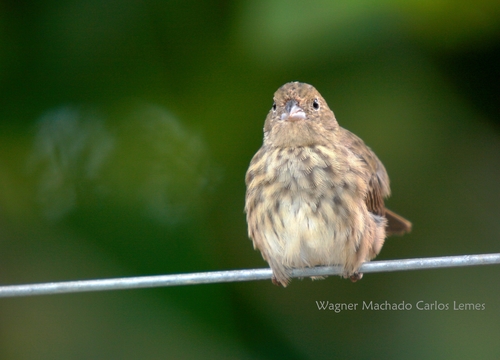
Palm Tanager

Palm Tanager

Thraupis palmarum

Silhouette: Sheatherius · PhyloPic

Daily sighting probability <5% · Rare
at Las Baulas Marine National Park

In 3 days ~10% in a week ~30%

44 Verified sightings at Las Baulas Marine National Park From 2019 to 2026
54,999 In all 59 parks
December Best month
☀️ Diurnal When it's spotted

About the Palm Tanager

The palm tanager (Thraupis palmarum) is a medium-sized passerine bird. This tanager is a resident breeder from Nicaragua south to Bolivia, Paraguay, and southern Brazil. It also breeds on Trinidad and, since 1962, on Tobago. In Trinidad and Tobago, it is known by colloquial names such as the "palmiste," on American Spanish countries (Colombian pron: "pūlmist"), Brazil Pipira-verde (Portuguese pron: "pəəpəərā-værd"), and the "green jean" in American English.

Adult palm tanagers are 19 cm (7.5 in) long and weigh 36 g (1.3 oz). They are grey to dull olive-green. The flight feathers are blackish, and the long tail is blackish edged with green. A yellow wingbar shows in flight. Sexes are similar, although females may be somewhat paler.

It occurs in semi-open areas including cultivation and gardens. The bulky cup nest is built in a tree, usually a palm, or under the eaves of a house, and the female incubates three, sometimes two, brown-blotched cream eggs for 14 days, with another 17 days to fledging.

Palm tanagers are social, restless but unwary birds which eat a wide variety of small fruit. They also regularly take some nectar, flower... Wikipedia →

Sounds

Song0:17

Brazil · 2026

© JAYRSON ARAUJO DE OLIVEIRA · XC1166868 · CC BY-NC-SA 4.0

Call0:56

Ecuador · 2025

© Marc Anderson · XC1077660 · CC BY-NC-ND 4.0

Aberrant0:46

Venezuela · 2021

© Francisco contreras · XC679894 · CC BY-NC-SA 4.0

Global Distribution

Parks Where Found

# Park Country Daily sighting probability
1 Tijuca National Park 🇧🇷 Brazil
~80%
2 Chagres National Park 🇵🇦 Panama
~60%
3 Serra dos Órgãos National Park 🇧🇷 Brazil
~60%
4 Main Ridge Forest Reserve 🇹🇹 Trinidad and Tobago
~60%
5 Soberanía National Park 🇵🇦 Panama
~60%
6 Arenal Volcano National Park 🇨🇷 Costa Rica
~60%
7 Farallones de Cali National Natural Park 🇨🇴 Colombia
~60%
8 Poás Volcano National Park 🇨🇷 Costa Rica
~60%
9 Parque Natural Metropolitano 🇵🇦 Panama
~50%
10 Sierra de la Macarena National Park 🇨🇴 Colombia
~50%
11 Tayrona National Natural Park 🇨🇴 Colombia
~50%
12 Chirripó National Park 🇨🇷 Costa Rica
~50%
13 Henri Pittier National Park 🇻🇪 Venezuela
~40%
14 Manuel Antonio National Park 🇨🇷 Costa Rica
~40%
15 Itatiaia National Park 🇧🇷 Brazil
~40%
16 Tenorio Volcano National Park 🇨🇷 Costa Rica
~40%
17 Marino Ballena National Park 🇨🇷 Costa Rica
~40%
18 Gandoca-Manzanillo Wildlife Refuge 🇨🇷 Costa Rica
~40%
19 Brownsberg Nature Park 🇸🇷 Suriname
~40%
20 Cahuita National Park 🇨🇷 Costa Rica
~40%
21 San Lorenzo Protected Forest 🇵🇦 Panama
~40%
22 Bastimentos Island National Marine Park 🇵🇦 Panama
~40%
23 Yasuní National Park 🇪🇨 Ecuador
~40%
24 Chapada dos Guimarães National Park 🇧🇷 Brazil
~40%
25 Piedras Blancas National Park 🇨🇷 Costa Rica
~40%
26 Amboró National Park 🇧🇴 Bolivia
~30%
27 Braulio Carrillo National Park 🇨🇷 Costa Rica
~30%
28 La Amistad International Park (Panama) 🇵🇦 Panama
~30%
29 Emas National Park 🇧🇷 Brazil
~30%
30 Anavilhanas National Park 🇧🇷 Brazil
~30%
31 Chapada Diamantina National Park 🇧🇷 Brazil
~30%
32 Amacayacu National Natural Park 🇨🇴 Colombia
~30%
33 Manu National Park 🇵🇪 Peru
~30%
34 Tortuguero National Park 🇨🇷 Costa Rica
~20%
35 Cuyabeno Wildlife Reserve 🇪🇨 Ecuador
~20%
36 Caroni Swamp 🇹🇹 Trinidad and Tobago
~20%
37 Corcovado National Park 🇨🇷 Costa Rica
~20%
38 Monteverde Cloud Forest Reserve 🇨🇷 Costa Rica
~20%
39 Serra da Canastra National Park 🇧🇷 Brazil
~20%
40 Tambopata National Reserve 🇵🇪 Peru
~20%
41 Podocarpus National Park 🇪🇨 Ecuador
~20%
42 Carara National Park 🇨🇷 Costa Rica
~10%
43 Darién National Park 🇵🇦 Panama
~10%
44 Utría National Natural Park 🇨🇴 Colombia
~10%
45 Parque Estadual Encontro das Águas 🇧🇷 Brazil
~10%
46 Tapantí-Macizo de la Muerte National Park 🇨🇷 Costa Rica
~10%
47 Volcán Barú National Park 🇵🇦 Panama
~10%
48 Machalilla National Park 🇪🇨 Ecuador
~10%
49 Rincón de la Vieja National Park 🇨🇷 Costa Rica
~10%
50 Coiba National Park 🇵🇦 Panama
~10%
51 Los Nevados National Natural Park 🇨🇴 Colombia
~10%
52 Cabo Blanco Absolute Nature Reserve 🇨🇷 Costa Rica
<5%
53 Las Baulas Marine National Park 🇨🇷 Costa Rica
<5%
54 Chingaza National Natural Park 🇨🇴 Colombia
<5%
55 Los Quetzales National Park 🇨🇷 Costa Rica
<5%
56 Ostional Wildlife Refuge 🇨🇷 Costa Rica
<5%
57 Palo Verde National Park 🇨🇷 Costa Rica
<5%
58 Masaya Volcano National Park 🇳🇮 Nicaragua
<5%
59 Iguazú National Park 🇦🇷 Argentina
<5%

Cities Where Found

# City Country Daily sighting probability
1 Niterói 🇧🇷 Brazil
~90%
2 Maceió 🇧🇷 Brazil
~90%
3 Belém 🇧🇷 Brazil
~90%
4 Rio de Janeiro 🇧🇷 Brazil
~80%
5 Medellín 🇨🇴 Colombia
~80%
6 Santos 🇧🇷 Brazil
~80%
7 João Pessoa 🇧🇷 Brazil
~70%
8 Salvador 🇧🇷 Brazil
~70%
9 Natal 🇧🇷 Brazil
~70%
10 Recife 🇧🇷 Brazil
~70%

Zoos & Centres Where Found

# Zoo / Centre Country
1 La Paz Waterfall Gardens 🇨🇷 Costa Rica In captivity
2 Mangal das Garças 🇧🇷 Brazil In captivity

Before you go

What are the chances of seeing a Palm Tanager in Las Baulas Marine National Park?

Rare

Under 5% of wildlife watchers report a Palm Tanager sighting in Las Baulas Marine National Park on a given day, based on 44 verified sightings from GBIF citizen-science data from 2019 to 2026. It is the 113th most-seen of the 206 birds we can rate there. Over three days the chance rises to about 10%, and over a week to about 30%, if each day is a fresh chance.

When is the best time to see a Palm Tanager in Las Baulas Marine National Park?

February and November–December

In those months about 10% of wildlife watchers report a Palm Tanager in Las Baulas Marine National Park on a given day, against under 5% in January and March–October, the lowest months. Those are among Las Baulas Marine National Park's driest months, with about 85 mm of rain a month against 480 mm in October.

What time of day is best to see a Palm Tanager?

Between 7 and 10 am

Across all the parks we cover, that three-hour window holds the most Palm Tanager sightings with a recorded time, and nearly all of them come between 6 am and 6 pm: it is a daytime animal.

Where does the Palm Tanager sighting chance come from?

GBIF citizen-science records

It is estimated from how often the Palm Tanager is recorded against all the birds logged in Las Baulas Marine National Park (44 verified sightings from 2019 to 2026), calibrated against known sighting rates. Figures are rounded to the nearest 10% because citizen-science data supports honest approximations, not decimals, and months with records from fewer than five people show "—". How it works.

← Back to Las Baulas Marine National Park