


Completed


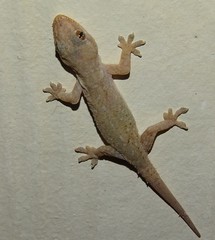
Common House Gecko
Hemidactylus frenatus
Silhouette: Andy Wilson · PhyloPic
- KingdomAnimalia (Animals)
- PhylumChordata (Chordates)
- ClassSquamata
- FamilyGekkonidae (Typical Geckos)
- GenusHemidactylus (House Geckos)
- SpeciesHemidactylus frenatus (Common House Gecko)
In 3 days ~80% in a week >90%
27 Verified sightings at Main Ridge Forest Reserve From 2019 to 2026
1,836 In all 73 parks
April Best month
🌅 Crepuscular When it's spotted
About the Common House Gecko
The Common house gecko (Hemidactylus frenatus) is a gecko native to South and Southeast Asia and Near Oceania. It is also known as the Asian house gecko, Pacific house gecko, wall gecko, House lizard, Tiktiki, chipkali and moon lizard.
The common house gecko is nocturnal, hiding during the day and foraging for insects at night. They can be seen climbing walls of houses and other buildings in search of insects attracted to porch lights, and are immediately recognisable by their characteristic chirping.
They grow to a length of between 7.5–15 cm (3–6 in), and live for about 7 years. They are non-venomous and not harmful to humans. Most medium-sized to large geckos are docile, but may bite if distressed, which might pierce skin. The common house gecko is a tropical species, and thrives in warm, humid areas where it can crawl around on rotting wood in search of the insects it eats, as well as within urban landscapes in warm climates. The animal is very adaptable and may prey on insects and spiders, displacing other gecko species which are less robust or behaviourally aggressive. In parts of Australia and Papua New Guinea they are often confused with a similar native lizard, the dubious dtella. Wikipedia →
Sounds
Recording0:10
Caribbean Netherlands · 2026
© Jonah Gray · iNaturalist · CC BY-NC 4.0
Recording0:03
Taiwan · 2025
© 陳界良 · iNaturalist · CC BY-NC 4.0
Recording0:07
Australia · 2025
© wcrrwng · iNaturalist · CC BY-NC 4.0
Recent sightings of Common House Gecko in Main Ridge Forest Reserve
LIVEiNaturalistGlobal Distribution
Parks Where Found
Cities Where Found
| # | City | Country | Daily sighting probability |
|---|---|---|---|
| 1 | Xiuying District | 🇨🇳 China | |
| 2 | Yogyakarta | 🇮🇩 Indonesia | |
| 3 | Cebu City | 🇵🇭 Philippines | |
| 4 | Hanoi | 🇻🇳 Vietnam | |
| 5 | Naha | 🇯🇵 Japan | |
| 6 | Makassar | 🇮🇩 Indonesia | |
| 7 | Kuching | 🇲🇾 Malaysia | |
| 8 | San Pedro Sula | 🇭🇳 Honduras | |
| 9 | Denpasar | 🇮🇩 Indonesia | |
| 10 | Surakarta | 🇮🇩 Indonesia |
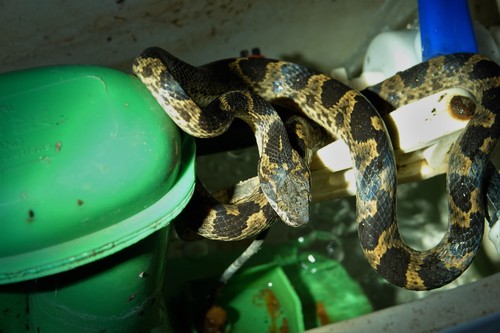
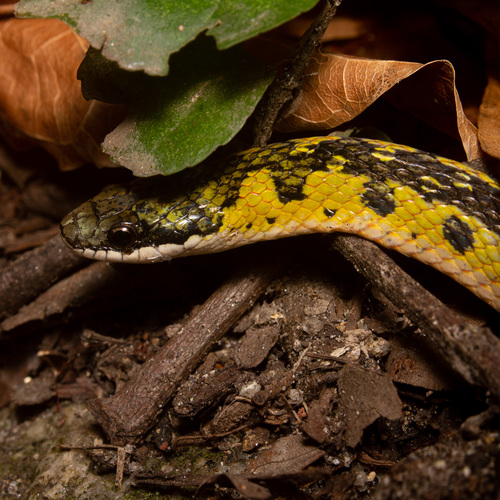
Closest Relatives at Main Ridge Forest Reserve





Before you go
What are the chances of seeing a Common House Gecko in Main Ridge Forest Reserve?
Likely
About 40% of wildlife watchers report a Common House Gecko sighting in Main Ridge Forest Reserve on a given day, based on 27 verified sightings from GBIF citizen-science data from 2019 to 2026. It is the 5th most-seen of the 24 reptiles we can rate there. Over three days the chance rises to about 80%, and over a week to over 90%, if each day is a fresh chance.
When is the best time to see a Common House Gecko in Main Ridge Forest Reserve?
April
In that month about 60% of wildlife watchers report a Common House Gecko in Main Ridge Forest Reserve on a given day, against under 5% in January and February, the lowest months. That is one of Main Ridge Forest Reserve's driest months, with about 65 mm of rain against 230 mm in October.
What time of day is best to see a Common House Gecko?
Between 6 and 9 pm
Across all the parks we cover, that three-hour window holds the most Common House Gecko sightings with a recorded time, and about 6 in 10 of them come between 6 pm and 6 am: it is most active around dawn and dusk.
Is Main Ridge Forest Reserve the best place to see a Common House Gecko?
4th of 73
Of the 73 parks where we can rate Common House Gecko sightings, Main Ridge Forest Reserve ranks 4th at about 40%. The best odds are in Taroko National Park (Taiwan, about 50%), Tayrona National Natural Park (Colombia, about 50%) and Ankarafantsika National Park (Madagascar, about 40%). All parks ranked.
Where does the Common House Gecko sighting chance come from?
GBIF citizen-science records
It is estimated from how often the Common House Gecko is recorded against all the reptiles logged in Main Ridge Forest Reserve (27 verified sightings from 2019 to 2026), calibrated against known sighting rates. Figures are rounded to the nearest 10% because citizen-science data supports honest approximations, not decimals, and months with records from fewer than five people show "—". How it works.
