


Completed


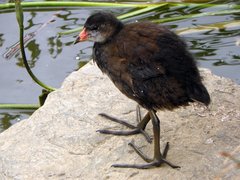



Common Moorhen
Gallinula chloropus
Silhouette: Andy Wilson · PhyloPic
- KingdomAnimalia (Animals)
- PhylumChordata (Chordates)
- ClassAves (Birds)
- OrderGruiformes (Cranes, Rails, and Allies)
- FamilyRallidae (Rails, Gallinules, and Coots)
- GenusGallinula (Typical Moorhens)
- SpeciesGallinula chloropus (Common Moorhen)
In 3 days ~40% in a week ~70%
316 Verified sightings at Cordoba
30,866 In all 108 parks From 2019 to 2026
April Best month
☀️ Diurnal When it's spotted
About the Common Moorhen
The common moorhen (Gallinula chloropus), also known as the waterhen, is a bird species in the rail family (Rallidae). It is distributed across many parts of the Old World, across Africa, Europe, and Asia. It lives around well-vegetated marshes, ponds, canals and other wetlands. The species is not found in the polar regions or many tropical rainforests; generally it is one of the most common Old World rail species, together with the Eurasian coot in some regions.
The common moorhen was formally described in 1758 by the Swedish naturalist Carl Linnaeus in the tenth edition of his Systema Naturae. He placed it in the genus Fulica and coined the binomial name Fulica chloropus. The common moorhen is now one of five extant species placed in the genus Gallinula that was introduced in 1760 by the French zoologist Mathurin Jacques Brisson. The genus name is from Latin gallinula meaning "little hen" or "little chicken". The specific epithet chloropus combines the Ancient Greek khlōros χλωρός meaning "green" and pous (πούς) meaning "foot".
The closely related common gallinule G. galeata of the New World, and the tristan moorhen G. nesiotis and gough moorhen G. comeri of the Tristan... Wikipedia →
Recent sightings of Common Moorhen in Cordoba
LIVEiNaturalistGlobal Distribution
Parks Where Found
Cities Where Found
| # | City | Country | Daily sighting probability |
|---|---|---|---|
| 1 | Ningbo | 🇨🇳 China | |
| 2 | Amsterdam | 🇳🇱 Netherlands | |
| 3 | Riyadh | 🇸🇦 Saudi Arabia | |
| 4 | Suzhou | 🇨🇳 China | |
| 5 | Srinagar | 🇮🇳 India | |
| 6 | Birmingham | 🇬🇧 United Kingdom | |
| 7 | Antalya | 🇹🇷 Turkey | |
| 8 | Liverpool | 🇬🇧 United Kingdom | |
| 9 | London | 🇬🇧 United Kingdom | |
| 10 | Antananarivo | 🇲🇬 Madagascar |
Zoos & Centres Where Found
Closest Relatives at Cordoba




Before you go
What are the chances of seeing a Common Moorhen in Cordoba?
With luck
About 10% of wildlife watchers report a Common Moorhen sighting in Cordoba on a given day, based on 316 verified sightings from GBIF citizen-science data. It is the 45th most-seen of the 176 birds we can rate there. Over three days the chance rises to about 40%, and over a week to about 70%, if each day is a fresh chance.
When is the best time to see a Common Moorhen in Cordoba?
January, March–June and October–November
In those months about 20% of wildlife watchers report a Common Moorhen in Cordoba on a given day, against about 10% in February, July–September and December, the lowest months.
What time of day is best to see a Common Moorhen?
Between 10 am and 1 pm
Across all the parks we cover, that three-hour window holds the most Common Moorhen sightings with a recorded time, and about 9 in 10 of them come between 6 am and 6 pm: it is a daytime animal.
Is Cordoba the best place to see a Common Moorhen?
131st of 270
Of the 270 cities where we can rate Common Moorhen sightings, Cordoba ranks 131st at about 10%. The best odds are in Ningbo (China, about 70%), Amsterdam (Netherlands, about 70%) and Riyadh (Saudi Arabia, about 70%).
Which relatives of the Common Moorhen live in Cordoba?
Same family: Rallidae
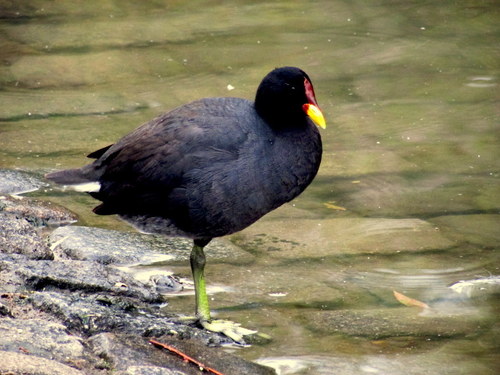
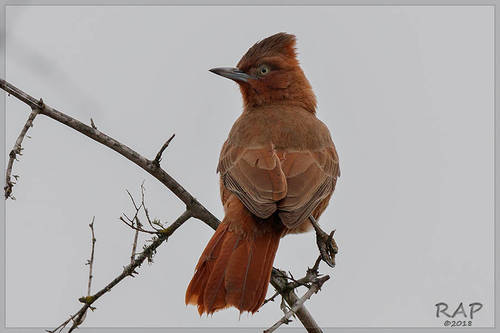
The closest relatives of the Common Moorhen that you can see in Cordoba (family Rallidae, Rails, Gallinules, and Coots) are White-winged Coot (about 10%) and Red-gartered Coot (about 10%), with each one's daily chance of a sighting.
Where does the Common Moorhen sighting chance come from?
GBIF citizen-science records
It is estimated from how often the Common Moorhen is recorded against all the birds logged in Cordoba (316 verified sightings), calibrated against known sighting rates. Figures are rounded to the nearest 10% because citizen-science data supports honest approximations, not decimals, and months with records from fewer than five people show "—". How it works.
